RESEARCH | July 2, 2015

Hacking Wireless Ghosts Vulnerable For Years

Is the risk associated to a Remote Code Execution vulnerability in an industrial plant the same when it affects the human life? When calculating risk, certain variables and metrics are combined into equations that are rendered as static numbers, so that risk remediation efforts can be prioritized. But such calculations sometimes ignore the environmental metrics and rely exclusively on exploitability and impact. The practice of scoring vulnerabilities without auditing the potential for collateral damage could underestimate a cyber attack that affects human safety in an industrial plant and leads to catastrophic damage or loss. These deceiving scores are always attractive for attackers since lower-priority security issues are less likely to be resolved on time with a quality remediation.

In the last few years, the world has witnessed advanced cyber attacks against industrial components using complex and expensive malware engineering. Today the lack of entry points for hacking an isolated process inside an industrial plant mean that attacks require a combination of zero-day vulnerabilities and more money.

Two years ago, Carlos Mario Penagos (@binarymantis) and I (Lucas Apa) realized that the most valuable entry point for an attacker is in the air. Radio frequencies leak out of a plant’s perimeter through the high-power antennas that interconnect field devices. Communicating with the target devices from a distance is priceless because it allows an attack to be totally untraceable and frequently unstoppable.

In August 2013 at Black Hat Briefings, we reported multiple vulnerabilities in the industrial wireless products of three vendors and presented our findings. We censored vendor names from our paper to protect the customers who use these products, primarily nuclear, oil and gas, refining, petro-chemical, utility, and wastewater companies mostly based in North America, Latin America, India, and the Middle East (Bahrain, Kuwait, Oman, Qatar, Saudi Arabia, and UAE). These companies have trusted expensive but vulnerable wireless sensors to bridge the gap between the physical and digital worlds.

First, we decided to target wireless transmitters (sensors). These sensors gather the physical, real-world values used to monitor conditions, including liquid level, pressure, flow, and temperature. These values are precise enough to be trusted by all of the industrial hardware and machinery in the field. Crucial decisions are based on these numbers. We also targeted wireless gateways, which collect this information and communicate it to the backbone SCADA systems (RTU/EFM/PLC/HMI).

In June 2013, we reported eight different vulnerabilities to the ICS-CERT (Department of Homeland Security). Three months later, one of the vendors, ProSoft Technology released a patch to mitigate a single vulnerability.

After a patient year, IOActive Labs in 2014 released an advisory titled “OleumTech Wireless Sensor Network Vulnerabilities” describing four vulnerabilities that could lead to process compromise, public damage, and employee safety, potentially leading to the loss of life.
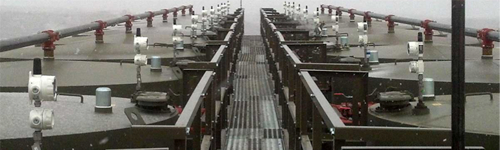
Figure 1: OleumTech Transmitters infield

The following OleumTech Products are affected:

  • All OleumTech Wireless Gateways: WIO DH2 and Base Unit (RFv1 Protocol)
  • All OleumTech Transmitters and Wireless Modules (RFv1 Protocol)
  • BreeZ v4.3.1.166

An untrusted user or group within a 40-mile range could inject false values on the wireless gateways in order to modify measurements used to make critical decisions. In the following video demonstration, an attacker makes a chemical react and explode by targeting a wireless transmitter that monitors the process temperature. This was possible because a proper failsafe mechanism had not been implemented and physical controls failed. Heavy machinery makes crucial decisions based on the false readings; this could give the attacker control over part of the process.
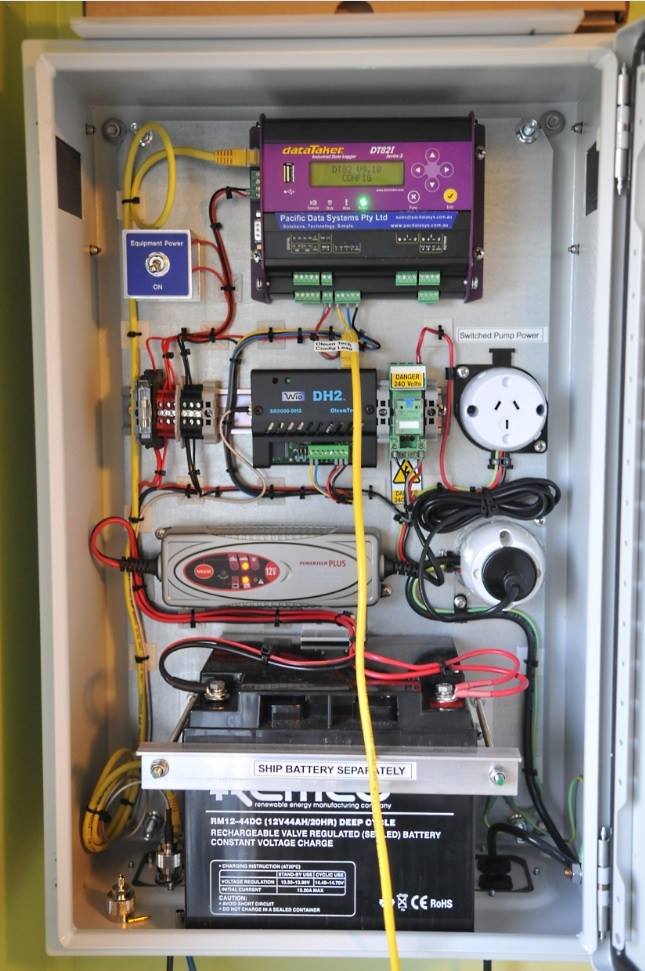
Figure 2: OleumTech DH2 used as the primary Wireless Gateway to collect wireless end node data.
Video:  Attack launched using a 40 USD RF transceiver and antenna

Industrial embedded systems’ vulnerabilities that can be exploited remotely without needing any internal access are inherently appealing for terrorists.

Mounting a destructive, real-world attack in these conditions is possible. These products are in commercial use in industrial plants all over the world. As if causing unexpected chemical reactions is not enough, exploiting a remote, wireless memory corruption vulnerability could shut down the sensor network of an entire facility for an undetermined period of time.

In May 2015, two years from the initial private vulnerability disclosure, OleumTech created an updated RF protocol version (RFv2) that seems to allow users to encrypt their wireless traffic with AES256. Firmware for all products was updated to support this new feature.

Still, are OleumTech customers aware of how the new AES Encryption key is generated? Which encryption key is the network using?
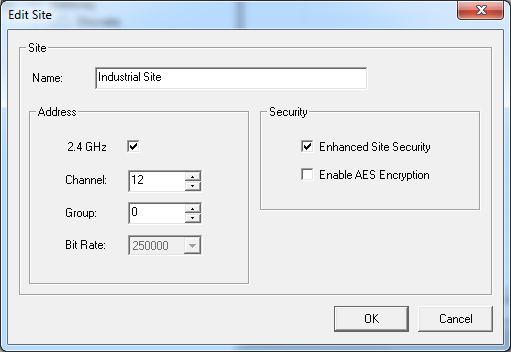
Figure 3: Picture from OleumTech BreeZ 5 – Default Values (AES Encryption)

Since every hardware device should be unmounted from the field location for a manual update, what is the cost?

IOActive Labs hasn’t tested these firmware updates. We hope that OleumTech’s technical team performed testing to ensure that the firmware is properly securing radio communications.

I am proud that IOActive has one of the largest professional teams of information security researchers who work with ICS-CERT (DHS) in the world. In addition to identifying critical vulnerabilities and threats for power system facilities, the IOActive team provides security testing directly for control system manufacturers and businesses that have industrial facilities – proactively detecting weaknesses and anticipating exploits in order to improve the safety and operational integrity of technologies.

Needless to say, the companies that rely on vulnerable devices could lose much more than millions of dollars if these vulnerabilities are exploited. These flaws have the potential for massive economic and sociological impact, as well as loss of human life. On the other hand, some attacks are undetectable so it is possible that some of these devices already have been exploited in the wild. We may never know. Fortunately, customers now have a stronger security model and I expect that they now are motivated enough to get involved and ask the vulnerable vendors these open questions.

RESEARCH | April 17, 2014

A Wake-up Call for SATCOM Security

During the last few months we have witnessed a series of events that will probably be seen as a tipping point in the public’s opinion about the importance of, and need for, security. The revelations of Edward Snowden have served to confirm some theories and shed light on surveillance technologies that were long restricted.
 
We live in a world where an ever-increasing stream of digital data is flowing between continents. It is clear that those who control communications traffic have an upper-hand.
 
Satellite Communications (SATCOM) plays a vital role in the global telecommunications system. Sectors that commonly rely on satellite networks include:
  • Aerospace
  • Maritime
  • Military and governments
  • Emergency services
  • Industrial (oil rigs, gas, electricity)
  • Media
It is important to mention that certain international safety regulations for ships such as GMDSS or aircraft’s ACARS rely on satellite communication links. In fact, we recently read how, thanks to the SATCOM equipment on board Malaysian Airlines MH370, Inmarsat engineers were able to determine the approximate position of where the plane crashed. 
 
IOActive is committed to improving overall security. The only way to do so is to analyze the security posture of the entire supply chain, from the silicon level to the upper layers of software. 
 
Thus, in the last quarter of 2013 I decided to research into a series of devices that, although widely deployed, had not received the attention they actually deserve. The goal was to provide an initial evaluation of the security posture of the most widely deployed Inmarsat and Iridium SATCOM terminals.  
 
In previous blog posts I’ve explained the common approach when researching complex devices that are not physically accessible. In these terms, this research is not much different than the previous research: in most cases the analysis was performed by reverse engineering the firmware statically.

 
What about the results? 
 
Insecure and undocumented protocols, backdoors, hard-coded credentials…mainly design flaws that allow remote attackers to fully compromise the affected devices using multiple attack vectors.
 
Ships, aircraft, military personnel, emergency services, media services, and industrial facilities (oil rigs, gas pipelines, water treatment plants, wind turbines, substations, etc.) could all be affected by these vulnerabilities.
 
I hope this research is seen as a wake-up call for both the vendors and users of the current generation of SATCOM technology. We will be releasing full technical details in several months, at Las Vegas, so stay tuned.
The following white paper comprehensively explains all the aspects of this research IOActive_SATCOM_Security_WhitePaper
INSIGHTS | February 17, 2014

INTERNET-of-THREATS

At IOActive Labs, I have the privilege of being part of a great team with some of the world’s best hackers. I also have access to really cool research on different technologies that uncovers security problems affecting widely used hardware and software. This gives me a solid understanding of the state of security for many different software and hardware devices, not just opinions based on theories and real life experience.
 
Currently, the term Internet-of-Things (IoT) is becoming a buzzword used in the media, announcements from hardware device manufacturers, etc. Basically, it’s used to describe an Internet with everything connected to it. It describes what we are seeing nowadays, including:
  • Laptops, tablets, smartphones, set-top boxes, media-streaming devices, and data-storage devices
  • Watches, glasses, and clothes
  • Home appliances, home switches, home alarm systems, home cameras, and light bulbs
  • Industrial devices and industrial control systems
  • Cars, buses, trains, planes, and ships
  • Medical devices and health systems
  • Traffic sensors, seismic sensors, pollution sensors, and weather sensors
     …and more; you name it, and it is or soon will be connected to the Internet.
 
While the devices and systems connected to the Internet are different, they have something in common–most of them suffer from serious security vulnerabilities. This is not a guess. It is based on IOActive Labs’ security research into many of these types of devices currently being used worldwide. Sadly, we are seeing almost the exact same vulnerabilities on these devices that have plagued software vendors over the last decade. Vulnerabilities that the most important software vendors are trying hard to eradicate. It seems that many hardware companies are following really poor security practices when adding software to their products and connecting them to the Internet. What is worse is that sometimes vendors don’t even respond to security vulnerability reports or just downplay the threat and don’t fix the vulnerabilities. Many vendors don’t even know how to properly deal with the security vulnerabilities being reported.
 
Some of common vulnerabilities IOActive Labs finds include:
  • Sensitive data sent over insecure channels
  • Improper use of encryption
    • No SSL certificate validation
    • Things like encryption keys and signing certificates easily available to anyone
  • Hardcoded credentials/backdoor accounts
  • Lack of authentication and/or authorization
  • Storage of sensitive data in clear text
  • Unauthenticated and/or unauthorized firmware updates
  • Lack of firmware integrity check during updates
  • Use of insecure custom made protocols
Also, data ambition is working against vendors and is increasing attack surfaces considerably. For example, all data collected is sent to “vendor cloud” and device commands are sent from “vendor cloud”, instead of just allowing users to connect directly to and command their devices. Hacking into “vendor cloud” = thousands of devices compromised = lots of lost money.
 
Why should we worry about all of this? Well, these devices affect our everyday life and will continue to do so more and more. We’ve only seen the tip of the iceberg when it comes to the attacks that people, companies, and governments face and how easily they can be performed. If the situation doesn’t change soon, it is just matter of time before we witness attacks with tragic consequences.
 
If a headline like “+100K Digital Toilets from XYZ1.3 Inc. Found Sending Spam and Distributing Malware” doesn’t scare you because you think it’s funny and improbable, you could be wrong. We shouldn’t wait for headlines such as “Dozens of People Injured When Home Automation Devices Hacked” before we react.
 
Something must be done! From enforcing secure practices during product development to imposing high fines when products are hacked, action must be taken to prevent the loss of money and possibly even lives.
 
Companies should strongly consider:
    • Training developers on secure development
    • Implementing security development practices to improve software security
    • Training company staff on security best practices
    • Implementing a security patch development and distribution process
    • Performing product design/architecture security reviews
    • Performing source code security audits
    • Performing product penetration tests
    • Performing company network penetration tests
    • Staying up-to-date with new security threats
    • Creating a bug bounty program to reward reported vulnerabilities and clearly defining how vulnerabilities should be reported
    • Implementing a security incident/emergency response team
It is difficult to give advice to end users given that the best solution is just not to buy or use many products because they are insecure by design. At this stage, it’s just matter of being lucky and hoping that you won’t be hacked. Maybe opportunistic vendors could come up with some novel solution such as an IPS/anti* device that will protect all of your devices from attacks. Just pray that the protection device itself is not vulnerable.
 
Sometimes end users are forced to live with insecure devices since there isn’t any way to turn them off or not to use them. These include devices provided by TV cable companies, electricity and gas companies, public services companies, governments, etc. These companies and the government should take responsibility for deploying secure products.
 
This is not BS–in a couple of days we will be releasing some of the extensive research I mentioned and on which this blog post is based.
 
I intend for this post to be a wakeup call for everyone! I’m really concerned about the current situation. In the meantime, I will use the term INTERNET-of-THREATS (not Internet-of-Things). Maybe this new buzzword will make us more conscious of the situation. If it doesn’t, then at least I have tried.
INSIGHTS | November 11, 2013

Practical and cheap cyberwar (cyber-warfare): Part I

Every day we hear about a new vulnerability or a new attack technique, but most of the time it’s difficult to imagine the real impact. The current emphasis on cyberwar (cyber-warfare if you prefer) leads to myths and nonsense being discussed. I wanted to show real life examples of large scale attacks with big impacts on critical infrastructure, people, companies, etc.
 

The idea of this post is to raise awareness. I want to show how vulnerable some industrial, oil, and gas installations currently are and how easy it is to attack them. Another goal is to pressure vendors to produce more secure devices and to speed up the patching process once vulnerabilities are reported.


The attack in this post is based on research done by my fellow pirates, Lucas Apa and Carlos Penagos. They found critical vulnerabilities in wireless industrial control devices. This research was first presented at BH USA 2013. You can find their full presentation here https://www.blackhat.com/us-13/archives.html#Apa
 
A common information leak occurs when vendors highlight how they helped Company X with their services or products. This information is very useful for supply chain attacks. If you are targeting Company X, it’s good to look at their service and product providers. It’s also useful to know what software/devices/technology they use.


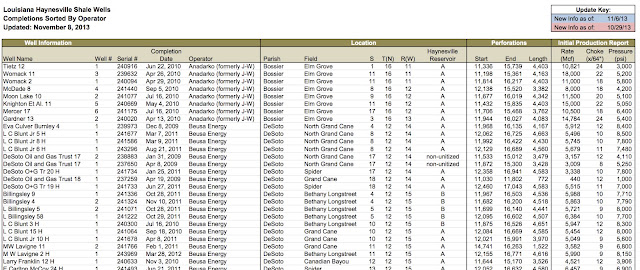
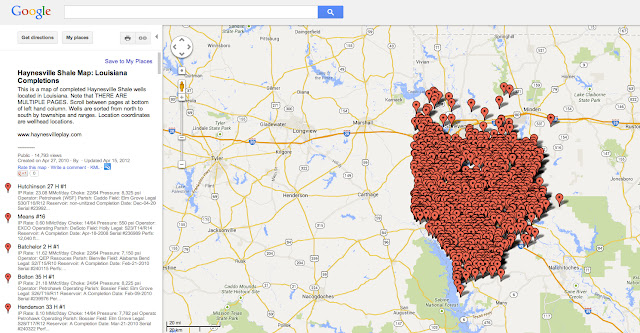
In this case, one of the vendors that sells vulnerable wireless industrial control devices is happy to announce in a press release that Company X has acquired its wireless sensors and is using them in the Haynesville Shale fields. So, as an attacker, we now know that Company X is using vulnerable wireless sensors at the Haynesville Shale fields. Haynesville Shale fields, what’s that? Interesting, with a quick Google search you end up with:


How does Google know about shale well locations? It’s simple, publically-available information. You can display wells by name, organization, etc.:


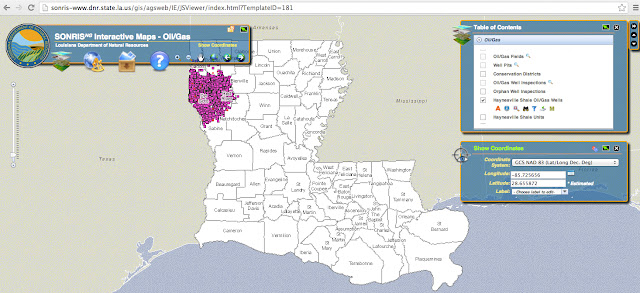
Even interactive maps are available:


You can find all of Company X’s wells along with their exact location (geographical coordinates). You know almost exactly where the vulnerable wireless sensors are installed.
 
Since the wells are at a remote location, exploiting the wireless sensor vulnerabilities becomes an interesting challenge. Enter drones, UAV unmanned aerial vehicles. Commercially available drones range from a couple hundred dollars to tens of thousands dollars, depending on range, endurance, functionality, etc. You can even build your own and save some money. The idea is to put the attack payload in a drone, send it to the wells’ location, and launch the attack. This isn’t difficult to do since drones can be programmed to fly to x,y coordinates and execute the payload while flying around the target coordinates (no need to return). 
 
Depending on your budget, you can launch an attack from a nearby location or very far away. Depending on the drone’s endurance, you can be X miles away from the target. You can extend the drone’s range depending on the radio and antenna used. 
 
The types of exploits you could launch from the drone range from bricking all of the wireless devices to causing some physical harm on the shale gas installations. Manipulating device firmware or injecting fake data on radio packets could make the control systems believe things like the temperature or pressure are wrong. Just bricking the devices could result in significant lost money to Company X. The devices would need to be reconfigured/reflashed. The exploits could interfere with shale gas extraction and even halt production. The consequences of an attack could be even more catastrophic depending on how the vulnerable devices are being used.
 
Attacks could be expanded to target more than just one vendor’s device. Drones could do reconnaissance first, scan and identify devices from different vendors, and then launch attacks targeting all of the specific devices.
 
In order to highlight attack possibilities and impact consequences I extracted the following from http://www.onworld.com/news/newsoilandgas.html (the companies mentioned in this article are not necessarily vulnerable, this is just for illustrative purposes):
 
“…Pipelines & Corrosion Monitoring
Wireless flow, pressure, level, temperature and valve position monitoring are used to streamline pipeline operation and storage while increasing safety and regulatory compliance. In addition, wireless sensing solutions are targeted at the billions of dollars per year that is spent managing pipeline corrosion. While corrosion is a growing problem for the aging pipeline infrastructure it can also lead to leaks, emissions and even deadly explosions in production facilities and refineries….”
 
Leaks and deadly explosions can have sad consequences.
 
Cyber criminals, terrorists, state actors, etc. can launch big impact attacks with relatively small budgets. Their attacks could produce economical loses, physical damage, even possible explosions.
 
While isolated attacks have a small impact when put in the context of cyberwar, they can cause panic in populations, political crisis, or geopolitical problems if combined with other larger impact attacks.
Probably in a future post I will describe more of these kinds of large scale, big impact attacks.
INSIGHTS | October 17, 2013

Strike Two for the Emergency Alerting System and Vendor Openness

Back in July I posted a rant about my experiences reporting the DASDEC issues and the problems I had getting things fixed. Some months have passed and I thought it would be a good time to take a look at how the vulnerable systems have progressed since then.
Well, back then my biggest complaint was the lack of forthrightness in Monroe Electronics’ public reporting of the issues; they were treated as a marketing problem rather than a security one. The end result (at the time) was that there were more vulnerable systems available on the internet – not fewer – even though many of the deployed appliances had adopted the 2.0-2 patch.
What I didn’t know at the time was that the 2.0-2 patch wasn’t as effective as one would have hoped; in most cases bad and predictable credentials were left in place intentionally – as in I was informed that Monroe Electronics were “intentionally not removing the exposed key(s) out of concern for breaking things.”
In addition to not removing the exposed keys, it didn’t appear that anyone even tried to review or audit any other aspect of the DASDEC security before pushing the update out. If someone told you that you had a shared SSH key for root you might say… check the root password wasn’t the same for every box too right? Yeah… you’d think so wouldn’t you!
After discovering that most of the “patched” servers running 2.0-2 were still vulnerable to the exposed SSH key I decided to dig deeper in to the newly issued security patch and discovered another series of flaws which exposed more credentials (allowing unauthenticated alerts) along with a mixed bag of predictable and hardcoded keys and passwords. Oh, and that there are web accessible back-ups containing credentials.
Even new features introduced to the 2.0-2 version since I first looked at the technology appeared to contain a new batch of hardcoded (in their configuration) credentials.
Upon our last contact with CERT we were informed that ‘[t]hese findings are entering the realms of “not terribly serious” and “not something the vendor can practically do much about.”‘
Go team cyber-security!
So… on one hand we’ve had one zombie alert and a good hand-full of responsibly disclosed issues which began back in January 2013… on the other hand I’m not sure anything changed except for a few default passwords and some version numbers.
Let’s not forget that the EAS is a critical national infrastructure component designed to save lives in an emergency. Ten months on and the entire system appears more vulnerable than when we began pointing out the vulnerabilities.
INSIGHTS | June 11, 2013

Tools of the Trade – Incident Response, Part 1: Log Analysis

There was a time when I imagined I was James Bond zip lining into a compromised environment, equipped with all kinds of top-secret tools. I would wave my hands over the boxes needing investigation, use my forensics glasses to extract all malware samples, and beam them over to Miss Moneypenny (or “Q” for APT concerns) for analysis. I would produce the report from my top-notch armpit laser printer in minutes. I was a hero.
As wonderful as it sounds, this doesn’t ever happen in real life. Instead of sporting a classy tuxedo, we are usually knee deep in data… often without boots! I have recently given a few presentations(1) on Incident Response (IR). The question I am most often asked concerns the tool chain that would enable an individual or a team to perform the basic actions one would expect from an Incident Responder.

Let me be clear. There is an immense difference between walking on to a crime scene in which your organization’s intent is to bring a perpetrator to court and approximately 90% of the actual IR work you will perform. The biggest difference has to do with how you collect and handle evidence, and you can rest assured that any improperly handled evidence will be relentlessly attacked by the defense.
However, I am writing this blog post from the point of view of a blue team member. I’ll focus on the tools that are available to determine what has happened, when it happened, and (most importantly) how to make sure it does not happen again.
TL;DR : Many, if not all, of the tools you will need are available in the SANS   Investigate Forensics Toolkit (SIFT) VMWare image(2) . You can skip the rest of this post and start playing with these tools right away if you want to, but I hope I can at least give you some pointers on where to look first.
As I illustrated in the introduction, IR work is incredibly unsexy. Almost without exception, you will run into a special case that requires you to work on the command line for hours trying to figure out what has occurred. The next-next finish of many a security product installation and use process is something you will nostalgically reflect on over a burning log (pun intended).
You will typically have in your possession three important pieces of evidence:
  • Log files
  • Memory images
  • Disk images
I will address these in three separate blog posts and try to give you some ideas about the tools you can use during your investigation.
In this blog post, we will start off by looking at log files.
Every device on the network creates a gigantic amount of data. Some of it is used for monitoring purposes, but most of it is (hopefully) stored and never to be looked at again. Until a system is compromised, this data is generally useless with the exception of a few hidden golden threads. These threads will give you a good starting point for figuring out what has happened. They might also be useful in tying the whole story together.  Essentially, you must figure out what the log files want to tell you. (Cue the X-Files soundtrack.)
Sifting through log files is like looking for gold. Your initial sift will be very coarse grained. As you get rid of more and more of the dirt, the mesh of your sift will get finer and finer.
In my humble opinion, there is nothing better than having a thorough understanding of the Unix command-line tools ‘grep’, ‘sed’, and ‘awk’.  The good thing about these tools is that you will find them on almost any Unix or Linux box you can get your hands on. The bad thing is that you will either need to know or need to find out what you are looking for.
In the absence of a full-fledged SIEM infrastructure, two tools exist that I recommend you become familiar with:
  • OSSEC(3)
  • log2timeline(6)
First up, OSSEC. Not only is this a good (and open-source) host-based intrusion detection system, but it also allows you to feed it collected logs through its command-line tools!  The events will trigger OSSEC out-of-the-box alerts and give you a good overview of the most interesting events that have taken place. You can also easily develop custom rule sets based on (as an example) publicly available data from other compromises(4)
As you become more experienced with OSSEC, you can build your own set of scripts, drawing inspiration from a variety of places. In cases where ye olde *nix is not available, make sure you are also familiar with a Windows shell tool. (Powershell is one heck of an alternative!) Also, keep your Command Line Kung Fu(5) handy!
You will not be able to perform IR without the powerful yet extremely elegant log2timeline(6) tool. This blog post does not offer enough space to provide a decent overview of log2timeline. In essence, it groks data from different sources and creates a ‘Super Timeline’ that helps you to narrow in on those timeframes that are relevant to your investigation. It is one thing to dig through information on a command line, but it is a completely different ball game when you can visualize events as they have occurred.
In upcoming blog posts, I will dig into the juicy secrets that can be found in memory and disk images. A major lesson to be learned as you climb on the ladder of IR is that many of the tools you will use are produced by your peers. Sure, IR software is available and works well. However, the bulk of tools available to you have been developed by your fellow incident responders to address a particular problem. Many responders generously release their tools to the public domain for others to use. We learn from others probably more than we teach.
 

(1) BYO-IR: Build Your Own Incident Response: http://www.slideshare.net/wremes/isc2-byo-ir
(2) http://computer-forensics.sans.org/community/downloads
(3) http://www.ossec.net
(4) e.g. APT1 Indicators of Compromise @ http://intelreport.mandiant.com/
(5) http://blog.commandlinekungfu.com/
(6) http://log2timeline.net/

INSIGHTS | June 4, 2013

Industrial Device Firmware Can Reveal FTP Treasures!

Security professionals are becoming more aware of backdoors, security bugs, certificates, and similar bugs within ICS device firmware. I want to highlight another bug that is common in the firmware for critical industrial devices: the remote access provided by some vendors between their devices and ftp servers for troubleshooting or testing. In many cases this remote access could allow an attacker to compromise the device itself, the company the device belongs to, or even the entire vendor organization.
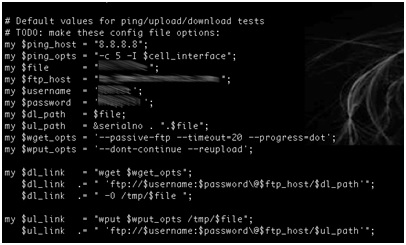
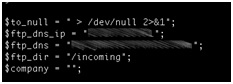
I discovered this vulnerability while tracking connectivity test functions within the firmware for an industrial device gateway. During my research I landed on a script with ftp server information that is transmitted in the clear:
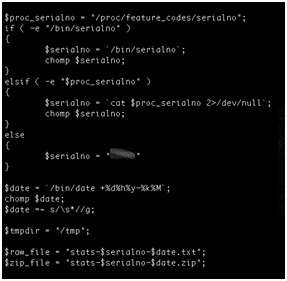
The script tests connectivity and includes two subtests. The first is a simple ping to the host “8.8.8.8”. The second test uses an internal ftp server to download a test file from the vendor’s ftp server and to upload the results back to the vendor’s server. The key instructions use the wget and wput commands shown in the screen shot.
In this script, the wget function downloads a test file from the vendor’s ftp server. When the test is complete, the wput function inserts the serial number of the device into the file name before the file is uploaded back to the vendor.
This is probably done to ensure that file names identify unique devices and for traceability.
This practice actually involves two vulnerabilities:
  • Using the device serial number as part of a filename on a relatively accessible ftp server.
  • Hardcoding the ftp server credentials within the firmware.
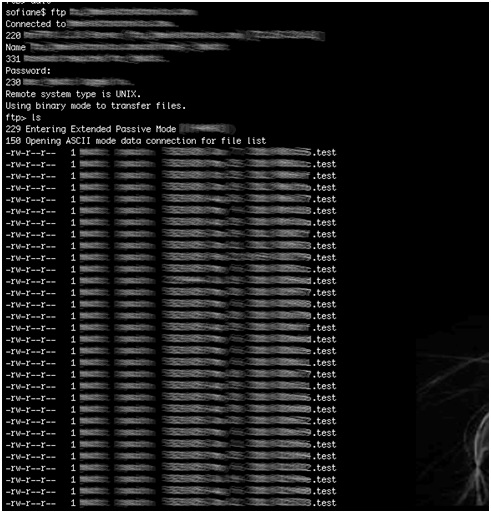
This combination could enable an attacker to connect to the ftp server and obtain the devices serial numbers.
The risk increases for the devices I am investigating. These device serial numbers are also used by the vendor to generate default admin passwords. This knowledge and strategy could allow an attacker to build a database of admin passwords for all of this vendor’s devices.
Another security issue comes from a different script that points to the same ftp server, this time involving anonymous access.
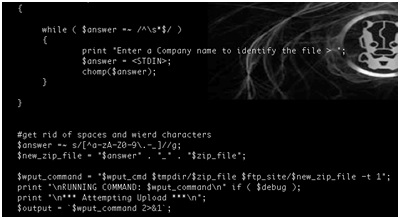
This vendor uses anonymous access to upload statistics gathered from each device, probably for debugging purposes. These instructions are part of the function illustrated below.
As in the first script, the name of the zipped file that is sent back to the ftp server includes the serial number.
The script even prompts the user to add the company name to the file name.
An attacker with this information can easily build a database of admin passwords linked to the company that owns the device.


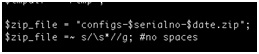
The third script, which also involves anonymous open access to the ftp server, gathers the device configuration and uploads it to the server. The only difference between this and the previous script is the naming function, which uses the configs- prefix instead of the stats- prefix.
The anonymous account can only write files to the ftp server. This prevents anonymous users from downloading configuration files. However, the server is running an old version of the ftp service, which is vulnerable to public exploits that could allow full access to the server.
A quick review shows that many common information security best practice rules are being broken:
  1. Naming conventions disclose device serial numbers and company names. In addition, these serial numbers are used to generate unique admin passwords for each device.
  2. Credentials for the vendor’s ftp server are hard coded within device firmware. This would allow anyone who can reverse engineer the firmware to access sensitive customer information such as device serial numbers.
  3. Anonymous write access to the vendor’s ftp server is enabled. This server contains sensitive customer information, which can expose device configuration data to an attacker from the public Internet. The ftp server also contains sensitive information about the vendor.
  4. Sensitive and critical data such as industrial device configuration files are transferred in clear text.
  5. A server containing sensitive customer data and running an older version of ftp that is vulnerable to a number of known exploits is accessible from the Internet.
  6. Using Clear text protocols to transfer sensitive information over internet
Based on this review we recommend some best practices to remediate the vulnerabilities described in this article:
  1. Use secure naming conventions that do not involve potentially sensitive information.
  2. Do not hard-code credentials into firmware (read previous blog post by Ruben Santamarta).
  3. Do not transfer sensitive data using clear text protocols. Use encrypted protocols to protect data transfers.
  4. Do not transfer sensitive data unless it is encrypted. Use high-level encryption to encrypt sensitive data before it is transferred.
  5. Do not expose sensitive customer information on public ftp servers that allow anonymous access.
  6. Enforce a strong patch policy. Servers and services must be patched and updated as needed to protect against known vulnerabilities.
INSIGHTS | May 23, 2013

Identify Backdoors in Firmware By Using Automatic String Analysis

The Industrial Control Systems Cyber Emergency Response Team (ICS-CERT) this Friday published an advisory about some backdoors I found in two programmable gateways from TURCK, a leading German manufacturer of industrial automation products.
Using hard-coded account credentials in industrial devices is a bad idea. I can understand the temptation among manufacturers to include a backdoor “support” mechanism in the firmware for a product such as this. This backdoor allows them to troubleshoot problems remotely with minimal inconvenience to the customer.

On the other hand, it is only a matter of time before somebody discovers these ‘secret’ backdoors. In many cases, it takes very little time.

The TURCK backdoor is similar to other backdoors that I discussed at Black Hat and in previous blog posts. The common denominator is this: you do not need physical access to an actual device to find its backdoor. All you have to do is download device firmware from the vendor’s website. Once you download the firmware, you can reverse engineer it and learn some interesting secrets.
For example, consider the TURCK firmware. The binary file contains a small header, which simplifies the reverse engineering process:


The offset 0x1c identifies the base address. Directly after the header are the ARM opcodes. This is all the information you need to load the firmware into an IDA disassembler and debugger.

A brief review revealed that the device has its own FTP server, among other services. I also discovered several hard-coded credentials that are added when the system starts. Together, the FTP server and hard-coded credentials are a dangerous combination. An attacker with those credentials can completely compromise this device.
Find Hidden Credentials Fast
You can find hidden credentials such as this using manual analysis. But I have a method to discover hidden credentials more quickly. It all started during a discussion with friends at the LaCon conference regarding these kinds of flaws. One friend (hello @p0f ! ) made an obvious but interesting comment: “You could just find these backdoors by running the ‘strings’ command on the firmware file, couldn’t you?”

This simple observation is correct. All of the backdoors that are already public (such as Schneider, Siemens, and TURCK) could have been identified by looking at the strings … if you know common IT/embedded syntax. You still have to verify that potential backdoors are valid. But you can definitely identify suspicious elements in the strings.
There is a drawback to this basic approach. Firmware usually contains thousands of strings and it can take a lot of time to sift through them. It can be much more time consuming than simply loading the firmware in IDA, reconstructing symbols, and finding the ‘interesting’ functions.
So how can one collect intelligence from strings in less time? The answer is an analysis tool we created and use at IOActive called Stringfighter.
How Does Stringfighter Work?
Imagine dumping strings from a random piece of firmware. You end up with the following list of strings:
[Creating socket]
ERROR: %n
Initializing 
Decompressing kernel
GetSrvAddressById
NO_ADDRESS_FOUND
Xi$11ksMu8!Lma


From your security experience you notice that the last string seems different from the others—it looks like a password rather than a valid English word or a symbol name. I wanted to automate this kind of reasoning.
This is not code analysis. We only assume certain common patterns (such as sequential strings and symbol tables) usually found in this kind of binary. We also assume that compilers under certain circumstances put strings close to their references.
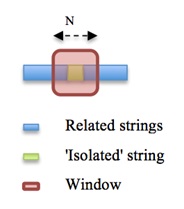
As in every decision process, the first step is to filter input based on selected features. In this case we want to discover ‘isolated’ strings. By ‘isolated’ I’m referring to ‘out-of-context’ elements that do not seem related to other elements.
An effective algorithm known as the ‘Levenshtein distance’ is frequently used to measure string similarity:
To apply this algorithm we create a window of n bytes that scans for ‘isolated’ strings. Inside that window, each string is checked against its ‘neighbors’ based on several metrics including, but not limited to, the Levenshtein distance.
However, this approach poses some problems. After removing blocks of ‘related strings,’ some potentially isolated strings are false positive results. For example, an ‘isolated’ string may be related to a distant ‘neighbor.’
We therefore need to identify additional blocks of ‘related strings’ (especially those belonging to symbol tables) formed between distant blocks that later become adjacent.
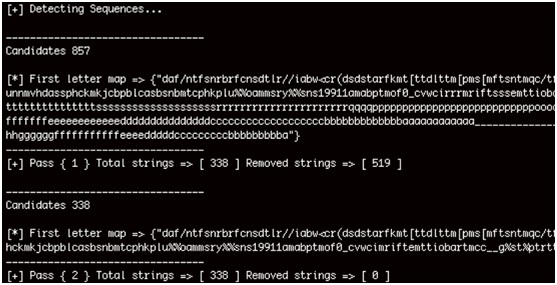
To address this issue we build a ‘first-letter’ map and run this until we can no longer remove additional strings.
At this point we should have a number of strings that are not related. However, how can we decide whether the string is a password? I assume developers use secure passwords, so we have to find strings that do not look like natural words.
We can consider each string as a first-order Markov source. To do this, use the following formula to calculate its entropy rate:
We need a large dictionary of English (or any other language) words to build a transition matrix. We also need a black list to eliminate common patterns.
We also want to avoid the false positives produced by symbols. To do this we detect symbols heuristically and ‘normalize’ them by summing the entropy for each of its tokens rather than the symbol as a whole.
These features help us distinguish strings that look like natural language words or something more interesting … such as undocumented passwords.
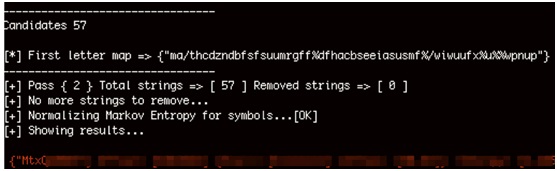
The following image shows a Stringfighter analysis of the TURCK BL20 firmware. The first string in red is highlighted because the tool detected that it is interesting.
In this case it was an undocumented password, which we eventually confirmed by analyzing the firmware.
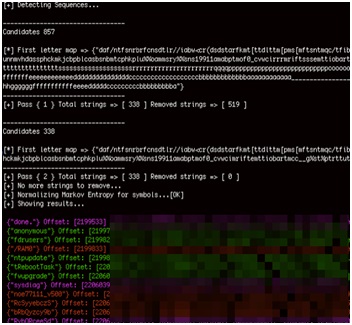
The following image shows a Stringfighter analysis of the Schneider NOE 771 firmware. It revealed several backdoor passwords (VxWorks hashes). Some of these backdoor passwords appear in red.

Stringfighter is still a proof-of-concept prototype. We are still testing the ideas behind this tool. But it has exceeded our initial expectations and has detected backdoors in several devices. The TURCK backdoor identified in the CERT advisory will not be the last one identified by IOActive Labs. See you in the next advisory!
INSIGHTS | April 30, 2013

Fact or Fiction: Is Huawei a Risk to Critical Infrastructure?

How much of a risk does a company like Huawei or ZTE pose to U.S. national security? It’s a question that’s been on many peoples lips for a good year now. Last year the U.S. House of Representatives Permanent Select Committee on Intelligence warned American companies to “use another vendor”, and earlier in that year the French senator and former defense secretary Jean-Marie Bockel recommended a “total prohibition in Europe of core routers and other sensitive IT equipment coming from China.” In parallel discussions, the United Kingdom, Australia and New Zealand (to name a few) have restricted how Huawei operates within their borders.
Last week Eric Xu – executive vice-president and one of the triumvirate jointly running Huawei – stunned analysts when he told them that Huawei was “not interested in the U.S. market any more.”
Much of the analysis has previously focused upon Huawei’s sizable and influential position as the world’s second largest manufacturer of network routers and switching technology – a critical ingredient for making the Internet and modern telecommunications work – and the fact that it is unclear as to how much influence (or penetration) the Chinese government has in the company and its products. The fear is that at any point now or in the future, Chinese military leaders could intercept or disrupt critical telecommunications infrastructure – either as a means of aggressive statecraft or as a component of cyber warfare.
As someone who’s spent many years working with the majority of the world’s largest telecommunication companies, ISP’s, and cable providers, I’ve been able to observe firsthand the pressure being placed upon these critical infrastructure organizations to seek alternative vendors and/or replace any existing Huawei equipment they may already have deployed. In response, many of the senior technical management and engineers at these organizations have reached out to me and to IOActive to find out how true these rumors are. I use the term “rumor” because, while reports have been published by various government agencies, they’re woefully lacking in technical details. You may have also seen François Quentin (chairman of the board of Huawei France) claiming that the company is a victim of “rumors”.
In the public technical arena, there are relatively few bugs and vulnerabilities being disclosed in Huawei equipment. For example, if you search for CVE indexed vulnerabilities you’ll uncover very few. Compared to the likes of Cisco, Juniper, Nokia, and most of the other major players in routing and switching technology, the number of public disclosures is miniscule. But this is likely due to a few of the following reasons:
  • The important Huawei equipment isn’t generally the kind of stuff that security researchers can purchase off Ebay and poke around with at home for a few hours in a quest to uncover new bugs. They’re generally big-ticket items. (This is the same reason why you’ll see very few bugs publicly disclosed in Cisco’s or Nokia’s big ISP-level routers and switches).
  • Up until recently, despite Huawei being such a big player internationally, they haven’t been perceived as such to the English-speaking security researcher community – so have traditionally garnered little interest from bug hunters.
  • Most of the time when bugs are found and exploitable vulnerabilities are discovered, they occur during a paid-for penetration test or security assessment, and therefore those findings belong to the organization that commissioned the consulting work – and are unlikely to be publicly disclosed.
  • Remotely exploitable vulnerabilities that are found in Huawei equipment by independent security researchers are extremely valuable to various (international) government agencies. Any vulnerability that could allow someone to penetrate or eavesdrop at an international telecommunications carrier-level is worth big bucks and will be quickly gobbled up. And of course any vulnerability sold to such a government agency most certainly isn’t going to be disclosed to the vulnerable vendor – whether that be Huawei, Cisco, Juniper, Nokia, or whatever.


What does IOActive know of bugs and exploitable vulnerabilities within Huawei’s range of equipment? Quite a bit obviously – since we’ve been working to secure many of the telecommunications companies around the world that have Huawei’s top-end equipment deployed. It’s obviously not for me to disclose vulnerabilities that were uncovered on the dime of an IOActive client, however many of the vulnerabilities we’ve uncovered during tests have given great pause to our clients as remedies are sought.
Interesting enough, the majority of those vulnerabilities were encountered using standard network discovery techniques – which to my mind is just scratching the surface of things. However, based upon what’s been disclosed in these afore mentioned government reports over the last year, that was probably their level of scrutinization too. Digging deeper in to the systems reveals more interesting security woes.
Given IOActive’s expertise history and proven capability of hardware hacking, I’m certain that we’d be able to uncover a whole host of different and more significant security weaknesses in these critical infrastructure components for clients that needed that level of work done. To date IOActive the focus has be on in-situ analysis – typically assessing the security and integrity of core infrastructure components within live telco environments.
I’ve heard several senior folks talk of their fears that even with full access to the source code that that wouldn’t be enough to verify the integrity of Chinese network infrastructure devices. For a skillful opponent, that is probably so, because they could simply hide the backdoors and secret keys in the microcode of the devices semiconductor chips.
Unfortunately for organizations that think they can hide such critical flaws or backdoors at the silicon layer, I’ve got a surprise for you. IOActive already has the capability strip away the layers of logic within even the most advanced and secure microprocessor technologies out there and recover the code and secrets that have been embedded within the silicon itself.
So, I’d offer a challenge out there to the various critical infrastructure providers, government agencies, and to manufacturers such as Huawei themselves – let IOActive sort out the facts from the multitude of rumors. Everything you’ve probably been reading is hearsay.
Who else but IOActive can assess the security and integrity of a technology down through the layers – from the application, to the drivers, to the OS, to the firmware, to the hardware and finally down to the silicon of the microprocessors themselves? Exciting times!
— Gunter Ollmann, CTO IOActive Inc.
INSIGHTS | April 2, 2013

Spotting Fake Chips in the Supply Chain

In the information security world we tend to focus upon vulnerabilities that affect the application and network architecture layers of the enterprise and, every so often, some notable physical devices. Through various interrogatory methods we can typically uncover any vulnerabilities that may be present and, through discussion with the affected business units, derive a relative statement of risk to the business as a whole.


An area of business rarely dissected from an information security perspective however is the supply chain. For manufacturing companies and industrial suppliers, nothing is more critical to their continued business success than maintaining the integrity and reliability of their supply chain. For some industries – such as computer assembly or truck fabrication facilities – even the smallest hiccup in their just-in-time ordering system can result in entire assembly lines being gummed up and product not being rolled out the front door.


The traditional approach to identifying vulnerabilities within the supply chain is largely through a paper-based audit process – sometimes top-and-tailed with a security assessment of PC-based assessments. Rarely (if ever) are the manufacturing machines and associated industrial control systems included in physical assessments or penetration tests for fear of disrupting the just-in-time manufacturing line.


Outside the scope of information security assessment, and often beyond the capabilities of automated quality assurance practices within an organizations assembly line, lies the frailty of being victim to failure of a third-party supplier’s tainted supply chain.


For example, let’s look at a common microprocessor ordered through a tainted supply chain.


Dissecting a ST19XT34 Microprocessor


In early 2012 samples of the ST ST19XT34 were ordered from https://us.hkinventory.com/.  The ST19XT34 is a secure microprocessor designed for very large volume and cost-effective secure portable applications (such as smartcards used within Chip&PIN technologies). The ST19X platform includes an internal Modular Arithmetic Processor (MAP) and DES accelerator – designed to speed up cryptographic calculations using Public Key Algorithms and Secret Key Algorithms.


The ST19XT34 chips that IOActive were charged to investigate were encapsulated within a standard SOIC package and were supposed to have 34kb of EEPROM.


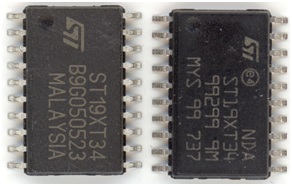
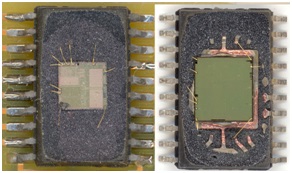
Upon visual analysis the devices appeared to be correct.  However, after decapsulation, it was clear that the parts provided were not what had been ordered.


In the above image we have a ‘fake’ ST19XT34 on the left with a sample of the genuine chip on the right.  It is almost impossible to tell the left device was altered unless you have a known original part.


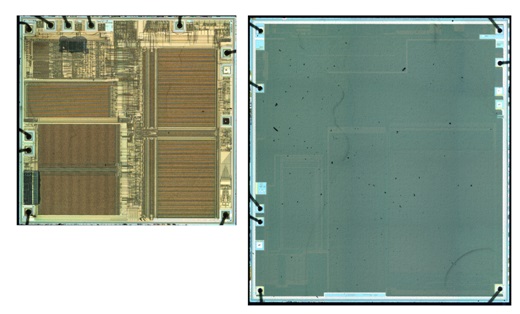
After decapsulation of the various parts it was easy to immediately recognize the difference between the two SOIC part.  The left ‘fake’ device was actually an ST ST19AF08 with the right being the genuine ST19XT34.


The ST19AF08 is a 600 nanometer 3 metal device (on left).  It contains an 8 KB EEPROM.


The ST19XT34 is a 350 nanometer 3 metal device (on right).  It contains a 34 KB EEPROM making the die much larger than the older and smaller sized device.


Microprocessor Supply Chain Frailty


As the example above clearly shows, it is often very difficult to identify a tainted supply chain. While an x-ray in the above case could also have verified the integrity of the supplier if it had been part of the quality assurance process, it would not have detected more subtle modifications to the supplied microprocessors.


If it is so easy to taint the supply chain and introduce fraudulently marked microprocessors, how hard is it to insert less obvious – more insidious – changes to the chips? For example, what if a batch of ST19XT34 chips had been modified to weaken the DES/triple-DES capabilities of the chip, or perhaps the random number generator was rigged with a more predictable pseudo random algorithm – such that an organized crime unit or government entity could trivially decode communications or replay transactions?


The frailty of today’s supply chain is a genuine concern for many. The capability of organized crime and foreign government entities to include backdoors, add malicious code, or subvert “secure” routines within fake or counterfeit microprocessors is not a science fiction story, but something that can occur today. The ability to inject these modified chips in to the supply chain of any global manufacturer of goods is, quite frankly, trivial.


The cost of entry for organized criminals and government entities to undertake this kind of manipulation of the supply chain is high, but well within their financial capabilities – and, more importantly, they could reap great rewards from their investment. 


Identifying a tainted supply chain is not a simple task. It requires specialized equipment capable of dissecting microprocessors at the nanometer scale, fiddly extraction of microcode, and skilled security analysts to sift through the code looking for backdoors and deliberate weaknesses in the algorithms. 


It’s an expensive and time consuming proposition – but fast becoming  a critical component when it comes to assuring that today’s smartphones, Chip&PIN technologies and critical infrastructure control systems aren’t subject to organized subversion.