INSIGHTS | January 30, 2013

Energy Security: Less Say, More Do

Due to recent attacks on many forms of energy management technology ranging from supervisory control and data acquisition (SCADA) networks and automation hardware devices to smart meters and grid network management systems, companies in the energy industry are increasing significantly the amount they spend on security. However, I believe these organizations are still spending money in the wrong areas of security.  Why? The illusion of security, driven by over-engineered and over-funded policy and control frameworks and the mindset that energy security must be regulated before making a start is preventing, not driving, real world progress.

Sadly, I don’t see organizations in the oil and gas exploration, utility, and consumer energy management sectors taking more visible and proactive approaches to improving the security of their assets in 2013 any more than they did in 2012.
It’s only January, you protest. But let me ask you: on what areas are your security teams going to focus in 2013?
I’ve had the privilege in the past six months of travelling to Asia, the Middle East, Europe and the U.S. to deliver projects and have seen a number of consistent shortcomings in security programs in almost every energy-related organization that I have dealt with. Specialized security teams within IT departments are commonplace now, which is great. But these teams have been in place for some time. And even though as an industry we spend millions on security products every year, the number of security incidents is also increasing every year.  I’m sure this trend will continue in 2013. It is clear to me (and this is a global issue in energy security), that the great majority of organizations do not know where or how to correctly spend their security budgets.
Information security teams focus heavily on compliance, policies, controls, and the paper perception of what good security looks like when in fact there is little or no evidence that this is the case. Energy organizations do very little testing to validate the effectiveness of their security controls, which leaves these companies exposed to attacks and wondering what they are doing wrong.


For example, automated malware has been mentioned many times in the press and is a persistent threat, but companies are living under the misapprehension that having endpoint solutions alone will protect them from this threat. Network architectures are still being poorly designed and communication channels are still operating in the clear, leaving critical infrastructure solutions exposed and vulnerable.
I do not mean to detract from technology vendors who are working hard to keep up with all the new malware challenges, and let’s face it, we would we would be lost without many of their solutions. But organizations that are purchasing these products need to “trust but verify” these products and solutions by requiring vendors and solution integrators to prove that the security solutions they are selling are in fact secure. The energy industry as a whole needs to focus on proving the existence of controls and to not rely on documents and designs that say how a system should be secure. Policies may make you look good, but how many people read them? And, if they did read them, would they follow them? How would you know? And could you place your hand on heart and swear to the CEO, “I’m confident that our critical systems and data cannot be compromised.”?


I say, “Less say, more do in 2013.” Energy companies globally need to stop waiting for regulations or for incidents to happen and must do more to secure their systems and supply. We know we have a problem in the industry and it won’t go away while we wait for more documents that define how we should improve our security defenses. Make a start. The concepts aren’t new, and it’s better to invest money and effort in improved systems rather than churning out more polices and paper controls and hoping they make you more secure. And it is hope, because without evidence how can you really be sure the controls you design and plan are in place and effective?


Start by making improvements in the following areas and your overall security posture will also improve (a lot of this is old news, but sadly is not being done):


Recognize that compliance doesn’t guarantee security. You must validate it.
·         Use ISA99 for SCADA and ISO27001/2/5 for security risk management and controls.
·         Use compliance to drive budget conversations.
·         Don’t get lost in a policy framework. Instead focus on implementing, then validating.
·         Always validate paper security by testing internal and external controls!
Understand what you have and who might want to attack it.
·         Define critical assets and processes.
·         Create a list of who could affect these assets and how.
·         Create a layered security architecture to protect these assets.
·         Do this work in stages. Create value to the business incrementally.
·         Test the effectiveness of your plans!
Do the basics internally, including:
·         Authentication for logins and machine-to-machine communications.
·         Access control to ensure that permissions for new hires, job changers, and departing employees are managed appropriately.
·         Auditing to log significant events for critical systems.
·         Availability by ensuring redundancy and that the organization can recover from unplanned incidents.
·         Integrity by validating critical values and ensuring that accuracy is always upheld.
·         Confidentiality by securing or encrypting sensitive communications.
·         Education to make staff aware of good security behaviors. Take a Health & Safety approach.
Trust but verify when working with your suppliers:
·         Ask vendors to validate their security, not just tell you “it’s secure.”
·         Ask suppliers what their security posture is. Do they align to any security standards? When was the last time they performed a penetration test on client-related systems? Do they use a Security Development Lifecycle for their products?
·         Test their controls or ask them to provide evidence that they do this themselves!
Work with agencies who are there to assist you and make them part of your response strategy, such as:
·         Computer Emergency Readiness Team (CERT)
·         Centre for the Protection of National Infrastructure (CPNI)
·         North American Electric Reliability Corporation (NERC)
Trevor Niblock, Director, ICS and Smart Grid Services
INSIGHTS | January 7, 2013

The Demise of Desktop Antivirus

Are you old enough to remember the demise of the ubiquitous CompuServe and AOL CD’s that used to be attached to every computer magazine you ever brought between the mid-80’s and mid-90’s? If you missed that annoying period of Internet history, maybe you’ll be able to watch the death of desktop antivirus instead.

65,000 AOL CD’s as art

Just as dial-up subscription portals and proprietary “web browsers” represent a yester-year view of the Internet, desktop antivirus is similarly being confined to the annuls of Internet history. It may still be flapping vigorously like a freshly landed fish, but we all know how those last gasps end.

To be perfectly honest, it’s amazing that desktop antivirus has lasted this long. To be fair though, the product you may have installed on your computer (desktop or laptop) bears little resemblance to the antivirus products of just 3 years ago. Most vendors have even done away from using the “antivirus” term – instead they’ve tried renaming them as “protection suites” and “prevention technology” and throwing in a bunch of additional threat detection engines for good measure.

I have a vision of a hunchbacked Igor working behind the scenes stitching on some new appendage or bolting on an iron plate for reinforcement to the Frankenstein corpse of each antivirus product as he tries to keep it alive for just a little bit longer…

That’s not to say that a lot of effort doesn’t go in to maintaining an antivirus product. However, with the millions upon millions of new threats each month it’s hardly surprising that the technology (and approach) falls further and further behind. Despite that, the researchers and engineers that maintain these products try their best to keep the technology as relevant as possible… and certainly don’t like it when anyone points out the gap between the threat and the capability of desktop antivirus to deal with it.

For example, the New York Times ran a piece on the last day of 2012 titled “Outmaneuvered at Their Own Game, Antivirus Makers Struggle to Adapt” that managed to get many of the antivirus vendors riled up – interestingly enough not because of the claims of the antivirus industry falling behind, but because some of the statistics came from unfair and unscientific tests. In particular there was great annoyance that a security vendor (representing an alternative technology) used VirusTotal coverage as their basis for whether or not new malware could be detected – claiming that initial detection was only 5%.

I’ve discussed the topic of declining desktop antivirus detection rates (and evasion) many, many times in the past. From my own experience, within corporate/enterprise networks, desktop antivirus detection typically hovers at 1-2% for the threats that make it through the various network defenses. For newly minted malware that is designed to target corporate victims, the rate is pretty much 0% and can remain that way for hundreds of days after the malware has been released in to the wild.

You’ll note that I typically differentiate between desktop and network antivirus. The reason for this is because I’m a firm advocate that the battle is already over if the malware makes it down to the host. If you’re going to do anything on the malware prevention side of things, then you need to do it before it gets to the desktop – ideally filtering the threat at the network level, but gateway prevention (e.g. at the mail gateway or proxy server) will be good enough for the bulk of non-targeted Internet threats. Antivirus operations at the desktop are best confined to cleanup, and even then I wouldn’t trust any of the products to be particularly good at that… all too often reimaging of the computer isn’t even enough in the face of malware threats such as TDL.

So, does an antivirus product still have what it takes to earn the real estate it take up on your computer? As a standalone security technology – No, I don’t believe so. If it’s free, never ever bothers me with popups, and I never need to know it’s there, then it’s not worth the effort uninstalling it and I guess it can stay… other than that, I’m inclined to look at other technologies that operate at the network layer or within the cloud; stop what you can before it gets to the desktop. Many of the bloated “improvements” to desktop antivirus products over recent years seem to be analogous to improving the hearing of a soldier so he can more clearly hear the ‘click’ of the mine he’s just stood on as it arms itself.

I’m all in favor of retraining any hunchbacked Igor we may come across. Perhaps he can make artwork out of discarded antivirus DVDs – just as kids did in the 1990’s with AOL CD’s?

— Gunter Ollmann, CTO — IOActive, Inc.
INSIGHTS | December 20, 2012

Exploits, Curdled Milk and Nukes (Oh my!)

Throughout the second half of 2012 many security folks have been asking “how much is a zero-day vulnerability worth?” and it’s often been hard to believe the numbers that have been (and continue to be) thrown around. For the sake of clarity though, I do believe that it’s the wrong question… the correct question should be “how much do people pay for working exploits against zero-day vulnerabilities?”

The answer in the majority of cases tends to be “it depends on who’s buying and what the vulnerability is” regardless of the questions particular phrasing.

On the topic of exploit development, last month I wrote an article for DarkReading covering the business of commercial exploit development, and in that article you’ll probably note that I didn’t discuss the prices of what the exploits are retailing for. That’s because of my elusive answer above… I know of some researchers with their own private repository of zero-day remote exploits for popular operating systems seeking $250,000 per exploit, and I’ve overheard hushed bar conversations that certain US government agencies will beat any foreign bid by four-times the value.

But that’s only the thin-edge of the wedge. The bulk of zero-day (or nearly zero-day) exploit purchases are for popular consumer-level applications – many of which are region-specific. For example, a reliable exploit against Tencent QQ (the most popular instant messenger program in China) may be more valuable than an exploit in Windows 8 to certain US, Taiwanese, Japanese, etc. clandestine government agencies.

More recently some of the conversations about exploit sales and purchases by government agencies have focused in upon the cyberwar angle – in particular, that some governments are trying to build a “cyber weapon” cache and that unlike kinetic weapons these could expire at any time, and that it’s all a waste of effort and resources.

I must admit, up until a month ago I was leaning a little towards that same opinion. My perspective was that it’s a lot of money to be spending for something that’ll most likely be sitting on the shelf that will expire in to uselessness before it could be used. And then I happened to visit the National Museum of Nuclear Science & History on a business trip to Albuquerque.

Museum: Polaris Missile


Museum: Minuteman missile part?

For those of you that have never heard of the place, it’s a museum that plots out the history of the nuclear age and the evolution of nuclear weapon technology (and I encourage you to visit!).

Anyhow, as I literally strolled from one (decommissioned) nuclear missile to another – each laying on its side rusting and corroding away, having never been used, it finally hit me – governments have been doing the same thing for the longest time, and cyber weapons really are no different!

Perhaps it’s the physical realization of “it’s better to have it and not need it, than to need it and not have it”, but as you trace the billions (if not trillions) of dollars that have been spent by the US government over the years developing each new nuclear weapon delivery platform, deploying it, manning it, eventually decommissioning it, and replacing it with a new and more efficient system… well, it makes sense and (frankly) it’s laughable how little money is actually being spent in the cyber-attack realm.

So what if those zero-day exploits purchased for measly 6-figured wads of cash curdle like last month’s milk? That price wouldn’t even cover the cost of painting the inside of a decommissioned missile silo.

No, the reality of the situation is that governments are getting a bargain when it comes to constructing and filling their cyber weapon caches. And, more to the point, the expiry of those zero-day exploits is a well understood aspect of managing an arsenal – conventional or otherwise.

— Gunter Ollmann, CTO – IOActive, Inc.

INSIGHTS | November 21, 2012

The Future of Automated Malware Generation

This year I gave a series of presentations on “The Future of Automated Malware Generation”. This past week the presentation finished its final debut in Tokyo on the 10th anniversary of PacSec.

Hopefully you were able to attend one of the following conferences where it was presented:

  • IOAsis (Las Vegas, USA)
  • SOURCE (Seattle, USA)
  • EkoParty (Buenos Aires, Argentina)
  • PacSec (Tokyo, Japan)

Motivation / Intro

Much of this presentation was inspired by a number of key motivations:
  1. Greg Hoglund’s talk at Blackhat 2010 on malware attribution and fingerprinting
  2. The undeniable steady year by year increase in malware, exploits and exploit kits
  3. My unfinished attempt in adding automatic classification to the cuckoo sandbox
  4. An attempt to clear up the perception by many consumers and corporations that many security products are resistant to simple evasion techniques and contain some “secret sauce” that sets them apart from their competition
  5. The desire to educate consumers and corporations on past, present and future defense and offense techniques
  6. Lastly to help reemphasize the philosophy that when building or deploying defensive technology it’s wise to think offensively…and basically try to break what you build
Since the point of the talk is the future of automated malware generation, I’ll start with explaining the current state of automated malware generation, and then I’ll move to reviewing current defenses found in most products today.
Given enough time, resources and skill-set, every defense technique can be defeated, to prove this to you I’ll share some of the associated offensive techniques. I will then discuss new defense technologies that you’ll start to hear more about and then, as has been the cycle in any war, to each defense will come a new offensive technique. So I will then discuss the future of automated malware generation. This is a long blog, but I hope you find it interesting!

Current State of Automated Malware Generation

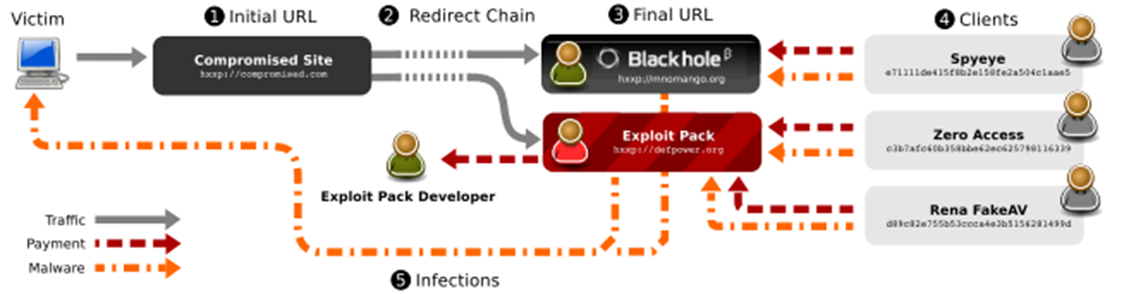
Automated Malware Generation centers on Malware Distribution Networks (MDNs).

MDNs are organized, distributed networks that are responsible for the entire exploit and infection vector.

There are several players involved:

  • Pay-per-install client – organizations that write malware and gain a profit from having it installed on as many machines as possible
  • Pay-per-install services – organizations that get paid to exploit and infect user machines and in many cases use pay-per-install affiliates to accomplish this
  • Pay-per-install affiliates – organizations that own a lot of  infrastructure and processes necessary to compromise web legitimate pages, redirect users through traffic direction services (TDSs), infect users with exploits (in some cases exploit kits) and finally, if successful, download malware from a malware repository.
Figure: Blackhole exploit kit download chain
Source: Manufacturing Compromise: The Emergence of Exploit-as-a-Service 
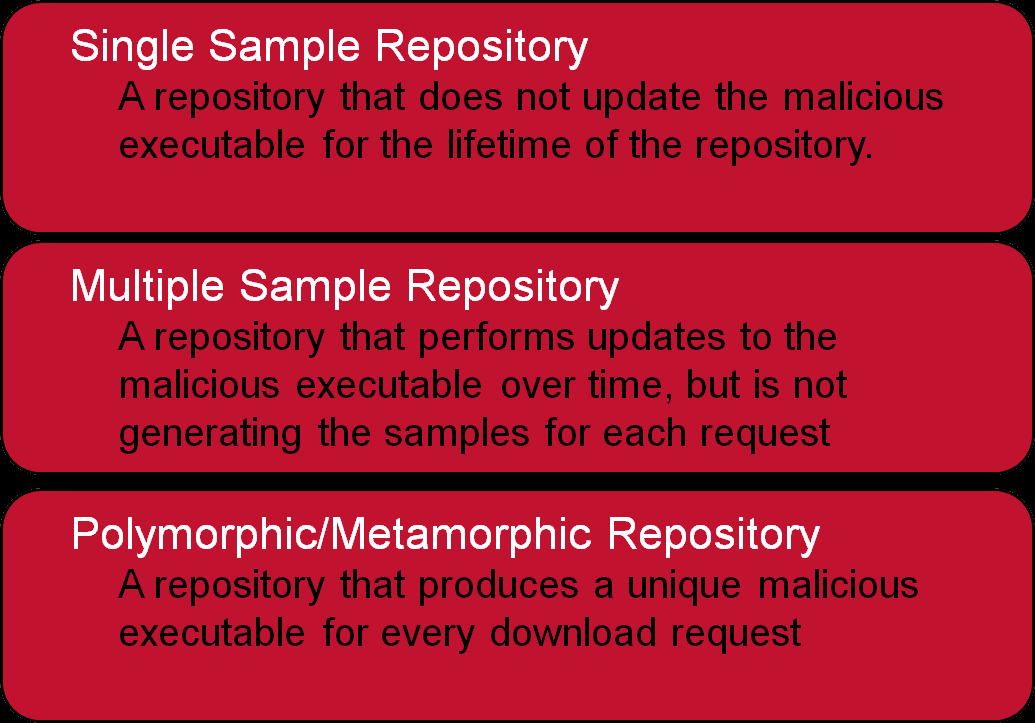
There are a number of different types of malware repositories, some that contain the same binary for the life-time of a particular attack campaign, some that periodically update or repackage the binary to avoid and evade simple detection techniques, and polymorphic/metamorphic repositories that produce a unique sample for each user request. More complex attacks generally involve the latter.


Figure: Basic Break-down of Malware Repository Types

Current State of Malware Defense

Most Security desktop and network products on the market today use the following techniques to detect malware:
  • hashes – cryptographic checksums of either the entire malware file or sections of the file, in some cases these could include black-listing and white-listing
  • signatures – syntactical pattern matching using conditional expressions (in some cases format-aware/contextual)
  • heuristics – An expression of characteristics and actions using emulation, API hooking, sand-boxing, file anomalies and/or other analysis techniques
  • semantics – transformation of specific syntax into a single abstract / intermediate representation to match from using more abstract signatures and heuristics

EVERY defense technique can be broken – with enough time, skill and resources.

In the above defensive techniques:

  • hash-based detection can be broken by changing the binary by a single byte
  • signature-based detection be broken using syntax mutation
    e.g.

    • Garbage Code Insertion e.g. NOP, “MOV ax, ax”, “SUB ax 0”
    • Register Renaming e.g. using EAX instead of EBX (as long as EBX isn’t already being used)
    • Subroutine Permutation – e.g. changing the order in which subroutines or functions are called as long as this doesn’t effect the overall behavior
    • Code Reordering through Jumps e.g. inserting test instructions and conditional and unconditional branching instructions in order to change the control flow
    • Equivalent instruction substitution e.g. MOV EAX, EBX <-> PUSH EBX, POP EAX
  • heuristics-based detection can be broken by avoiding the characteristics the heuristics engine is using or using uncommon instructions that the heuristics engine might be unable to understand in it’s emulator (if an emulator is being used)
  • semantics-based detection can be broken by using techniques such as time-lock puzzle (semantics-based detection are unlikely to be used at a higher level such as network defenses due to performance issues) also because implementation requires extensive scope there is a high likelihood that not all cases have been covered. Semantic-based detection is extremely difficult to get right given the performance requirements of a security product.

There are a number of other examples where defense techniques were easily defeated by proper targeted research (generally speaking). Here is a recent post by Trail of Bits only a few weeks ago [Trail of Bits Blog] in their analysis of ExploitSheild’s exploitation prevention technology. In my opinion the response from Zero Vulnerability Labs was appropriate (no longer available), but it does show that a defense technique can be broken by an attacker if that technology is studied and understood (which isn’t that complicated to figure out).

Malware Trends

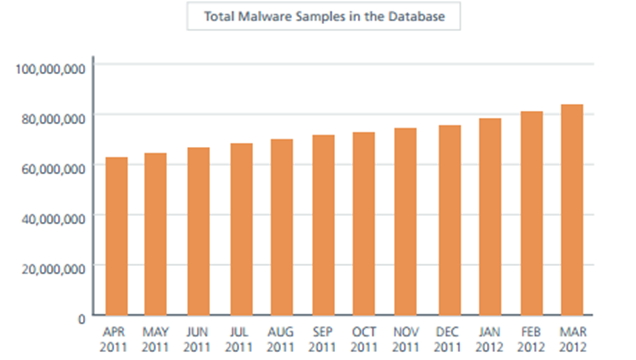
Check any number of reports and you can see the rise in malware is going up (keep in mind these are vendor reports and have a stake in the results, but being that there really is no other source for the information we’ll use them as the accepted experts on the subject) [Symantec] [Trend] McAfee [IBM X-Force] [Microsoft] [RSA]

Source: Mcafee Global Q12012 Threat Report
The increase in malware samples has also been said of mobile malware [F-Secure Mobile Threat Report].
Since the rise of malware can’t be matched by continually hiring another analyst to analyze malware (this process has its limitations) security companies deploy high-interaction and low-interaction sandboxes. These sandboxes run the malware, analyze its behavior and attempt to trigger various heuristics that will auto-classify the malware by hash. If it’s not able to auto-classify then typically the malware is added to a suspicious bucket for a malware analyst to manually review…thus malware analysts are bottle necks in the process of preemptive malware classification.
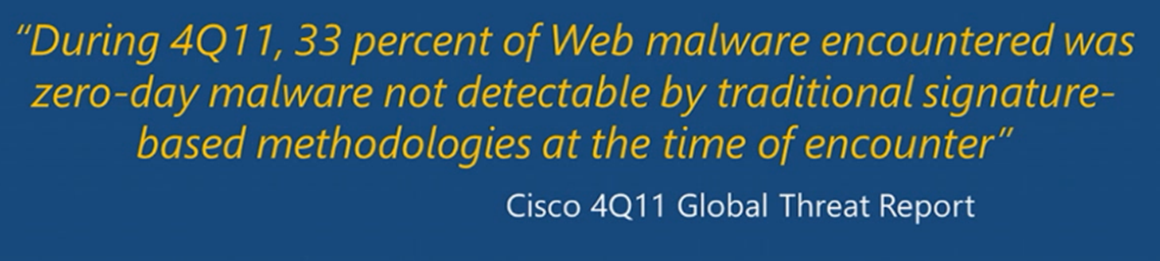
In addition, a report from Cisco last year found that 33% of Web malware encountered was zero-day malware not detectable by traditional signature-based methodologies at the time of encounter [Cisco 2011 4Q Global Threat Report]
33%!! — Obviously means there is work to be done on the detection/defense side of the fence.

So how can the security industry use automatic classification? Well, in the last few years a data-driven approach has been the obvious step in the process.

The Future of Malware Defense

With the increase in more malware, exploits, exploit kits, campaign-based attacks, targeted attacks, the reliance on automation will heave to be the future. The overall goal of malware defense has been to a larger degree classification and to a smaller degree clustering and attribution.

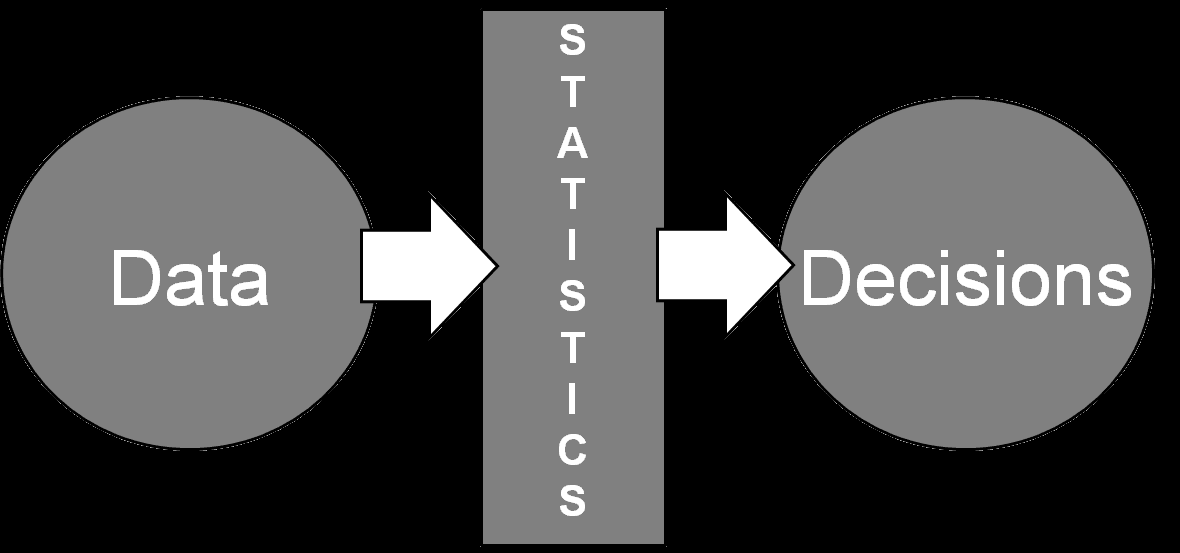
Thus statistics and data-driven decisions have been an obvious direction that many of the security companies have started to introduce, either by heavily relying on this process or as a supplemental layer to existing defensive technologies to help in predictive pattern-based analysis and classification.

Where statistics is a discipline that makes you understand data and forces decisions based on data, machine learning is where we train computers to make statistical decisions on real-time data based on inputted data.
While machine learning as a concept has been around for decades, it’s only more recently that it’s being used in web filtering, data-leakage prevention (DLP), and malware content analysis.

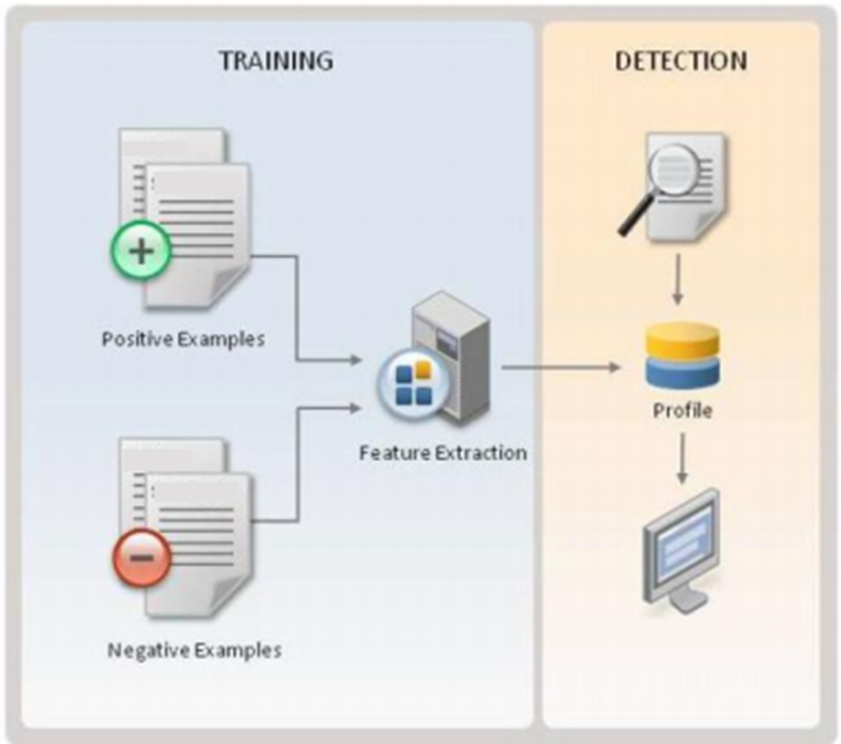
Training machine learning classifiers involves breaking down whatever content you want to analyze e.g. a network stream or an executable file into “features” (basically characteristics).

For example historically certain malware has:

  • No icon
  • No description or company in resource section
  • Is packed
  • Lives in windows directory or user profile

Each of the above qualities/characteristics can be considered “features”. Once the defensive technology creates a list of features, it then builds a parser capable of breaking down the content to find those features. e.g. if the content is a PE WIN32 executable, a PE parser will be necessary. The features would include anything you can think of that is characteristic of a PE file.

The process then involves training a classifier on a positive (malicious) and negative (benign) sample set. Once the classifier is trained it can be used to determine if a future unknown sample is benign or malicious and classify it accordingly.

Let me give you a more detailed example: If you’ve ever played around with malicious PDFs you know there are differences between the structure of a benign PDF and a malicious PDF.
Here are some noteworthy characteristics in the structure of a PDF (FireEye Blog/Presentation – Julia Wolf):
  • Compressed JavaScript
  • PDF header location  e.g %PDF  – within first 1024 bytes
  • Does it contain an embedded file (e.g. flash, sound file)
  • Signed by a trusted certificate
  • Encoded/Encrypted Streams e.g. FlatDecode is used quite a lot in malicious PDFs
  • Names hex escaped
  • Bogus xref table
All the above are features that can be used to feed the classifier during training against benign and malicious sample sets (check out “Scoring PDF structure to detect malicious file” from my friend Rodrigo Montoro (YouTube)

There are two open-source projects that I want to mention using machine learning to determine if a file is malicious:

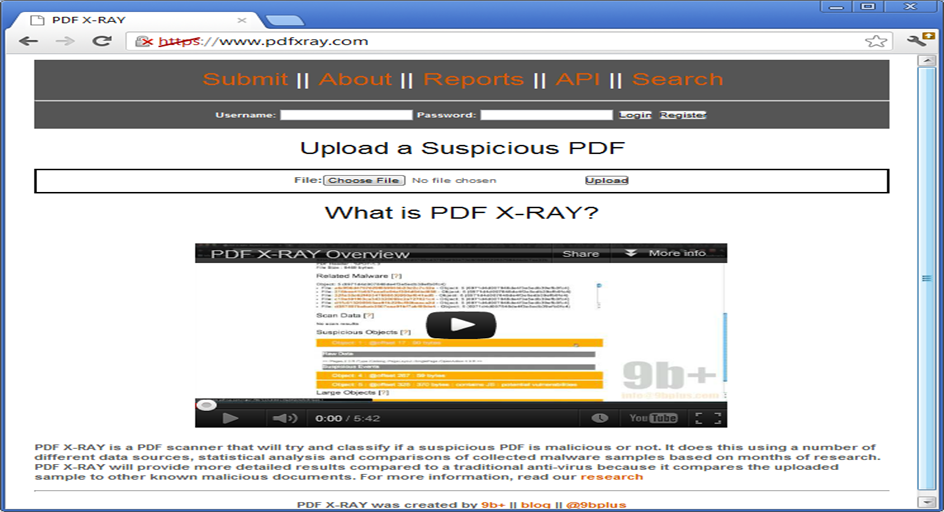
PDF-XRay from Brandon Dixon:

An explanation of how it works from the pdf-xray site is as follows:

Adobe Open Source Malware Classification Tool by Karthik Raman/Adobe

Details (from website): Perform quick, easy classification of binaries for malware analysis.
Published results: 98.21% accuracy, 6.7% false positive rate
7 features = DebugSize, ImageVersion, IatRVA, ExportSize, ResourceSize, VirtualSize2, NumberOfSections
Personal remarks: This tool is a great proof of concept, but my results weren’t as successful as Karthik’s  results which I’m told were only on binaries that were not packed, my sample set included packed, unpacked, and files that had never been packed.


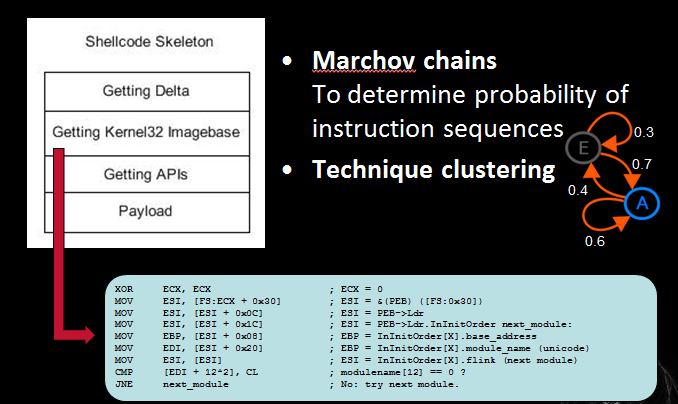
Shifting away from analysis of files, we can also attempt to classify shellcode on the wire from normal traffic. Using marchov chains which is a discipline of Artificial Intelligence, but in the realm of natural language processing, we can determine and analyze a network stream of instructions to see if the sequence of instructions are likely to be exploit code.

The below example is attempting to show that most exploit code (shellcode) follows a basic skeleton, be it a decoder loop, decoding a payload and then jumping to that payload or finding the delta, getting the kernel32 imagebase, resolving the addresses for GetProcAddress and LoadLibraryA, calling various functions and finally executing the rest of your payload.
There are a finite set of published methods to do this, and if you can use semantics, you can further limit the possible sequences and determine if the network stream are instructions and further if those instructions are shellcode.

The Future of Automated Malware Generation

In many cases the path of attack and defense techniques follows the same story of cat and mouse. Just like Tom and Jerry, the chase continues forever, in the context of security, new technology is introduced, new attacks then emerge and in response new countermeasures are brought in to the detection of those attacks…an attacker’s game can come to an end IF they makes a mistake, but whereas cyber-criminal organizations can claim a binary 0 or 1 success or failure, defense can never really claim a victory over all it’s attackers. It’s a “game” that must always continue.

That being said you’ll hear more and more products and security technologies talk about machine learning like it’s this unbeatable new move in the game….granted you’ll hear it mostly from savvy marketing, product managers or sales folks. In reality it’s another useful layer to slow down an attacker trying to get to their end goal, but it’s by no means invincible.

Use of machine learning  can be taken circumvented by an attacker in several possible ways:

  • Likelihood of false positives / false negatives due to weak training corpus 
  • Circumvention of classification features
  • Inability to parse/extract features from content
  • Ability to poison training corpus
Let’s break down each of those points, because if the next stage of defense will increasingly include machine learning, then attackers will be attempting to include various evasion techniques to avoid this new detection technique.
Likelihood of false positives / false negatives due to weak training corpus
If the defense side creates models based on a small sample set or a sample set that doesn’t represent a diverse enough sample set than the model will be too restrictive and thus have false negatives. If a product has too many false-positives, users won’t trust it, and if given the choice ignore the results. Products that typically have too many false positives will be discontinued. Attackers can benefit from a weak training corpus by using less popular techniques/vulnerabilities that most likely haven’t been used in training and won’t be caught by the classifier.
If the defense creates models based only on malicious files and not enough benign files then there will be tons of false positives. Thus, if the attacker models their files to look more representative of good files, there will be a higher likelihood that the acceptable threshold to mitigate false positives will allow the malicious file through.
Circumvention of classification features
At the start of this blog I mentioned that I’m currently attempting to add automatic classification to the cuckoo sandbox, which is an open source behavioral analysis framework. If I were to add such code, it would be open source and any techniques including features would be exposed. Thus, all an attacker would have to do is read my source code, and avoid the features; this is also true for any product that an attacker can buy or demo. They could either read the source code or reverse engineer the product and see which features are being used and attempt to trick the classification algorithm if the threshold/weights/characteristics can be determined.
Inability to parse/extract features from content
Classification using machine learning is 100% reliant on the fact that the features can be extracted from the content and feed to the classification algorithm, but what if the executable is a .NET binary (Japanese Remote Control Virus) and the engine can’t interpret .NET binaries, or if the  format changes, or gets updated e.g. PDF 2.0. For each of these changes, a parser must be built, updated and shipped out. Attackers have the advantage of a window of time between product updates, or again with proper research, an understanding that certain products simply can’t handle a particular format in order to extract features.
Ability to poison training corpus
Training a machine learning classifier involves training the algorithm against a known malicious set and a known benign set. If an attacker were able to poison either set, the results and final classification determination would be flawed. This can occur numerous ways. For example: the attacker releases a massive set of files onto the Internet in the off chance that a security product company will use it as its main source of samples, or they poison a number of known malware behavior frameworks such as VirusTotal or malwr, that share samples with security companies, with bogus malware. This scenario is unlikely, because most companies wouldn’t rely on one major source for all their testing, but still worth mentioning.

Conclusion

In reality, we haven’t yet seen malware that contains anti machine learning classification or anti-clustering techniques. What we have seen is more extensive use of on-the-fly symmetric-key encryption where the key isn’t hard-coded in the binary itself, but uses something unique about the target machine that is being infected. Take Zeus for example that makes use of downloading an encrypted binary once the machine has been infected where the key is unique to that machine, or Gauss who had a DLL that was encrypted with a key only found on the targeted user’s machine.

What this accomplishes is that the binary can only work the intended target machine, it’s possible that an emulator would break, but certainly sending it off to home-base or the cloud for behavioral and static analysis will fail, because it simply won’t be able to be decrypted and run.

Most defensive techniques if studied, targeted and analyzed can be evaded — all it takes is time, skill and resources. Using Machine learning to detect malicious executables, exploits and/or network traffic are no exception. At the end of the day it’s important that you at least understand that your defenses are penetrable, but that a smart layered defense is key, where every layer forces the attackers to take their time, forces them to learn new skills and slowly gives away their resources, position and possibly intent — hopefully giving you enough time to be notified of the attack and cease it before ex-filtration of data occurs. What a smart layered defense looks like is different for each network depending on where your assets are and how your network is set up, so there is no way for me to share a one-size fits all diagram, I’ll leave that to you to think about.

Useful Links:
Coursera – Machine Learning Course
CalTech – Machine Learning Course
MLPY (https://mlpy.fbk.eu/)
PyML (http://pyml.sourceforge.net/)
Milk (http://pypi.python.org/pypi/milk/)
Shogun (http://raetschlab.org/suppl/shogun) Code is in C++ but it has a python wrapper.
MDP (http://mdp-toolkit.sourceforge.net) Python library for data mining
PyBrain (http://pybrain.org/)
Orange (http://www.ailab.si/orange/) Statistical computing and data mining
PYMVPA (http://www.pymvpa.org/)
scikit-learn (http://scikit-learn.org): Numpy / Scipy / Cython implementations for major algorithms + efficient C/C++ wrappers
Monte (http://montepython.sourceforge.net) a software for gradient-based learning in Python
Rpy2 (http://rpy.sourceforge.net/): Python wrapper for R


About Stephan
Stephan Chenette has been involved in computer security professionally since the mid-90s, working on vulnerability research, reverse engineering, and development of next-generation defense and attack techniques. As a researcher he has published papers, security advisories, and tools. His past work includes the script fragmentation exploit delivery attack and work on the open source web security tool Fireshark.

Stephan is currently the Director of Security Research and Development at IOActive, Inc.
Twitter: @StephanChenette

INSIGHTS | October 30, 2012

3S Software’s CoDeSys: Insecure by Design

My last project before joining IOActive was “breaking” 3S Software’s CoDeSys PLC runtime for Digital Bond.

Before the assignment, I had a fellow security nut give me some tips on this project to get me off the ground, but unfortunately this person cannot be named. You know who you are, so thank you, mystery person.

The PLC runtime is pretty cool, from a hacker perspective. CoDeSys is an unusual ladder logic runtime for a number of reasons.


Different vendors have different strategies for executing ladder logic. Some run ladder logic on custom ASICs (or possibly interpreter/emulators) on their PLC processor, while others execute ladder logic as native code. For an introduction to reverse-engineering the interpreted code and ASIC code, check out FX’s talk on Decoding Stuxnet at C3. It really is amazing, and FX has a level of patience in disassembling code for an unknown CPU that I think is completely unique.


CoDeSys is interesting to me because it doesn’t work like the Siemens ladder logic. CoDeSys compiles your ladder logic as byte code for the processor on which the ladder logic is running. On our Wago system, it was an x86 processor, and the ladder logic was compiled x86 code. A CoDeSys ladder logic file is literally loaded into memory, and then execution of the runtime jumps into the ladder logic file. This is great because we can easily disassemble a ladder logic file, or better, build our own file that executes system calls.


I talked about this oddity at AppSec DC in April 2012. All CoDeSys installations seem to fall into three categories: the runtime is executing on top of an embedded OS, which lacks code privilege separation; the runtime is executing on Linux with a uid of 0; or the runtime is executing on top of Windows CE in single user mode. All three are bad for the same reasons.


All three mean of course that an unauthenticated user can upload an executable file to the PLC, and it will be executed with no protection. On Windows and Linux hosts, it is worse because the APIs to commit Evil are well understood.


 I had said back in April that CoDeSys is in an amazing and unique position to help secure our critical infrastructure. Their product is used in thousands of product lines made by hundreds of vendors. Their implementation of secure ladder logic transfer and an encrypted and digitally signed control protocol would secure a huge chunk of critical infrastructure in one pass.


3S has published an advisory on setting passwords for CoDeSys as the solution to the ladder logic upload problem. Unfortunately, the password is useless unless the vendors (the PLC manufacturers who run CoDeSys on their PLC) make extensive modification to the runtime source code.


Setting a password on CoDeSys protects code segments. In theory, this can prevent a user from uploading a new ladder logic program without knowing the password. Unfortunately, the shell protocol used by 3S has a command called delpwd, which deletes the password and does not require authentication. Further, even if that little problem was fixed, we still get arbitrary file upload and download with the privileges of the process (remember the note about administrator/root?). So as a bad guy, I could just upload a new binary, upload a new copy of the crontab file, and wait patiently for the process to execute.


The solution that I would like to see in future CoDeSys releases would include a requirement for authentication prior to file upload, a patch for the directory traversal vulnerability, and added cryptographic security to the protocol to prevent man-in-the-middle and replay attacks.
INSIGHTS | October 24, 2012

The WECC / NERC Wash-up

Last week in San Diego, IOActive spoke at both the Western Electricity Coordinating Council (WECC) and NERC GridSec (GridSecCon) conferences. WECC is primarily an auditor audience and NERC-CIP is compliance-focused, while GridSecCon is the community and technical security authority for the electricity industry in the U.S. There was a great turnout for both conferences, with more than 200 attendees across three days per conference. IOActive security researcher Eireann Leverett presented “The Last Gasp of the Industrial Air-Gap…”at WECC and participated in a discussion panel on Industry Best Practice for Grid Security at GridSecCon.

WECC
An auditors forum, what can I say…other than they do have a great sense of humor [they got Eireann’s Enron corporate failure joke], apparently enjoy a drink like everyone else and definitely need our help and perspective when it comes to understanding the disparity between being compliant and being secure. Day 1 was a closed session for WECC members only, where they discuss god only knows what. Day 2 is where IOActive got involved, with the morning session focusing on Cyber Security and explaining in a little more detail the security challenges the industry faces which are aligned to CIP audit and compliance programmes. Eireann, Jonathan Pollet and Tom Parker all gave great talks which some could argue were a little too technical for the audience, but they were well received nonetheless. More work is definitely needed with forums such as WECC and the NERC standards council to ensure the gap between CIP compliance and the actual state of Energy security is further reduced.
GridSecCon
The audience at GridSecCon was anything but a single area of expertise like we saw at the WECC conference. I engaged with folk from security, engineering, risk management, consulting, audit and compliance and technology backgrounds.From that its fair to say the Industrial Control System and Energy sector is a red-hot opportunity for new rules, new products, new ideas…and new failures! Eireann was in fine form again on the panel – which was made up of consulting, product vendors and Government – throwing in a quote from Trotsky, a Russian Marxist revolutionary.

. I laughed, but not sure the rest of the crowd appreciated the irony. European humor at work J.  I didn’t see as much as I would have liked to on the Supply Chain side of things including the term Security of Supply, which is widely used in Europe. More work is definitely needed in these areas and is something I will look at in 2013.
Day 1 saw some interesting talks on Social Engineering threats and a panel discussion on Malware threats to the sector. The threat of Social Engineering in the Energy sector in terms of awareness is clearly on the rise.  Positively, it seemed organizations were placing more emphasis [I said more, not enough] on educating SCADA Operations staff around Phishing and Telephony based attacks. Tim Roxy from NERC oversaw the Malware panel as participants openly discussed the threat of new Malware targeting the Energy sector, in particular the effects of SQL Slammer on SCADA systems and a review of the recent attack on Saudi Aramco (Shamoon Malware). It was unclear if the SCADA networks at Saudi Aramco were affected but obviously there are similar challenges in store as SCADA and Corporate networks continue to converge. The incident also triggered an unprecedented response exercise involving reviews of up to 120 of Saudi Aramco’s Plant sites across the Middle East region.

 
Day 2 was kicked off by an excellent Key Note talk by Admiral Thad Allen, [retired] US Coast Guard, on Incident Response and his view of the challenges national infrastructure security is facing in the US, which could easily be applied globally. Undeniably, Admiral Allen said complexity was the biggest challenge we face in securing existing and new national infrastructure. His talk gave examples of his experience in dealing with incidents such as hurricane Katrina in New Orleans, in particular, the importance of defining exactly what the problem is before even thinking about how to respond to it. Not correctly understanding the problem in relation to coordinating an effective response could mean an expensive and ineffective solution, which is exactly where the Energy sector sits today – “stop admiring the problem, start working on the solution.”

Technical vs. Risk Management – the age-old conundrum
It still surprises me to see after 15 odd years of our industry coming to the forefront and an estimated 50+ billion dollar spend in implementing technical security measures that we continue to see the topic of technical vs. risk management come up at these conferences. If technical solutions were security nirvana we wouldn’t be worried about anything today would we? Of course we need both areas, and each is an important as the other. Sure, the technical stuff may seem more interesting, but if we can’t sell the importance of what the tech tells us in a business language the overall security of the Energy industry will continue to struggle for traction. Likewise, the perceived notion that compliance to standards like CIP/ISO27000 etc. etc. keep us safe at night will continue to skew the real picture unless we can talk tech, risk and compliance at the same time.
What are the conferences missing?
Maybe I don’t attend enough conferences, and I understand client sensitivities in sharing this sort of information, but what these conferences need more of is a view from the field – what is actually going on below all the conversations about risk management, compliance and products. Again, stop admiring the problem, admit we have one by analyzing what’s actually going on in the field, and use this to inform programmes of work to solve the issues. We know what good looks like; only talking about it is as useful in the real world as a chocolate teapot…
Key Take Aways
Did I learn anything new? Of course I did, however a lot of the core messages like “we need to talk tech and risk management” and “sector-wide information sharing” continue to be old wine in new bottles for me, especially while governments set strict rules on who they value information from [who they deem as appropriate] and how it can be done [at their approval]. And it’s a little troubling if we have a whole industry sector with its concerns around the security of national infrastructure still trying to understand the importance of risk management or the gaps between compliance and actual security. Saying that, WECC and NERC are clearly making concerted efforts to move thing in the right direction.
 Wicked Problems and Black Swans [Day 2 Key Note, Admiral Thad Allen]. Again, a great talk by Admiral Allen and some great perspective. A Wicked Problem: something we know is there but we don’t have an answer to [lack of Utilities investment in Grid security]. A Black Swan: an outcome so dire it doesn’t seem likely [Grid failure/compromise].


As I see it, we need to be more vocal in participating in the sector forums and share [in a generic fashion] what we are seeing in the field, which should further inform organizations like WECC and NERC with a view to continued security improvement across the sector.
 San Diego is hot, the Tex Mex food is great…and I’ll hopefully see you all at WECC & NERC in 2013!
INSIGHTS | October 11, 2012

SexyDefense Gets Real

As some of you know by now, the recent focus of my research has been defense. After years of dealing almost exclusively with offensive research, I realized that we have been doing an injustice to ourselves as professionals. After all, we eventually get to help organizations protect themselves (having the mindset that the best way to learn defense is to study the offensive techniques), but nevertheless, when examining how organizations practice defense one has a feeling of missing something.
For far too long the practice (and art?) of defense has been entrusted to bureaucrats and was lowered down to a technical element that is a burden on an organization. We can see it from the way that companies have positioned defensive roles: “firewall admin,” “IT security manager,” “incident handler,” and even the famous “CISO.” CISOs have been getting less and less responsibility over time, basically watered down to dealing with the network/software elements of the organization’s security. No process, no physical, no human/social. These are all handled by different roles in the company (audit, physical security, and HR, respectively).
This has led to the creation of the marketing term “APT”: Advanced Persistent Threat. The main reason why non-sophisticated attackers are able to deploy an APT is the fact that organizations are focusing on dealing with extremely narrow threat vectors; any threat that encompasses multiple attack vectors that affect different departments in an organization automatically escalates into an APT since it is “hard” to deal with such threats. I call bullshit on that.
As an industry, we have not really been supportive of the defensive front. We have been pushing out products that deal mainly with past threats and are focused on post-mortem detection of attacks. Anti-virus systems, firewalls, IDS, IPS, and DLP – these are all products that are really effective against attacks from yesteryears. We ignore a large chunk of the defense spectrum nowadays, and attackers are happily using this against us, the defenders.
When we started SexyDefense, the main goal was to open the eyes of defensive practitioners, from the hands-on people to executive management. The reason for this is that this syndrome needs to be fixed throughout the ranks. I already mentioned that the way we deal with security in terms of job titles is wrong. It’s also true for the way we approach it on Day 1. We make sure that we have all the products that industry best practices tell us to have (which are from the same vendors that have been pushing less-than-effective products for years), and then we wait for the alert telling us that we have been compromised for days or weeks.
What we should be doing is first understanding what are we protecting! How much is it worth to the organization? What kind of processes, people, and technologies “touch” those assets, and how do they affect it? What kind of controls are there to protect such assets? And ultimately, what are the vulnerabilities in processes, people, and technologies related to said assets?
These are tough questions – especially if you are dealing with an “old school” practice of security in a large organization. Now try asking the harder question: who is your threat? No, don’t say hackers! Ask the business line owners, the business development people, sales, marketing, and finance. These are the people who probably know best what are the threats to the business, and who is out there to get it. Now align that information with the asset related ones, and you get a more complete picture of what you are protecting, and from whom. In addition, you can already see which controls are more or less effective against such threats, as it’s relatively easy to figure out the capabilities, intent, and accessibility of each adversary to your assets.
Now, get to work! But don’t open that firewall console or that IPS dashboard. “Work” means gathering intelligence on your threat communities, keeping track of organizational information and changes, and owning up to your home-field advantage. You control the information and resources used by the organization. Use them to your advantage to thwart threats, to detect intelligence gathering against your organization, to set traps for attackers, and yes, even to go the whole 9 yards and deal with counterintelligence. Whatever works within the confines of the law and ethics.
If this sounds logical to you, I invite you to read my whitepaper covering this approach [sexydefense.com] and participate in one of the SexyDefense talks in a conference close to you (or watch the one given at DerbyCon online: [http://www.youtube.com/watch?v=djsdZOY1kLM].
If you have not yet run away, think about contributing to the community effort to build a framework for this, much like we did for penetration testing with PTES. Call it SDES for now: Strategic Defense Execution Standard. A lot of you have already been raising interest in it, and I’m really excited to see the community coming up with great ideas and initiatives after preaching this notion for a fairly short time.
Who knows what this will turn into?
INSIGHTS | September 11, 2012

Malware Doesn’t Care About Your Disclosure Policy, But You Better Have One Anyway

All over the world, things are changing in ICS security—we are now in the spotlight and the only way forward is, well, forward. Consequently, I’m doing more reading than ever to keep up with technical issues, global incidents, and frameworks and policies that will ensure the security of our future.

From a security researcher’s perspective, one exciting development is that .gov is starting to understand the need for disclosure in some cases. They have found that by giving companies lead time to implement fixes, they often get stonewalled for months or years. Yes, it sometimes takes years to fix specific ICS security issues, but that is no excuse for failing to contact the researcher and ICS-CERT with continually-updated timelines. This is well reflected in the document we are about to review.

The Common Industrial Control System Vulnerability Disclosure Framework was published a bit before BlackHat/Defcon/BSideLV, and I’ve just had some time to read it. The ICSJWG put this together and I would say that overall it is very informative.

For example, let’s start with the final (and most blogged about) quote of the Executive Summary:

“Inconsistent disclosure policies have also contributed to a public perception of disorganization within the ICS security community.”

I can’t disagree with that—failure to have a policy already has contributed to many late nights for engineers.

On Page 7, we see a clarification of vulnerabilities found during customer audits that is commendable:

“Under standard audit contracts, the results of the audit are confidential to the organization customer and any party that they choose to share those results with. This allows for information to be passed back to the vendor without violating the terms of the audit. The standard contract will also prevent the auditing company from being able to disclose any findings publically. It is important to note however, that it is not required for a customer to pass audit results on to a vendor unless explicitly noted in their contract or software license agreement.”

Is there a vendor who explicitly asks customers to report vulnerabilities in their license agreements? Why/why not?

On Page 9, Section 5 we find a dangerous claim, one that I would like to challenge as firmly and fairly as I can:

“Not disclosing an issue is not discussed; however it remains an option and may be appropriate in some scenarios.”

Very, well. I’m a reasonable guy whose even known to support responsible disclosure despite the fact it puts hand-cuffs on only the good guys. Being such a reasonable guy, I’m going to pretend I can accept the idea that a company selling industrial systems or devices might have a genuine reason to not disclose a security flaw to its customers. In the spirit of such a debate, I invite any vendor to comment on this blog post with a hypothetical scenario in which this is justified.

Hypothetically speaking: When is it appropriate to withhold vulnerabilities and not disclose them to your ICS customers?

While we’re at it, we also see the age-old disclosure always increases risk trope again, here:

“Public Disclosure does increase risk to customers, as any information disclosed about the vulnerability is available to malicious individuals as well as to legitimate customers. If a vulnerability is disclosed publically prior to a fix being made available, or prior to an available fix being deployed to all customers, malicious parties may be able to use that information to impact customer operations.”

Since I was bold enough to challenge all vendors to answer my question about when it is appropriate to remain silent, it’s only fair to tackle a thorny issue from the document myself. Imagine you have a serious security flaw without a fix. The argument goes that you shouldn’t disclose it publicly since that would increase the risk. However, what if the exploit were tightly constrained and detectable in 100% of cases? It seems clear that in this case, public disclosure gives the best chance for your customers to DETECT exploitation as opposed to waiting for the fix. Wouldn’t that DECREASE risk? Unfortunately, until you can measure both risk and the occurrence of 0-day vulnerabilities in the wild RELIABLY, this is all just conjecture.

There exists a common misconception in vulnerability management that only the vendor can protect the customer by fixing an issue, and that public disclosure always increases risk. With public disclosure, you widen the circle of critical and innovative eyes, and a third party might be able to mitigate where the vendor cannot—for example, by using one of their own proprietary technologies.

Say, for example, that a couple of ICS vendors had partnered with an Intrusion Detection and Prevention system company that is a known defender of industrial systems. They could then focus their early vulnerability analysis efforts on detecting and mitigating exploits on the wire reliably before they’re even fixed. This would reduce the number of days after zero the exploit can’t be detected and, to my thinking, that reduces the risk. I’m disappointed that—in the post-Stuxnet era—we continue to have ICS disclosure debates because the malware authors ultimately don’t even care. I can’t help but notice that recent ICS malware authors weren’t consulted about their “disclosure policies” and also didn’t choose to offer them.

As much as I love a lively debate, I wanted to commend the ICSJWG for having the patience to explain disclosure when the rest of us get tired.

INSIGHTS | June 28, 2012

Thoughts on FIRST Conference 2012

I recently had the opportunity to attend the FIRST Conference in Malta and meet Computer Emergency Response Teams from around the world. Some of these teams and I have been working together to reduce the internet exposure of Industrial Control Systems, and I met new teams who are interested in the data I share. For those of you who do not work with CERTs, FIRST is the glue that holds together the international collaborative efforts of these teams—they serve as both an organization that makes trusted introductions, and vets new teams or researchers (such as myself).

It was quite an honor to present a talk to this audience of 500 people from strong technical teams around the world. However, the purpose of this post is not my presentation, but rather to focus on all of the other great content that can be found in such forums. While it is impossible to mention all the presentations I saw in one blog post, I’d like to highlight a few.
A session from ENISA and RAND focused on the technical and legal barriers to international collaboration between National CERTS in Europe. I’m interested in this because during the process of sharing my research with various CERTs, I have come to understand they aren’t equal, they’re interested in different types of information, and they operate within different legal frameworks. For example, in some European countries an IP address is considered private information and will not be accepted in incident reports from other teams. Dr. Silvia Portesi and Neil Robinson covered a great wealth of this material type in their presentation and report, which can be found at the following location:
In the United Kingdom, this problem has been analyzed by Andrew Cormack, Chief Regulatory Advisor at Janet. If I recall correctly, our privacy model is far more usable in this respect  and Andrew explained it to me like this:
If an organization cannot handle private data to help protect privacy (which is part of its mission), then we are inhibiting the mission of the organization with our interpretation of the law.
This is relevant to any security researcher who works within incident response frameworks in Europe and who takes a global view of security problems.
Unfortunately, by attending this talk—which was directly relevant to my work—I had to miss a talk by Eldar Lillevik and Marie Moe of the NorCERT team. I had wanted to meet with them regarding some data I shared months ago while working in Norway. Luckily, I bumped into them later and they kindly shared the details I had missed; they also spent some of their valuable time helping me improve my own reporting capabilities for CERTs and correcting some of my misunderstandings. They are incredibly knowledgeable people, and I thank them for both their time and their patience with my questions.
Of course, I also met with the usual suspects in ICS/Smart Grid/SCADA security: ICS-CERT and Siemens. ICS-CERT was there to present on what has been an extraordinary year in ICS incident response. Of note, Siemens operates the only corporate incident response team in the ICS arena that’s devoted to their own products. We collectively shared information and renewed commitments to progress the ICS agenda in Incident Response by continuing international collaboration and research. I understand that GE-CIRT was there too, and apparently they presented on models of Incident Response.
Google Incident Response gave some excellent presentations on detecting and preventing data exfiltration, and network defense. This team impressed me greatly: they presented as technically-savvy, capable defenders who are actively pursuing new forensic techniques. They demonstrated clearly their operational maturity: no longer playing with “models,” they are committed to holistic operational security and aggressive defense.
Austrian CERT delivered a very good presentation on handling Critical Infrastructure Information Protection that focused on the Incident Response approach to critical infrastructure. This is a difficult area to work in because standard forensic approaches in some countries—such as seizing a server used in a crime—aren’t appropriate in control system environments. We met later to talk over dinner and I look forward to working with them again.
Finally, I performed a simple but important function of my own work, which comprises meeting people face-to-face and verifying their identities. This includes our mutually signing crypto-keys, which allows us to find and identify other trusted researchers in case of an emergency. Now that SCADA security is a global problem, I believe it’s incredibly important (and useful) to have contacts around the world with which IOActive already shares a secure channel
INSIGHTS | April 25, 2012

Thoughts on AppSecDC 2012

The first week of April brought another edition of AppSecDC to Washington, D.C., but this year people from two different worlds came to the same conference: Web security and Industrial Control Systems security.  Of course, at the device level this convergence happened a long time ago if we take into account that almost every modern PLC  includes at least a web server, among other things.

 
I was presenting Real-world Backdoors in Industrial Devices on the Critical Infrastructure track, which included really exciting topics from well-known researchers including:
  •        Pentesting Smart Grid Web Apps from Justin Searle
  •        Vulnerabilities in Industrial Control Systems from ICS-CERT
  •        AMI Security from John Sawyer and Don Weber
  •        Project Basecamp: News from Camp 4 from Reid Wightman
  •        Denial of Service from Eireann Leverett
  •        Securing Critical Infrastructure from Francis Cianfrocca
I found it remarkable that most of the talks were basically about offensive security. I think that’s because ICS researchers are still at the point of squeezing all the potential attack vectors, an approach that eventually will provide the intelligence necessary to actually protect critical infrastructure in the best way possible. We would do well to remember that it’s taken many years for the IT sector to finally reach a point where some defensive technologies are solid enough to stop complex attacks.
 
The best thing about the CI track was that it introduced different perspectives and the technical talks highlighted two issues that should be addressed ASAP:  backdoors/unauthenticated protocols and exposure. Amazingly, a large number of industrial devices still rely on unauthenticated protocols and backdoors to implement their functionalities.  PLCs, smart meters, HVAC… during the talks we saw real-world examples that would let attackers control facilities, even remotely!
 
The talk from the ICS-CERT was pretty interesting since it brought another point of view to the track: what happens on the other side? For example, when vendors realize their products contain vulnerabilities or how real incidents are handled—yes, there have been real attacks against industrial facilities. The scary thing is that, according to the data presented by the ICS-CERT, these attacks are not isolated, but represent a trend.
 
The number of published SCADA vulnerabilities has dramatically increased, and societies (as well as the security industry and researchers) are slowly becoming more aware of and concerned about the importance of securing critical infrastructures. Even so, there are still a lot of things waiting to be discovered, so we should expect exciting findings in this area.
 
In summary, security conferences are great places to learn about and meet brilliant people, so if you have the chance to attend some, don’t hesitate! It was a pleasure to attend and speak at AppSecDC, so I would like to thank OWASP and IOActive for giving me this opportunity.
 
See you at the next one!