INSIGHTS | November 17, 2026

The FAA Ground Stop Wasn’t a Cyberattack. The Next One Might Be.

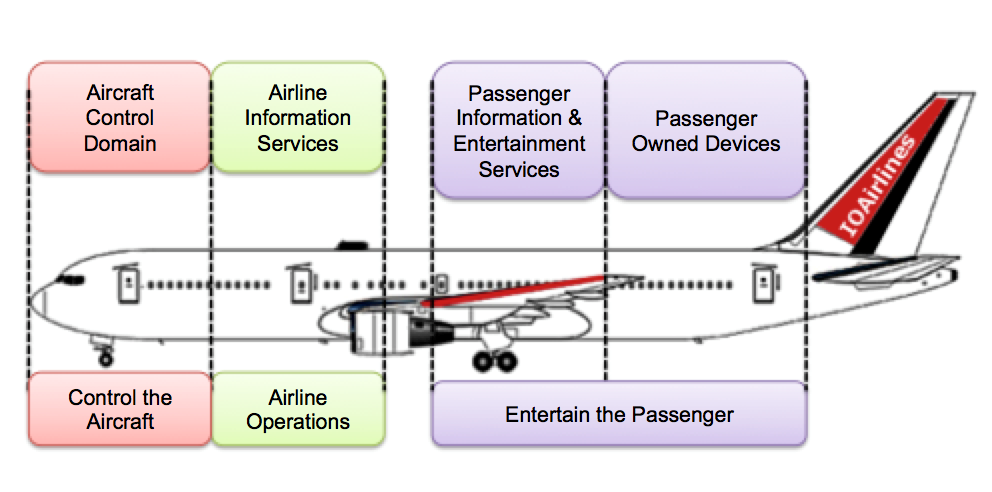
IOActive Aircraft Network Graphic

The short answer: The FAA’s nationwide ground stop on Friday, November 13, 2026, was not a cyberattack. Officials traced it to a newly installed router at a remote FAA radio site in El Dorado, Arkansas, plus a second router in Amarillo, Texas, that flooded the agency’s communications network with data. But that’s exactly why it should worry anyone who runs critical infrastructure. If one router doing what it was configured to do can ground more than 12,000 flights, imagine what an attacker who understands that network could do on purpose.

We spend a lot of time at IOActive breaking things that were never designed to be attacked. Air traffic control, power grids, water plants, rail signaling. Most of it runs on technology older than the smartphone in your pocket. Last week was a reminder that “it hasn’t been hacked yet” isn’t a security strategy. It’s luck.

What you’ll take away from this post

  • What actually happened during the FAA outage, and what we still don’t know
  • Why aging, “outdated” infrastructure is so hard to defend
  • Why the modernization window that’s opening right now is the moment to build security in
  • Practical steps operators can take today, before the replacement money arrives

What caused the FAA ground stop?

A router swap at a remote site caused it. According to Yahoo News’ live coverage, crews were moving an FAA radio site in El Dorado, Arkansas, from copper lines to fiber. When the new router came online, it and a router installed weeks earlier at a radar site in Amarillo, Texas, began flooding the network with traffic.

Here’s the timeline, as reported over the weekend:

DateWhat happened
Sun, Nov. 15About 1,570 U.S. cancellations by mid-morning. FAA disables the broadcast feature on all 69 routers of that type.
Sat, Nov. 14About 6,700 U.S. cancellations. Officials say there’s no evidence of a cyberattack.
Fri, Nov. 13Nationwide ground stop. Instability hits 17 of the FAA’s 22 en route centers. Operators cancel about 12,462 flights.

A few details stand out to anyone who does security work for a living:

  • It took about 45 minutes to trace the problem. The FAA administrator said that was partly because maintenance is logged on paper.
  • Controllers lost contact with some aircraft. The controllers’ union president said crews had to hunt for working frequencies and hand planes off to each other.
  • There’s no redundancy. Every facility relies on one network. FAA Administrator Bryan Bedford put it bluntly: “there’s no backup to the backup.”
  • This has happened before. In 2009, a misconfigured router during a similar fiber move disrupted 129 air traffic facilities, per a Transportation Department inspector general review.
  • Nobody knows yet whether it was the hardware or the install. Juniper’s parent company says the devices didn’t fail. The investigation, which includes the FBI, is ongoing.

The FAA’s own Q&A on the ground stop says it will reevaluate when it does replacement and maintenance work.

Why is outdated infrastructure a cybersecurity risk?

Legacy infrastructure is risky because it was built for reliability in a closed world, not for an adversary on the network. Most of the systems that keep planes, power and water moving were designed decades ago. Their engineers assumed physical isolation, trusted every device on the wire, and never pictured the internet reaching them.

That assumption no longer holds, and the FAA outage shows why in a few ways.

One bad packet stream can take down everything. The FAA network has no meaningful segmentation or fallback. A single device broadcasting more than it should cascaded across most of the country. Attackers love architectures like this. They don’t need to compromise 22 centers. They need one foothold and a way to make noise.

Visibility is poor. If maintenance records live on paper, defenders are working blind. You can’t detect an anomaly if you don’t know what normal looks like, or what changed an hour ago. The controllers’ union has even pointed out that some FAA computers are still updated with floppy disks.

Modernization creates its own attack surface. This is the part people miss. The outage didn’t happen because the old copper network failed. It happened during the upgrade. Every migration mixes old and new: new routers talking to old radar, new fiber feeding old protocols. Those seams are where misconfigurations hide, and where attackers look first.

The supply chain is long. The FAA network is owned and run by a contractor, uses hardware from another vendor, and depends on telecom partners for the fiber. Each handoff is a trust relationship. A feature turned on by default, a firmware version nobody vetted, or a remote-access path left open for a technician can all become an entry point.

None of this is unique to aviation. We see the same patterns across critical infrastructure every week, in utilities, oil and gas, manufacturing and rail. Aviation just happens to be the sector where a failure makes the evening news within minutes.

Why now is the time to secure legacy infrastructure

Now is the time because the money, the attention and the attack roadmap all arrived in the same week. The Transportation Department says it’s sending Congress a new funding request, on top of the $12.5 billion approved last year. Bedford estimates about $10.1 billion more is needed just to finish modernization, and Duffy has said more outages are possible until the copper lines are fully replaced at the end of 2028.

That’s a two-year window where old and new systems run side by side. Here’s why it matters.

1. Security is cheapest when it’s in the contract. Once a replacement network is designed, bought and deployed, bolting on segmentation, monitoring and secure configuration costs far more. Requirements written today shape what gets built through 2028 and beyond. If security testing isn’t a line item in the modernization budget, it won’t happen.

2. Everyone just saw the weak spot. The outage was accidental, but it was also a public demonstration. It showed that a flood of traffic from one remote site can destabilize 17 of 22 en route centers. U.S. agencies have spent the last few years warning that state-backed groups are quietly positioning themselves inside American critical infrastructure. You can be sure they read the same headlines.

3. The transition is the riskiest phase. Hybrid environments are where defenders have the least visibility and attackers have the most options. Teams are stretched, change windows are tight, and temporary access paths for contractors tend to become permanent.

4. “No evidence of a cyberattack” isn’t the same as “secure.” It means investigators haven’t found one. Every operator should ask a harder question: if this had been deliberate, would we have known, and how fast?

The lesson isn’t limited to the FAA. Any organization running decades-old control systems through a modernization program, whether that’s a grid operator, a port, a rail line or a water utility, is in the same window right now.

How do you protect legacy infrastructure from cyberattacks?

You protect legacy infrastructure by assuming you can’t replace it overnight and hardening what’s there while you modernize. You don’t need a $10 billion budget to start. These are the steps we recommend to operators in aviation, energy and other critical sectors:

  1. Build a real asset inventory. Know every device, firmware version and network path, including the remote sites nobody visits. Ditch paper change logs for something searchable.
  2. Segment the network. A fault or a compromise at one site should stay at that site. Rate-limit and filter traffic between zones so one noisy device can’t flood the whole system.
  3. Treat every migration as a security event. Review configurations before go-live, disable features you don’t need (like the broadcast function the FAA just turned off on 69 routers), and test changes in a lab that mirrors production.
  4. Test the new gear before it ships. Hardware and firmware from vendors and integrators should be assessed independently. “It worked as intended” isn’t reassuring if what was intended can bring down a national network.
  5. Lock down third-party access. Map every contractor and telecom partner connection. Make remote access time-limited, logged and monitored.
  6. Monitor for anomalies, not just signatures. Operational networks have predictable traffic. A sudden flood should trigger an alert in seconds, not a 45-minute hunt.
  7. Rehearse the bad day. Run tabletop exercises and red team scenarios that assume an attacker caused the outage. Find out how long detection, isolation and recovery actually take.
  8. Write security into modernization contracts. Require secure-by-design architecture, independent penetration testing and vulnerability disclosure from every vendor in the program.

How IOActive helps secure aging critical infrastructure

IOActive has been testing the systems other people assume are safe since 1998. Our researchers have published original work on aviation vulnerabilities, from in-flight systems to SATCOM, and we’ve run penetration tests, risk assessments and architecture reviews at major airports. We take the same attacker’s-eye view to energy, rail, maritime and industrial control environments.

Where we can help during a modernization like the FAA’s:

NeedHow IOActive helps
Know what’s actually on the networkOT/ICS assessments, asset inventory verification and architecture reviews
Vet new routers, controllers and firmwareHardware and embedded security testing in our labs in Seattle, Madrid and Cheltenham
Find out if an attacker could cause a cascadeRed and purple team engagements that emulate real threat actors
Reduce vendor and integrator riskSupply chain and third-party security assessments
Meet aviation regulationsAssessments that support TSA cybersecurity requirements for airports and aircraft operators
Plan the modernization securelyStrategic advisory and secure-by-design architecture reviews

Keep reading

If you’re responsible for infrastructure that was built before anyone worried about attackers, we’d like to talk. Contact our team to scope an assessment before your next upgrade window, not after it.

Frequently asked questions

What caused the FAA ground stop on November 13, 2026? A newly installed router at an FAA radio site in El Dorado, Arkansas, and a recently replaced router at a radar site in Amarillo, Texas, flooded the FAA’s communications network with data during a copper-to-fiber upgrade. The instability hit 17 of the FAA’s 22 en route centers.

Was the FAA outage a cyberattack? No. FAA and Transportation Department officials said they found no evidence of a cyberattack. The FBI is assisting in the investigation, and officials haven’t yet determined whether the cause was faulty hardware or a configuration error.

How many flights were canceled because of the FAA ground stop? The FAA says operators canceled about 12,462 flights on Friday, November 13. FlightAware data showed roughly 6,700 more U.S. cancellations Saturday and about 1,570 by mid-morning Sunday.

Why is outdated infrastructure a cybersecurity risk? Legacy systems were designed for reliability in isolated environments, not to resist attackers. They often lack network segmentation, real-time monitoring and secure configuration, so a single compromised or misbehaving device can disrupt an entire system.

How can organizations protect legacy infrastructure from cyberattacks? Start with an accurate asset inventory, segment the network, test new hardware before deployment, lock down third-party access, monitor for traffic anomalies and run red team exercises. Build security requirements into every modernization contract.

When will the FAA’s legacy network be replaced? Transportation Secretary Sean Duffy has said the copper lines will be fully replaced by the end of 2028, and that more disruptions are possible until then.
Sources

WHITEPAPER | April 5, 2022

Cyberattacks on SATCOM: Understanding the Threat

In 2014, Ruben Santamarta, Principal Security Consultant with IOActive, published a whitepaper titled “A Wake-up Call for SATCOM Security.” It detailed the discovery of an exceptionally weak security posture across a number of SATCOM terminals from a range of manufacturers. Four years later in 2018, Ruben published a follow up titled “Last Call for SATCOM Security” which detailed a thorough investigation into the security of SATCOM equipment across the Aviation, Maritime, and Military industries. In light of the cyberattacks at the start of the war in Ukraine, once again, the security posture was found to be overwhelmingly poor and in need of immediate and thorough corrective action by manufacturers.

RESEARCH | December 20, 2016

In Flight Hacking System

In my five years with IOActive, I’ve had the opportunity to visit some awesome places, often thousands of kilometers from home. So flying has obviously been an integral part of my routine. You might not think that’s such a big deal, unless like me, you’re afraid of flying. I don’t think I can completely get rid of that anxiety; after dozens of flights my hands still sweat during takeoff, but I’ve learned to live with it, even enjoying it sometimes…and spending some flights hacking stuff.

What helped a lot to reduce that fear was to understand how things work in planes, and getting used to noises, bumps, and turbulence. This blog post is  about understanding a bit more about how things work aboard an aircraft. More specifically, the In-Flight Entertainment Systems (IFE) developed by Panasonic Avionics.

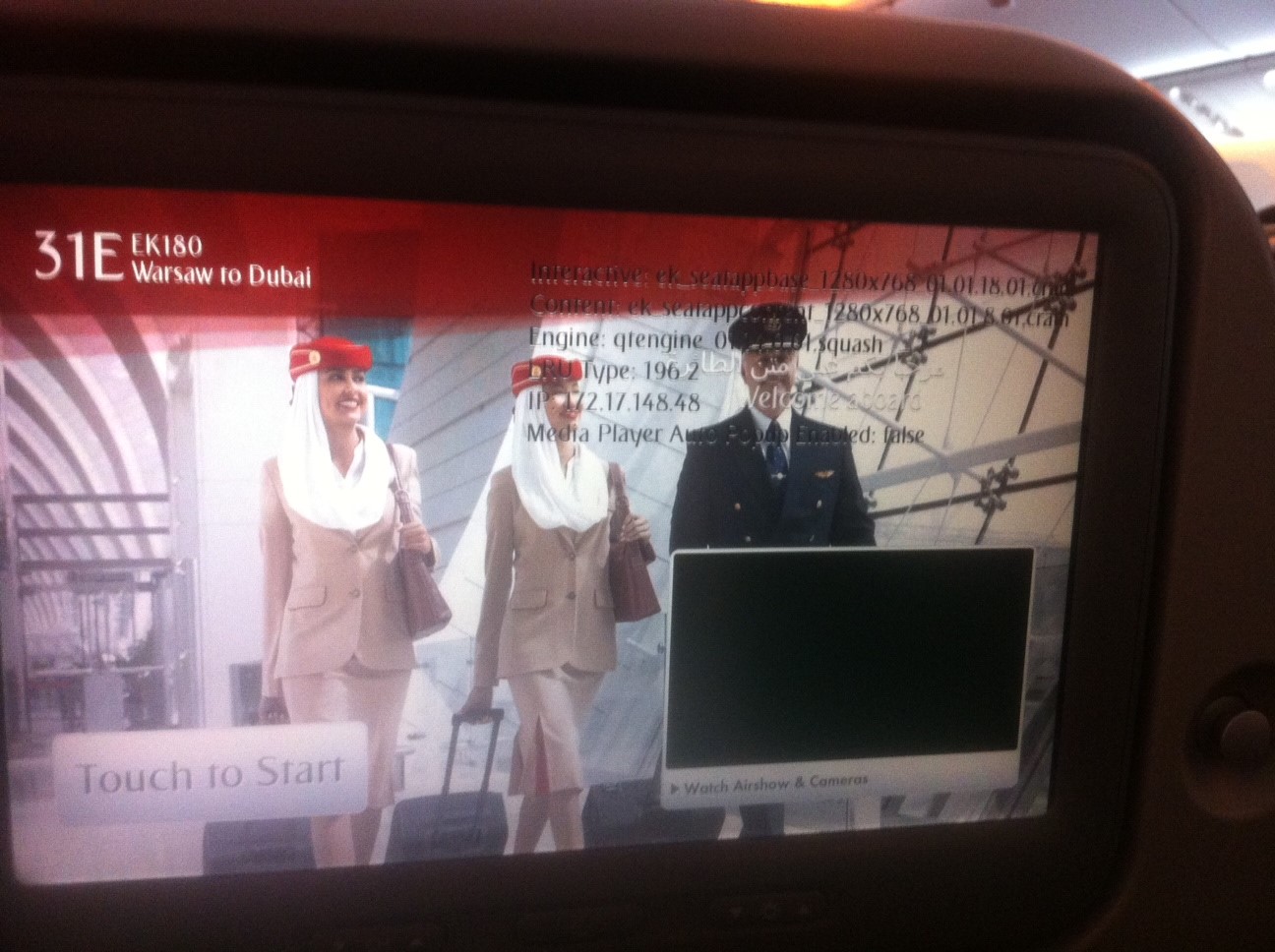
While I was flying from Warsaw to Dubai two years ago, I decided to try my luck and play with the IFE a little bit, touching this and that. Suddenly, after touching a specific point in one of the screen’s upper corners, the device returned this debug information: 

 
—-
Interactive: ek_seatappbase_1280x768_01.01.18.01.cram
Content: ek_seatappcontent_1280x768.01.01.8.01.cram
Engine: qtengine_01.14.0.01.squash
LRU Type: 196 2
IP: 172.17.148.48


Media Player Auto Popup Enabled: false
—–
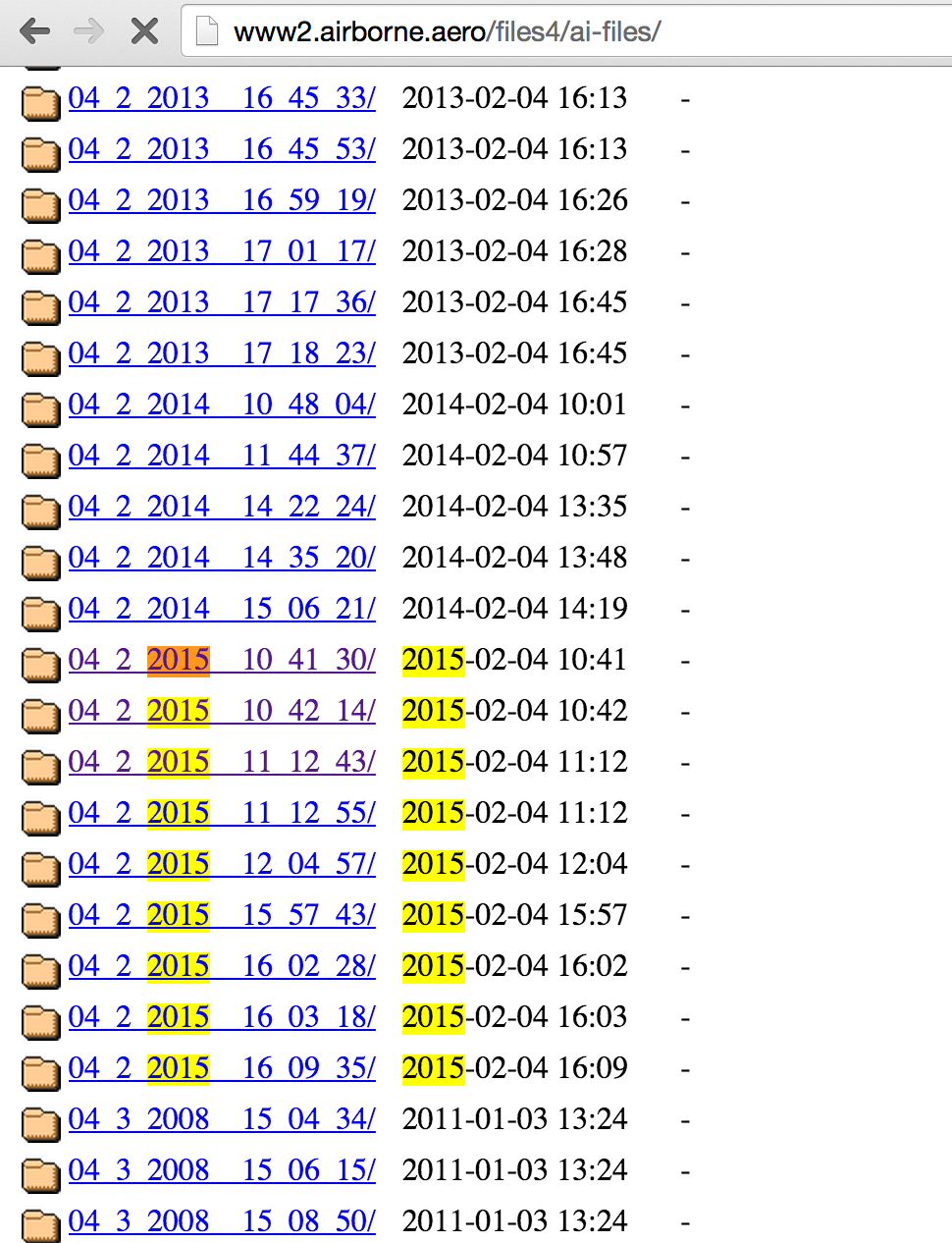
After arriving in Dubai and spending some time searching those keywords in Google, I discovered hundreds of publicly available firmware updates for multiple airlines:


These files were obviously being actively updated, so it was possible to gain access to the latest versions deployed on aircraft. Today the files are still there, although the directory listing is no longer available.

The airlines I was able to find firmware updates available for included:

  • Emirates
  • AirFrance
  • Aerolineas Argentinas
  • United
  • Virgin
  • Singapore
  • FinnAir
  • Iberia
  • Etihad
  • Qatar
  • KLM
  • American Airlines
  • Scandinavian 
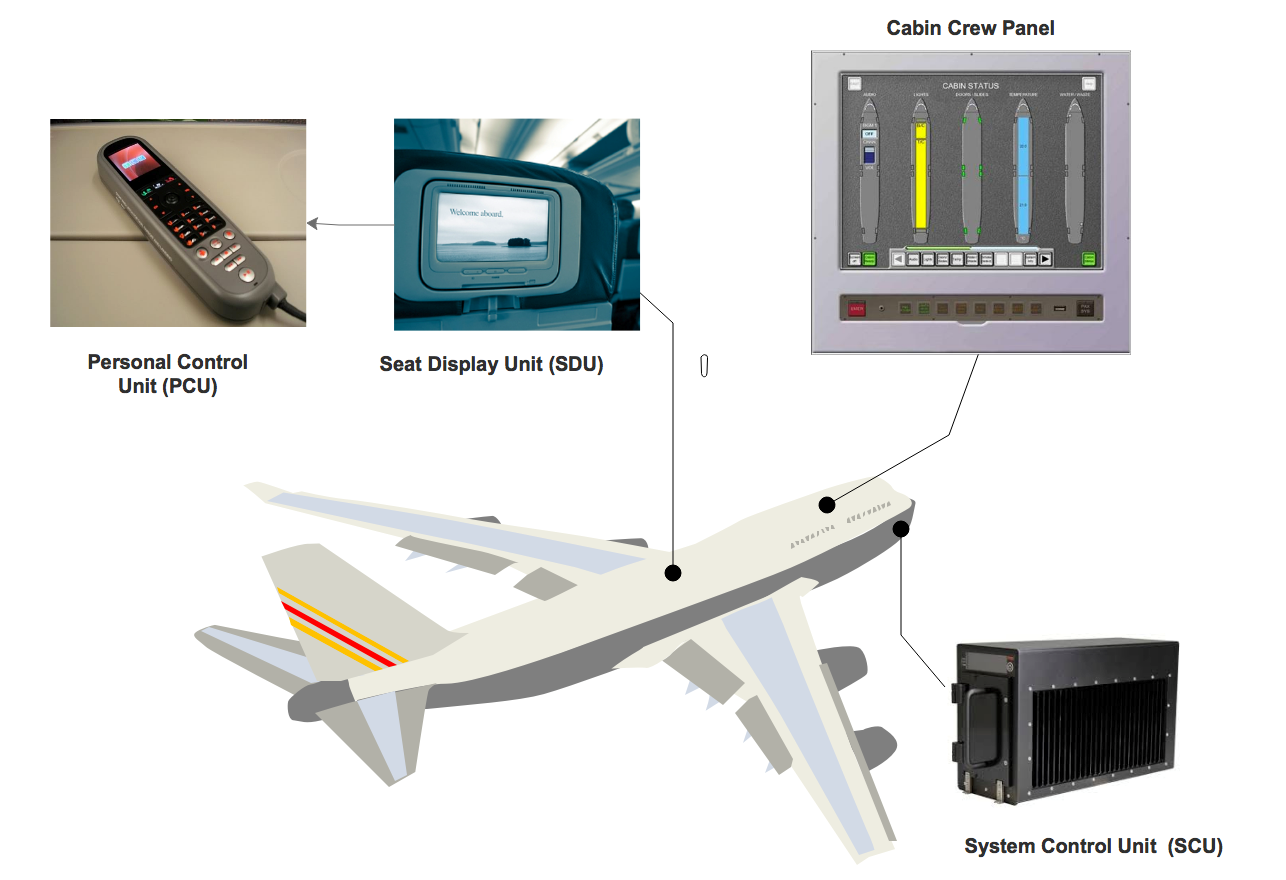
An IFE follows this basic architecture:
System Control Unit (SCU)

This needs to be a certified airborne server. Passengers can access real-time information about the flight, such as wind speed, latitude, longitude, altitude, and outside temperature. The SCU receives all of these values via the avionics bus (usually ARINC 429) and makes them available for the Seat Display Unit (SDU) through an Ethernet connection.

Seat Display Unit (SDU)
This LRU (Linear Replaceable Unit) allows the passenger to consume passive and active functions implemented in the IFE, such as watching movies, buying items, reading articles, or connecting to the internet. It’s basically an embedded device with a touchscreen; the newest are based on Android, while legacy devices mainly use Linux.

 
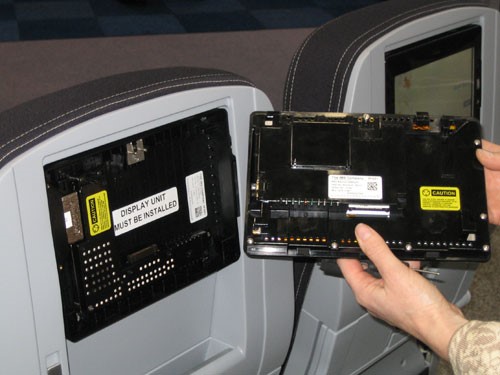
Removing an SDU – this is a Rave AIX SDU shown, not a Panasonic Avionics model(source: http://airfax.com/blog/wp-content/uploads/2012/06/RAVE_AIX_2012.jpg)
 
Personal Control Unit (PCU)
This handset is optional. The PCU can control the SDU, and as I’ll cover later, it can also act as a credit card reader.Cabin Crew Panel
Flight attendants and other crew members use these units to control features of the aircraft such as lights, actuators (including beds), announcements, onboard shopping, or the PA system, in order to attend to passenger needs. The Cabin Management System (CMS) is normally integrated with the IFE. Panasonic Avionics integrates the aircraft’s CMS and inflight entertainment (IFE) systems with the Global Communications Services, featuring shared system functionality for simple operation by the cabin crew (see https://www.panasonic.aero/inflight-systems/cabin-systems/). The IFE CrewApp is accessible from the Cabin Crew Panel.Panasonic IFE
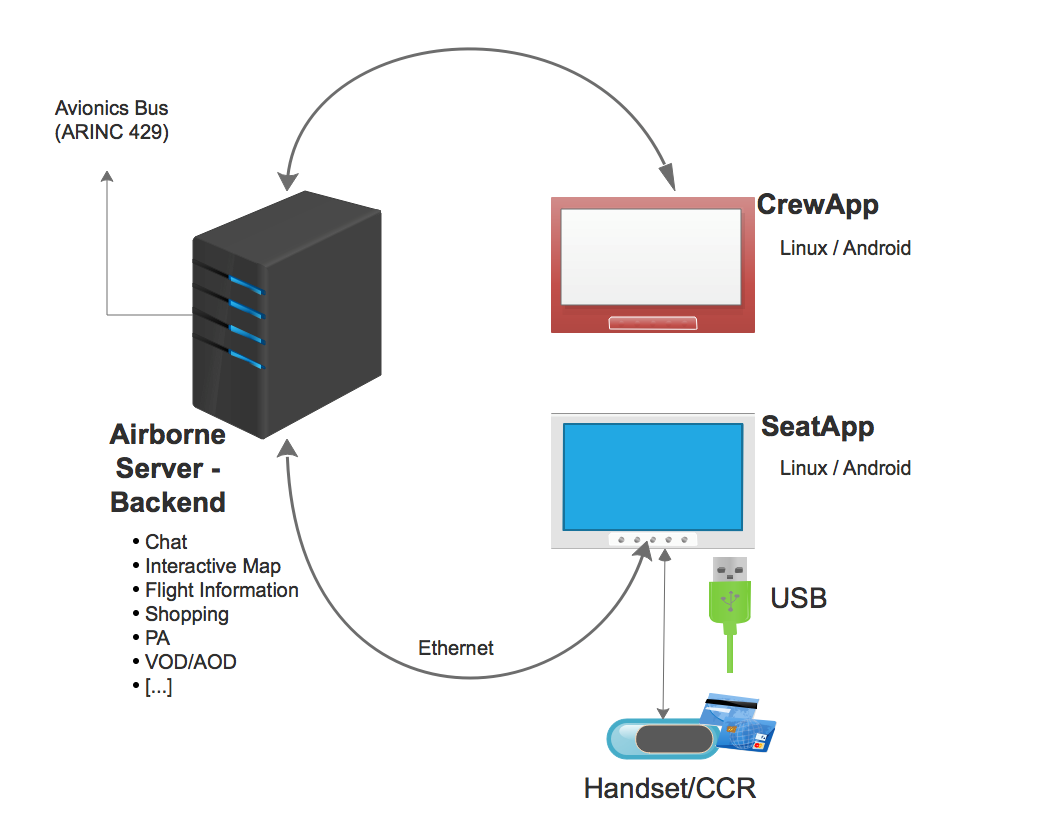
There are multiple Panasonic IFEs: the “legacy” 3000/3000i and the newest XSeries eFX, eX2 and eX3 (Android-based). Hardware may vary among them, but they have a similar architecture and some common features.You can find more details on these IFEs from the Panasonic Avionics website at https://www.panasonic.aero.These systems support a large range of personalization features, which allow airlines to deploy tailored IFEs while the code base remains pretty much the same.My analysis of the firmware files did not clearly reveal the approach used to perform the data loading on the ground. Usually IFEs perform content updates via Wi-Fi ad-hoc networks or high-speed mobile data links once the aircraft touches down. Panasonic Avionics IFEs are mostly updated over “sneakernet.” While in flight, satellite communications or custom mobile data links are also possible. However, in most cases IFEs operate offline, with their contents preloaded. Usually the IFE doesn’t even check credit cards in real time.The Panasonic Avionics IFE follows a client-server architecture with three main components
  • CrewApp
  • SeatApp
  • Backend  

I found multiple versions of the CrewApp and SeatApp on the aforementioned website. When searching in Google for certain keywords, I also found the source code of the backend to be publicly exposed, but on a different .aero website. Although it contains the custom features and data for specific airlines, it still uses the Panasonic backend codebase.

It is impossible to cover all of the variations in a single blog post, as each airline and other companies adapt and extend the Panasonic framework to its own needs, so we will focus on specific features.

 
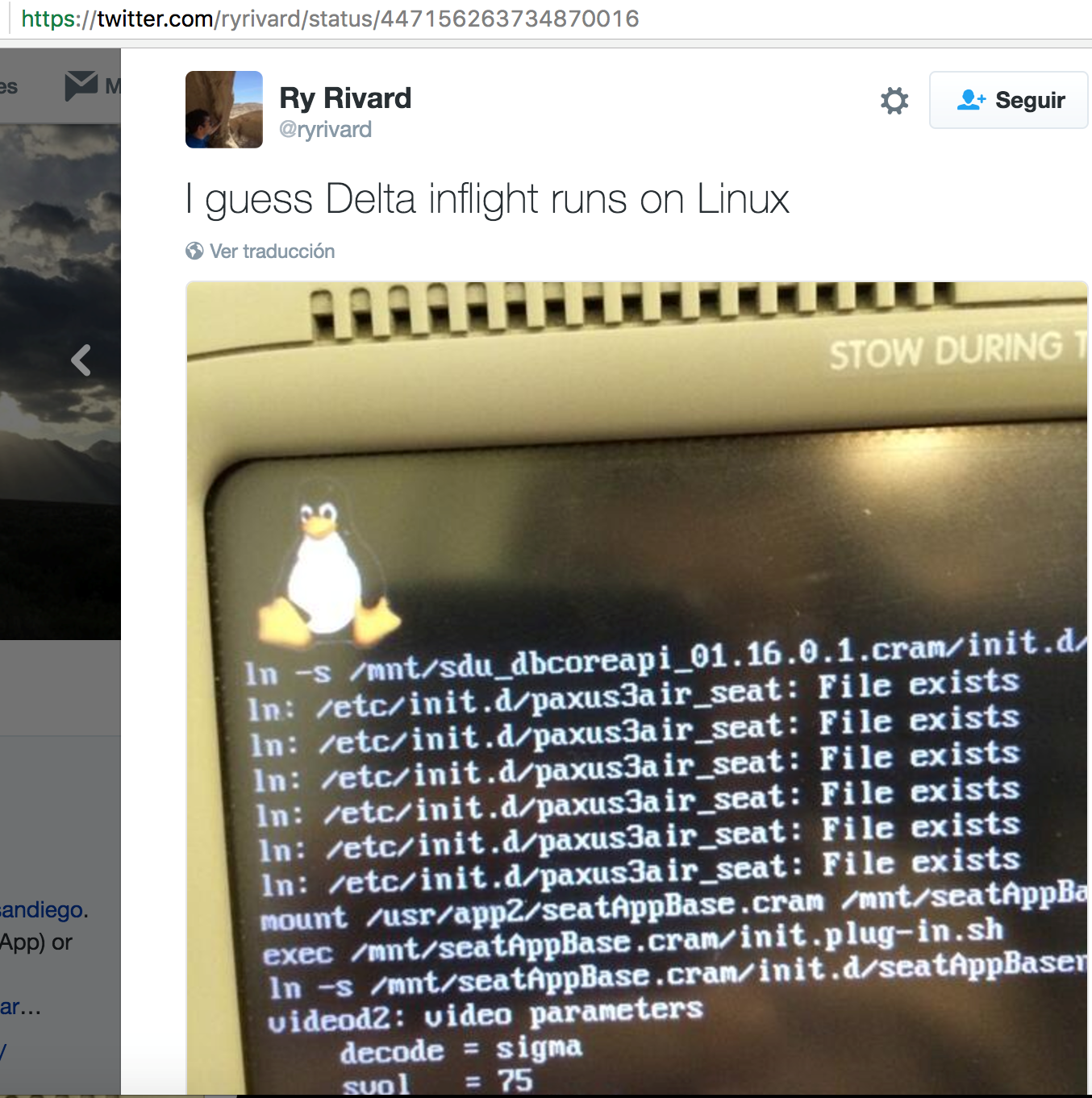
The Linux-based SeatApp rebooting
 

The firmware files (in this case software that runs on a device the user does not maintain) that I could analyze did not contain the complete system, just the files that should be updated. That’s a pity, because otherwise we could acquire more details on the low-level workings of those devices. However, it is possible to get some interesting details by going through the available files.

Scripts

Panasonic Avionics has implemented its own declarative script language, used to extend and interface with the GUI and features of the main application. It supports dozens of commands that cover the entire range of functionalities.

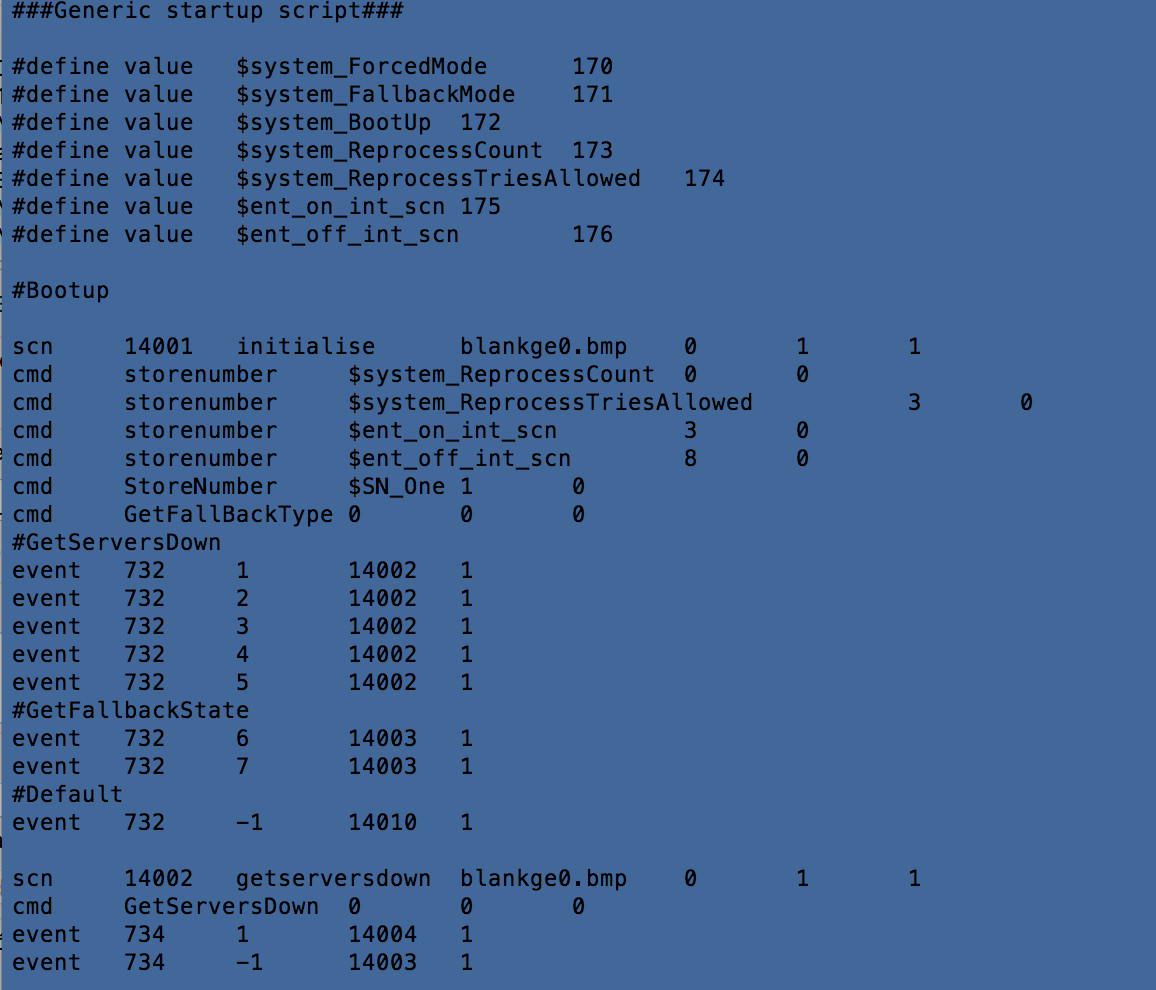
Example core/startup.txt code
 

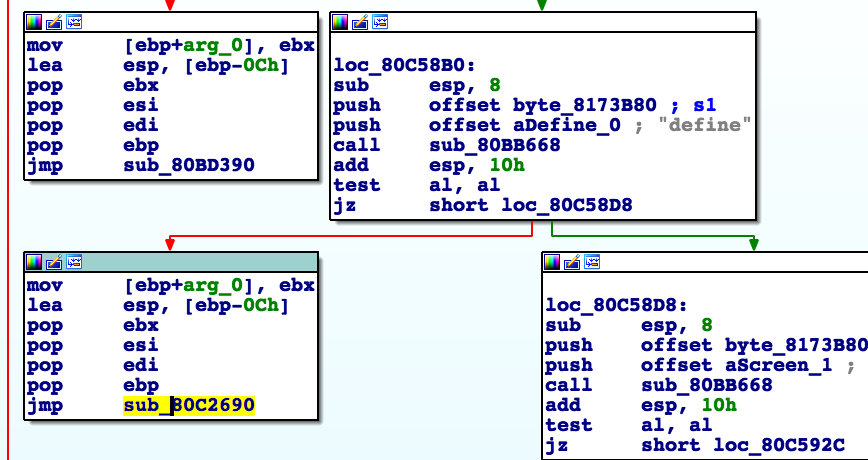
Reverse-engineering the main binary (airsurf), we can figure out how this script format’s parser works. In order to illustrate this approach, let’s look at #define.

The script is processed line-by-line, and when the parser detects a #define statement, it tries to parse the statement at sub_80C2690.


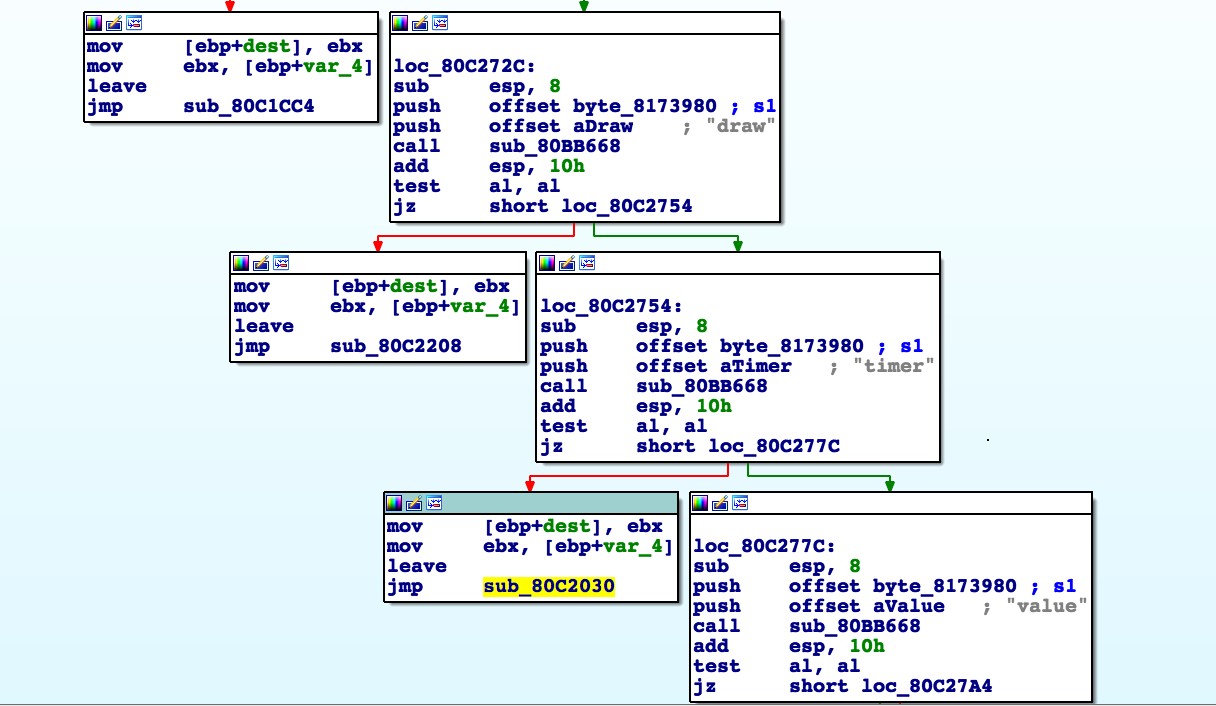
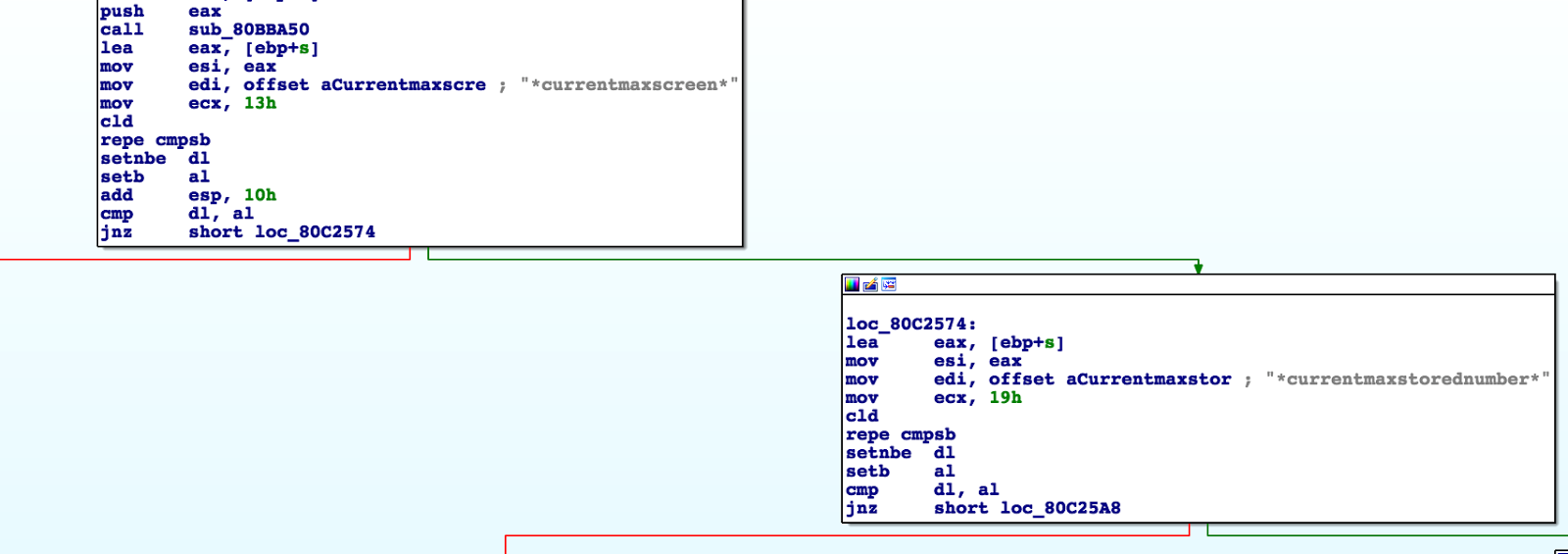
In this function there are five types that can be defined: flash, text, draw, timer, and value.

The first line of the script is a #define value, so let’s look at how it’s handled.

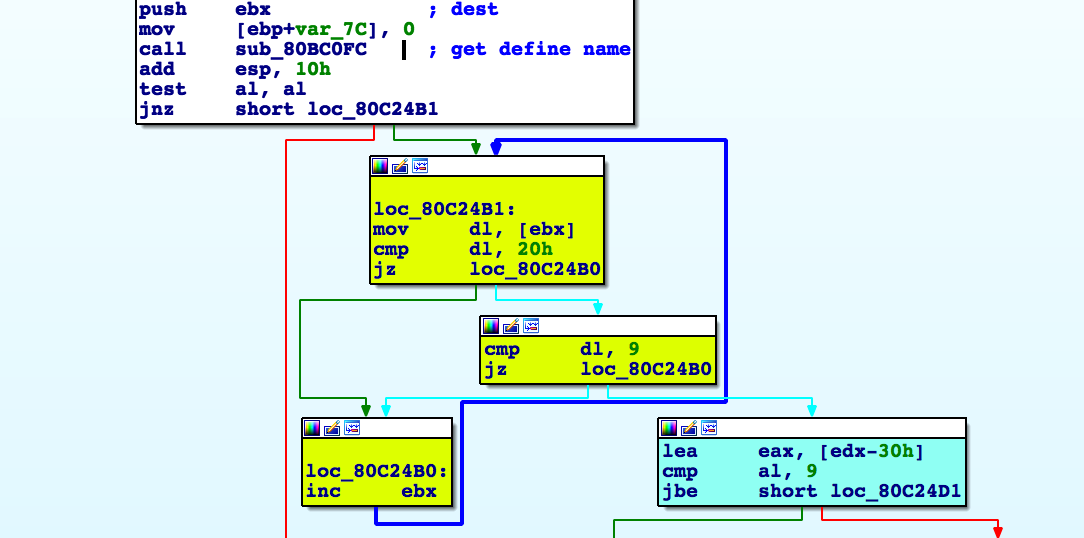
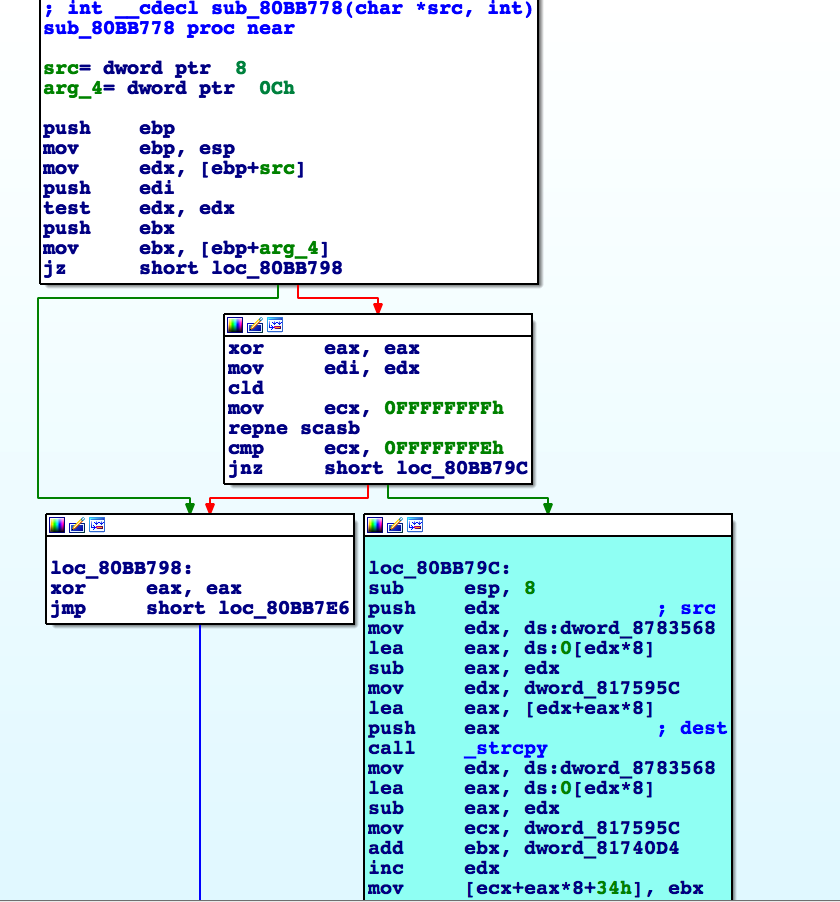
First, the line is parsed and the name of the define extracted. Then the parser checks to see whether the value that comes after (the green basic block below) is a number (blue basic block).

 
 If the value is not a number, it is checked against a series of variables. If the number matches, it’s expanded to its value.
 
 
If the value is a number, the name/value pair will be added to a global array of defines (the blue basic block below).
 
 
For the cmd statement, the binary traverses the cmd table and invokes the associated routine, passing parameters.
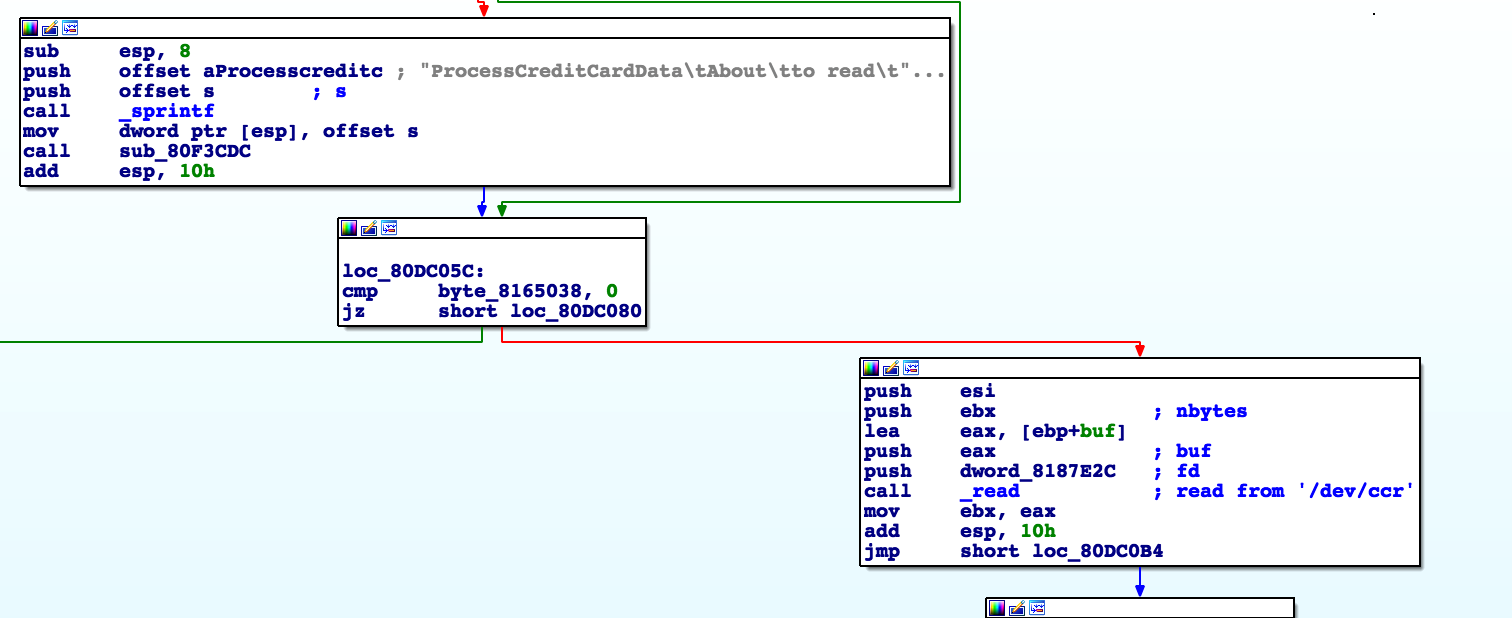
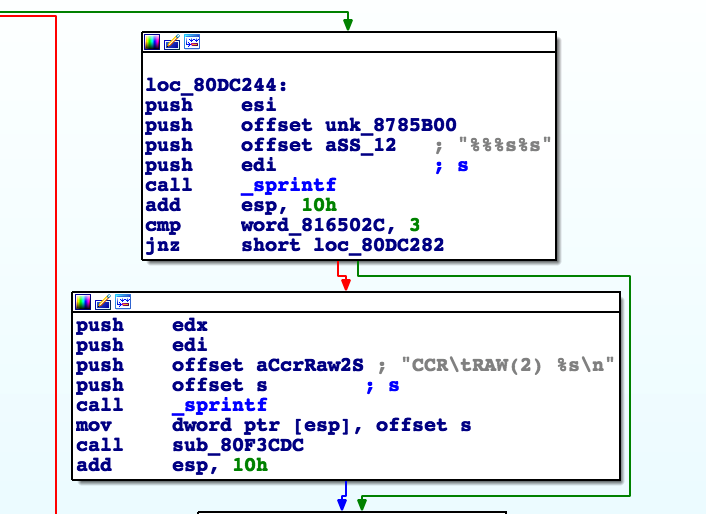
We can see some interesting functionalities here, such as the routine that reads the credit card data from the handset after swiping. 
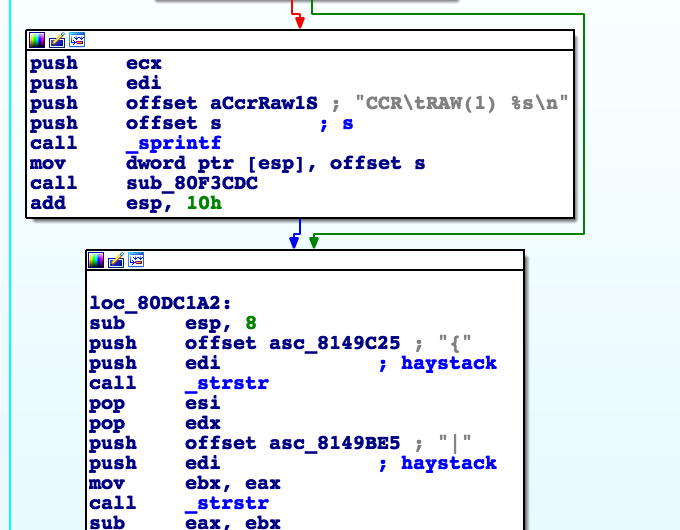
Data coming from the card reader (/dev/ccr) is parsed, and tracks printed out and validated.
 

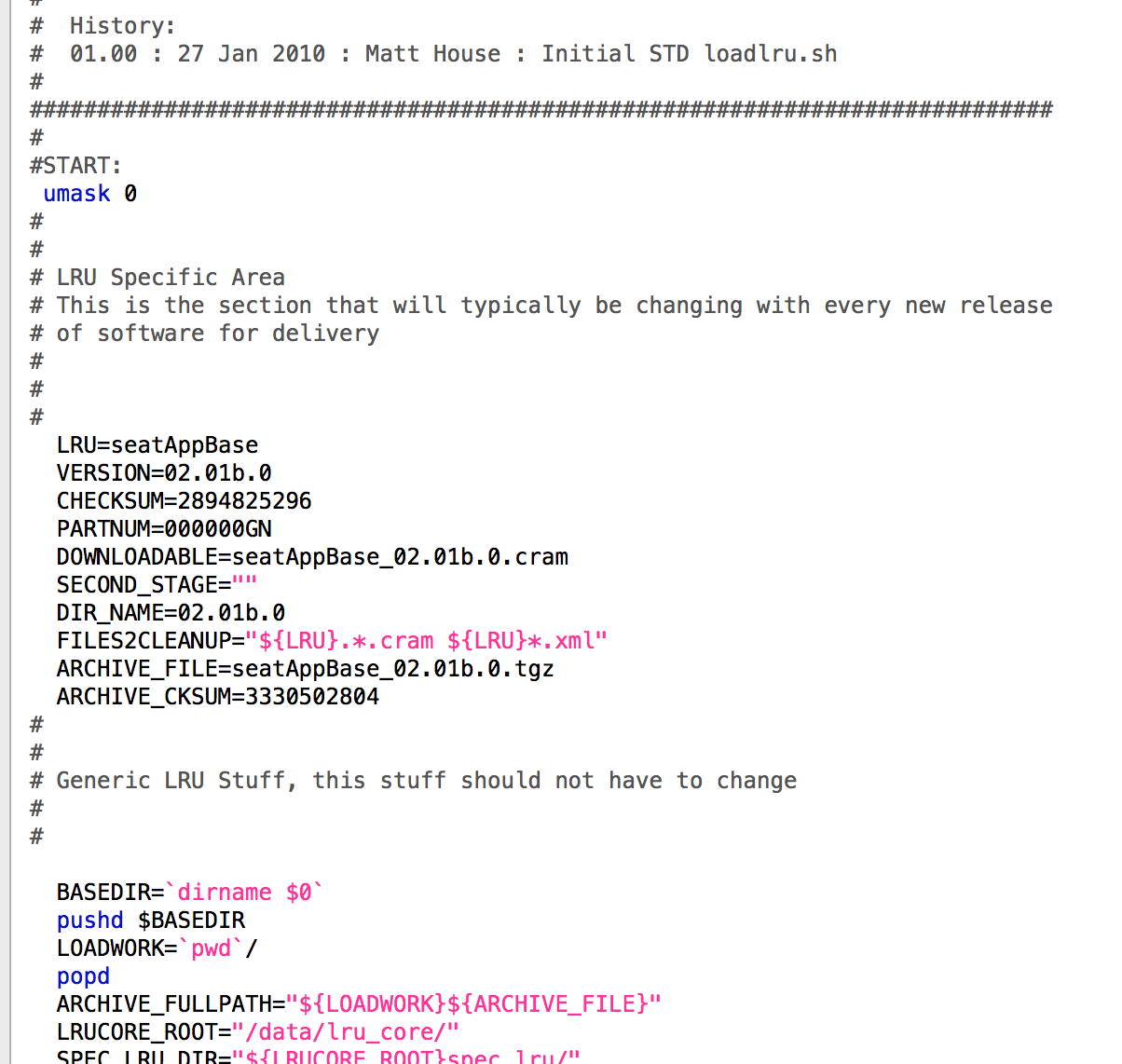
We can also see regular files here, such as shell scripts, configuration files (containing hardcoded credentials), databases, resources, and libraries.

I found the following information in a tweet from someone who captured the Panasonic IFE rebooting. The SeatAppBase files are the same files we are dealing with:

‘loadlru.h’
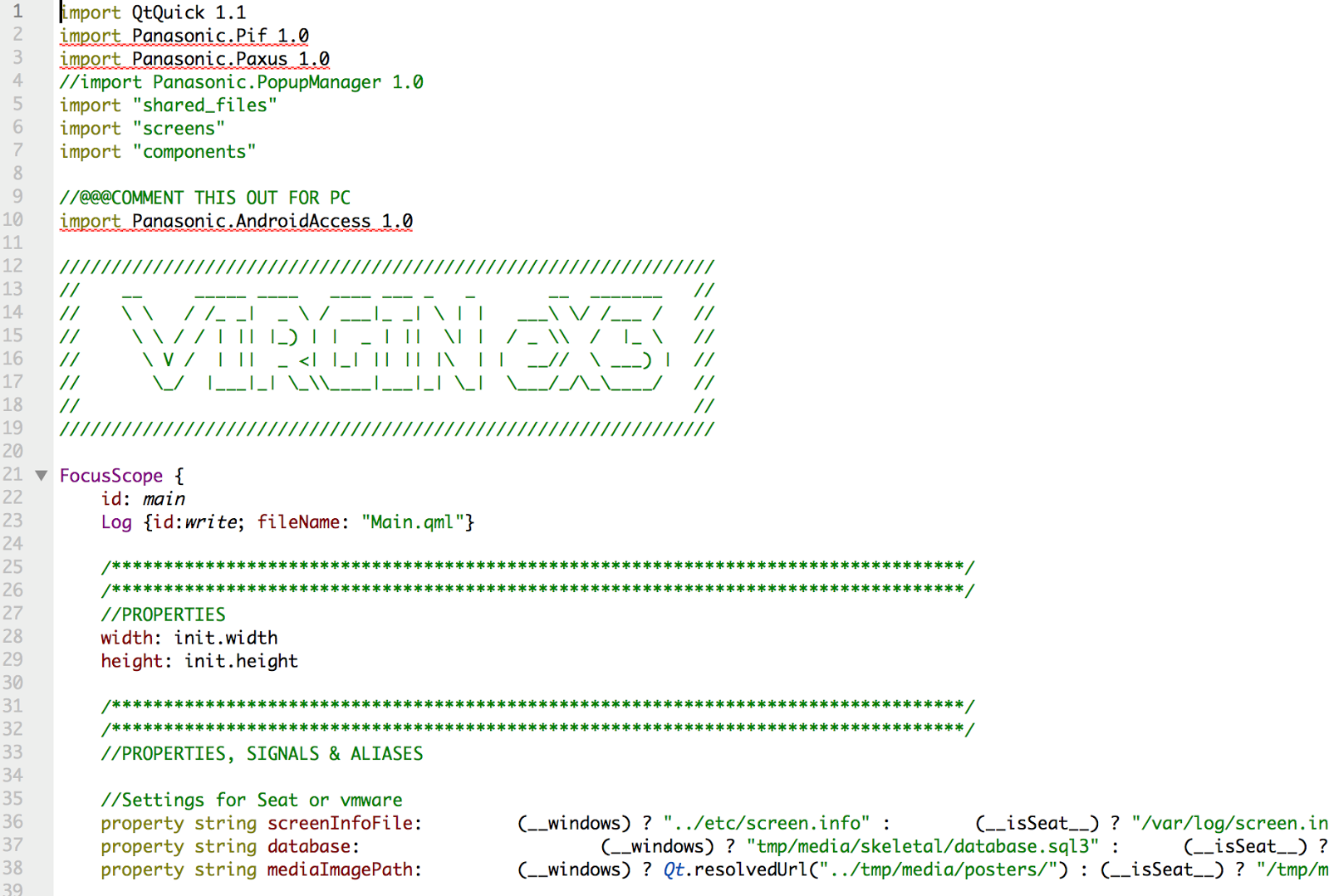
On the newest X Series IFEs, Panasonic switched to Android and moved from the old .txt script mode approach to QT QML:
 
 
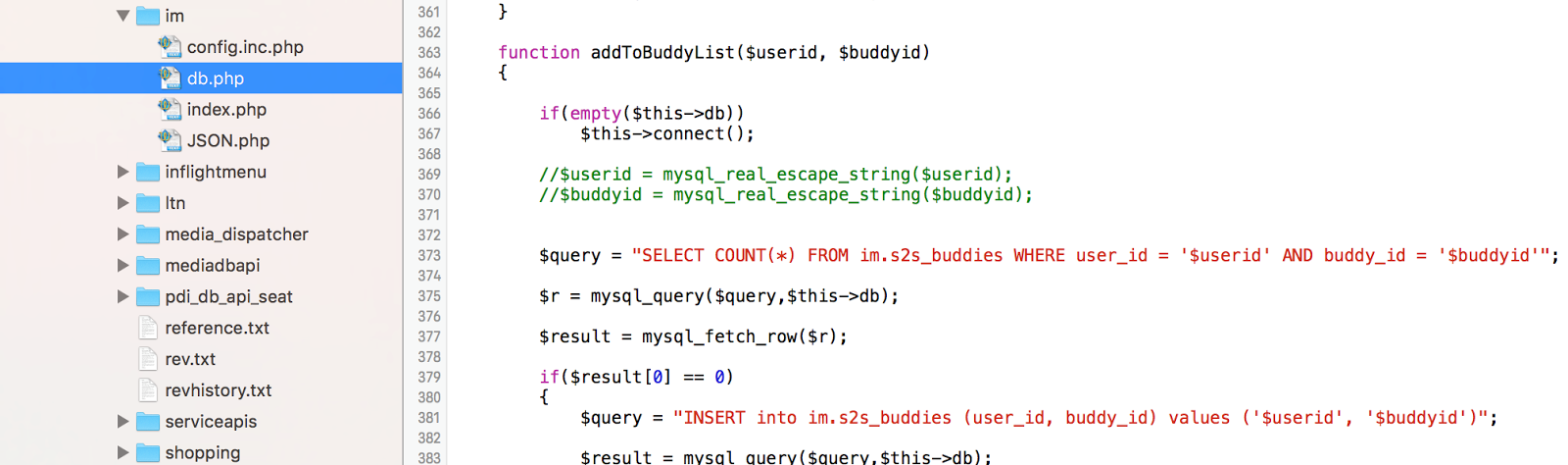
The backend uses PHP. The initial analysis reveals that it had vulnerabilities:

The image above belongs to the “seat-2-seat” chat functionality, where passengers can send messages to others. It shouldn’t take long for you to figure out there is something wrong, and it’s not the only problem.

The following videos show real vulnerability tests performed in such a way that they presented no risk.


1. Bypass credit card check


2. Arbitrary file access (so /dev/random)

3. SQL injection


Potential Impacts

So how far can an attacker go by chaining and exploiting vulnerabilities in an In-Flight Enterntainment system? There’s no generic response to this, but let’s try to dissect some potential general case scenarios by introducing some additional context (nonspecific to a particular company or system unless stated).

Relying exclusively on the DO-178B standard that defines Software Considerations in Airborne Systems and Equipment Certification, the IFE would technically lie within the D and E levels. Panasonic Avionics’ IFE in particular is certified at Level E. This basically means that even if the entire system fails, the impact would be something between no effect at all and passenger discomfort.

Also,  I should mention that an aircraft’s data networks are divided into four domains, depending on the kind of data they process: passenger entertainment, passenger owned devices, airline information services, and finally aircraft control.

Physical control systems should be located in the Aircraft Control domain, which should be physically isolated from the passenger domains; however, this doesn’t always happen. Some aircraft use optical data diodes, while others rely upon electronic gateway modules. This means that as long as there is a physical path that connects both domains, we can’t disregard the potential for attack.

In-flight entertainment systems may be an attack vector. In some scenarios such an attack would be physically impossible due to the isolation of these systems, while in others an attack remains theoretically feasible due to the physical connectivity. IOActive has successfully compromised other electronic gateway modules in non-airborne vehicles. The ability to cross the “red line” between the passenger entertainment and owned devices domain and the aircraft control domain relies heavily on the specific devices, software and configuration deployed on the target aircraft.

In 2014 we presented a series of vulnerabilities in Satellite Communication (SATCOM) devices, including airborne SATCOM terminals. A primary concern is the sharing of these SATCOM devices between different data domains, which could allow an attacker to use this equipment to pivot from a compromised IFE to certain avionics.

On the IT side, compromising the IFE means an attacker can control how passengers are informed aboard the plane. For example, an attacker might spoof flight information values such as altitude or speed, and show a bogus route on the interactive map. An attacker might compromise the CrewApp unit, controlling the PA, lighting, or actuators for upper classes. If all of these attacks are chained, a malicious actor may create a baffling and disconcerting situation for passengers.

The capture of personal information, including credit card details, while not in scope of this research, would also be technically possible if backends that sometimes provide access to specific airlines’ frequent-flyer/VIP membership data were not configured properly.

On the bright side, while not in scope of the Panasonic Avionics IFE systems research, I believe in-flight Wi-Fi itself is not a problem because it can be implemented securely without safety and security risks.

What all of this means is that after initial analysis we do not believe these systems can resist solid attacks from skilled malicious actors. Airlines must be vigilant when it comes to their In-Flight Entertainment Systems, ensuring that these and other systems are properly segregated and each aircraft’s security posture is carefully analyzed case by case. The responsibility for security does not solely rest with an IFE manufacturer, an aircraft manufacturer, or the fleet operator. Each plays an important role in assuring a secure environment.

Responsible disclosure

We reported these findings to Panasonic Avionics in March 2015. We believe that has been enough time to produce and deploy patches, at least for the most prominent vulnerabilities. That said, we believe that in such a heterogenous environment, with dozens of airlines involved and hundreds of versions of the software available, it’s difficult to say whether these issues have been completely resolved. 

As always, we would love to hear from other security types who might have a differing opinion. All of our positions are subject to change through exposure to compelling arguments and/or data.